Episode Transcript
[00:00:16] Speaker A: The Mysterious Old Radio Listening Society podcast.
Welcome to the Mysterious Old Radio Listening Society Podcast. Dedicated to suspense, crime and horror stories from the golden age of radio. I'm Eric.
[00:00:36] Speaker B: I'm Tim.
[00:00:36] Speaker C: And I'm Joshua.
[00:00:37] Speaker B: We love mysterious old time radio stories, but do they Stand the test of time? That's what we're here to find out.
[00:00:42] Speaker A: This week I've chosen an episode of Quiet Please entitled the Room where the Ghosts Live.
[00:00:49] Speaker C: Quiet Please was the brainchild of radio and screenwriter Willis Cooper, creator of another legendary series, Lights Out. The program debuted on the Mutual broadcasting network on June 8, 1990. 1947. In September 1948, it moved to ABC, where it remained until its final broadcast on June 25, 1949. In total, Cooper wrote 101 original scripts for the series, along with five repeats, for a total of 106 broadcasts.
[00:01:23] Speaker B: Quiet Please is often labeled a horror series, probably because of Cooper's roots in the genre. But as a May 1949 article in Writer's Digest noted, there's no formula or pattern to Quiet Please.
Other than that it is always narrated in the first person by Ernest Chappell and has an eerie, slow paced mood. Sometimes it's macabre, sometimes hilarious, but always entertaining. The same article reported that ABC received more listener requests for Quiet Please scripts than for any other program.
[00:01:49] Speaker A: And now let's listen to the room where the Ghosts live From Quiet, please. First broadcast January 12, 1948.
[00:01:58] Speaker C: It's late at night and a chill has set in. You're alone and the only light you see is coming from an antique radio. Listen to the sounds coming from the speaker. Listen to the music and listen to the voices.
[00:02:16] Speaker D: Quiet, please.
Quiet, please.
It.
The Mutual Broadcasting System presents Quiet, Please. Which is written and directed by Willis Cooper and which features Ernest Chapel. Quiet, Please. For tonight is called the Room where the Ghosts Live.
[00:03:10] Speaker E: No.
[00:03:12] Speaker D: No, I won't let you take me out of the house.
No, I'm going to stay right here.
I'm sorry, Doctor, but Lawrence, we've got to get you to a hospital. Now stop being a fool. I won't.
I'm going to die anyway. And I don't want to die in an ambulance somewhere out on an icy road between here and town.
I'm sorry. That's final. I can't do anything for you here, Lawrence. Maybe I don't want you to do anything for me. Doctor. I'm going to call the ambulance. How? My telephone. Of course.
The telephone isn't working. Oh, that's right. I forgot.
That's funny, isn't it what?
What a couple of days of snow can do. No lights, no heat, no water.
Just like the days when they lived here.
When who lived here?
The ghosts.
Open your mouth. What for? Thermometer. I'm not raving, Doctor. Well, let's see anyway.
Feel any pain?
Sure.
Worse than it was little.
A little Moria won't hurt.
It's a good thing I decided to stop in for a cup of coffee.
You might have died here all by yourself. Going to die anyway. Not if I can help it. Can't help. No. Stop this. That nonsense may have your bones all right now.
That'll relieve the pain in a minute or two.
Okay. I could take you to the hospital in my car. No. And I think I will. No.
[00:04:51] Speaker E: Lawrence, what got into you?
[00:04:53] Speaker D: What do you want to die for? Take your Maurice. No. Not yet. There's nothing wrong with you. You've been the happiest.
[00:05:00] Speaker E: You.
[00:05:00] Speaker D: You've got everything to live for. Then you go and shoot yourself. Yep.
Where did you get this pistol anyway?
Didn't you know it was loaded?
Sure. That powder and ball have probably been in there for 50 years. Longer than that. What?
Longer than that? Well, there's no telling what kind of infection you can get from that bullet. No?
No. Diaso say that the moment.
High temperature, huh?
Yeah, it's just pretty high.
I guess you're not going to the hospital after all.
I told you that. Doctor. I couldn't move you with that higher temperature. That's fine.
But I told you I wasn't going to be moved anyway.
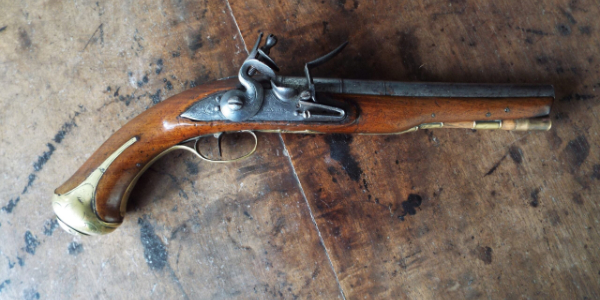
So you see. Who gave you this pistol? A British colonel. What British colonel? His name's on the lock plate.
Lt. Col.
Robert Charles Graves. 17th Regiment of Foot, 1774.
Ancestor of the father gave it to you?
[00:06:14] Speaker A: No.
[00:06:16] Speaker D: He gave it to me himself yesterday.
Lawrence, how could he? He's one of the ghosts.
I see. No, you don't.
I'm not delirious, Doctor. He. He really is. No, no. Just relax, Lawrence. Of course, I'm gonna die anyway.
Isn't that so?
I'm afraid it is.
Good.
[00:06:48] Speaker E: Lauren.
[00:06:50] Speaker D: What? Why did you do it? Well, I.
I'm not sure whether I did it on purpose or not.
I wanted to, but. Maybe it was an accident or maybe.
Or maybe were maybe one of the ghosts.
No, I.
I don't think so.
I guess it was an accident.
I'm glad, though.
[00:07:22] Speaker E: But why?
[00:07:25] Speaker D: On account of Melanie. Melanie? Melanie who.
Who's Melanie? Melanie is a girl who lived here 170 years ago. What?
And who still lives here.
It hurts quite A bit, Doctor. You want me to give you some more on Morpheus? I guess not.
I want to tell you things.
Well, you won't believe me, of course.
You think my mind's wandering, don't you? Well, I.
What difference does it make? That's right.
Nothing makes any difference now.
Fellow takes a long time dying, doesn't he?
After a while, we had the time up.
Pretty soon, Albia goes to see Melanie.
I. I'd like a little drink of brandy. Well, just a second.
Oh, yeah. Now, take it easy. Thanks.
Good brandy.
Wish I could take some along.
Good.
I wish I could do something for you, Lawrence. Nothing sewed in. Aren't we sure.
We mustn't leave.
I couldn't come back, you know.
I have to stay here. I don't understand that.
I have to stay here. I said My house.
What was I talking about? The.
The ghosts. Oh, yes.
So I tried to keep the house like it was in the old ac, all by myself.
Been fun.
And then noises.
Heard noises. What kind of noises? People beating on door, rattling a latch.
Every night.
I'm not afraid, Doctor. I know.
I got up, went all over the house.
Noises stopped after a while. It wasn't a dream. No, no dream.
Beating on a door someplace.
Always sounded like it came from right over there.
You see, there isn't any door there, Lawrence. That's what I.
My hands are cold. I'll build up the fire. No, no, no.
I know what it is.
I haven't got much time, huh?
Have I?
No, Lawrence, you haven't got much time. Oh, man, I have to hurry.
Shut your eyes so you can see what I saw.
I mean, I didn't see at sea because it was dark.
So when you shut your eyes, you. You feel the way I felt.
[00:10:43] Speaker E: I.
[00:10:45] Speaker D: All right, Lawrence, I.
I walked all over the house, Lights on, no sound.
No hammering on. Door.
No door.
I turned off the lights. It starts again from right over there.
I turn on the lights. No door.
No noise.
Then I get an idea.
I turn off the lights again.
I walk over where the sound comes from, and there is a door.
And I.
I think I hear a woman crying and footsteps and furniture being shoved around.
I said I wasn't scared, didn't I?
Well, I was. Then you'd be scared, too.
Finding a door where there isn't any door and there's somebody on the other side. But that's the outside wall of the house. Lawrence.
[00:11:52] Speaker E: No.
[00:11:52] Speaker D: What?
There's a room there.
The room where the ghosts lived.
You see? No, I don't.
I didn't know it, too.
You got your eyes shut.
Yes. If.
If you could hear the noise like I heard it.
Granted. Found me people pushing their shoulders against the locked door.
And I could smell smoke.
You see, I didn't know about the ghosts then.
[00:12:30] Speaker E: Well, how do you know now?
[00:12:33] Speaker D: I'm trying to tell you. I'm sorry.
Keep your eyes shut.
I want you to feel the way I felt.
And believe.
I reached for the lights again. I turned them on.
Nothing happens. Just nothing.
Except pounding on the door. Slower now.
And the woman crying.
And I hear her scream.
Oh, it's cool, she said. It's French. It means help. Help.
I heard her voice again, frightened.
[00:13:06] Speaker E: Auvre la poit.
[00:13:07] Speaker D: Auvris laporte, she said. That's French, too. Means open the door. Or so they tried to open it. And it was locked.
And they were pounding. She was coughing.
And at last, I found the key.
I yanked the door open.
Then the ghosts came out.
The lights came back on.
There wasn't any door.
There wasn't anybody in the room but me.
But then I heard something.
Somebody walking across the floor, down the hall.
So I turned and went down the hall after the footsteps, down toward my room.
Then I stopped dead because the door to my room closed and somebody locked it. You dreamed that? No.
It was locked from the inside.
So was every other door in the house.
That couldn't be. Try the doors.
Open your eyes and try the doors.
Go ahead, Lawrence. No, no, go ahead.
I'll keep on talking.
You.
You have to believe me.
Go ahead.
So what did I do?
I lay down here on the davenport with the lights on, and I tried to think, but nothing made any sense.
I got up and I tried the outside door. It was unlocked.
So I went outside.
I had some crazy idea maybe there was a room there.
There wasn't, of course, but there were footprints in the snow.
Some men's footprints and.
And a girl's.
This last nose covered them all up again, I guess.
Well, what about the doors, Doctor? They're locked from the inside. You can see.
Did you hear anything?
Did you? Well, I.
I thought I heard someone moving, if I'd awakened somebody, but it was probably my imagination. No, it wasn't.
Then sit down.
Oh, I'm getting so tired.
No, no, no, Randy, no.
So I came back in and I sat down and I hardly noticed that the lights were off again.
Then I heard something else, and I said, who's that?
And a woman's voice answered me.
[00:16:09] Speaker E: In the dark, I knew.
[00:16:12] Speaker D: Well, who's Melanie?
[00:16:15] Speaker E: Once I was a maid in this house in the time of the war, when the soldiers were captured on Christmas night at Trenton.
And these escaped and came here to be hidden by Monsieur Morris, for he was not a patriot. And they were kept then.
[00:16:30] Speaker D: You'd think I'd be surprised, but I wasn't very critian interrupter. She went right on telling me how Morris was a loyalist, how he hid the officers and how the neighbors suspected him and spied on him.
[00:16:45] Speaker E: Then Mr. Morris must go away, you see, And I was left alone to bring food to the poor soldiers.
And there was a night when I took their food to them. And when I would go from the room, I found the door to be locked from the other side.
But soon we smelled the smoke of the fire, for someone had set fire for the house to destroy the and we beat upon the door, but it did not avail us.
And so we perished in the fire, I and the British officers.
And there was none to know our fate.
And for our sins we are bound forever to this house.
Although I have not sinned so very greatly.
And I would thank you for releasing us from that room.
For so many times we have cried out, yet no one would open the door.
[00:17:41] Speaker D: And I opened the door, but now all my doors are locked against me.
[00:17:45] Speaker E: Yes.
They say it is their house now, and no man can open the doors again.
[00:17:52] Speaker D: I think we'll see about that.
[00:17:54] Speaker E: They say you must go away.
[00:17:57] Speaker D: Well, I'm not going away.
[00:18:00] Speaker E: I should be sorry. When you go away, you want.
You have released us.
I am grateful.
[00:18:10] Speaker D: Thanks.
I think they'd be grateful too.
[00:18:14] Speaker E: They are soldiers, monsieur, and they have not forgotten the manner of their death.
This is their revenge that no man shall live in this house.
[00:18:24] Speaker D: Well, that's fine. I'm to be chased out of my house by a bunch of ghosts.
[00:18:27] Speaker E: It is so, monsieur.
[00:18:30] Speaker D: How do you feel about it?
[00:18:32] Speaker E: I.
I could wish you could always be here, monsieur.
[00:18:40] Speaker D: So.
[00:18:41] Speaker E: Yes, monsieur, but it cannot be.
Unless.
[00:18:49] Speaker D: Unless what?
[00:18:50] Speaker E: It cannot be.
[00:18:53] Speaker D: If I turned on the lights, could I see you?
[00:18:56] Speaker E: No, monsieur.
The eyes of the living cannot see us.
[00:19:02] Speaker D: What did you look like?
[00:19:04] Speaker E: I.
I did have blue eyes, monsieur.
And my hair was black and I was not very tall and my feet were very small.
[00:19:19] Speaker D: And your clothes?
[00:19:22] Speaker E: Once I had a gown of taffety and it was blue like my eyes, I remember.
And there was a cap of lace for my grandma in between me.
[00:19:34] Speaker D: And I was struck with a sudden impulse to see this girl with the black hair and the taffety dress that matched her eyes.
And I jumped up and snapped the lights On.
And the room was empty.
And so I knew I'd been dreaming. Oh, cool. But I wasn't dreaming, my friend.
She came to me the next night and the next.
Oh, it's so cold.
Am I dying now?
Is this what it feels like?
Here, take a little sip of this.
Better?
How much longer?
Well, see, friend, I found myself in love.
With the ghost.
Yes.
And she loves me, Doctor. And we talked about it so much. There must be a way out.
But there couldn't be a way out.
And the others kept telling her I was new on. And I asked her to go to them.
I'm sorry.
Go to them. And begged them to let me stay was the only way.
But she told me they said no. They made a pact between themselves and they did not alter it.
The time was getting short, they were sorry, they said.
And then last night she came to me again when the snow was piling deeper and deeper around the windows. And I said, melanie, I. I can't go now. Can't they see that?
And she said.
[00:21:37] Speaker E: I have spoken again with the Kundalen.
[00:21:40] Speaker D: And what did he say?
[00:21:42] Speaker E: He will come to you, he said.
[00:21:44] Speaker D: And what?
[00:21:46] Speaker E: He will not speak to the living.
[00:21:48] Speaker D: But what good?
[00:21:49] Speaker E: I do not know, he said. He will come to you.
[00:21:53] Speaker D: When?
[00:21:54] Speaker E: Tonight.
Do not speak.
Say. Monsieur le Colonel.
I have the honor to present, monsieur, the Lieutenant Colonel Robert Charles Graves of His Majesty's 17th Regiment of 4.
Monsieur, the Colonel wishes me to present his compliments to you and to say to you that he has taken counsel with his fellow officers. No, do not speak.
Monsieur Le Colail wishes me also per se that he and his fellow officers have come to a decision in the matter of yourself.
They honor you for your devotion to me and they beg leave to supply you with the means of assuring you permanent residence in this house.
This here the Colonel begs you to
[00:23:23] Speaker D: accept
[00:23:25] Speaker E: as a token of his esteem.
[00:23:44] Speaker D: I turned on the lights that were there on the floor Flintlock pistol loaded God as your black flint.
Personal gift from Robert Charles. Grave 17 foot.
Well, I thought a long time Turned off the lights Called it no answer Talked to her Told her I loved her Wasn't brave enough to Said I loved her Couldn't do it Cried no no, I.
I didn't do it no I didn't.
Long toward Long toward morning Heard footsteps again Bolts, sword spurs flicking Knew who it was Said hello, Colonel, said Colonel, thanks Only haven't got courage enough
[00:24:47] Speaker E: Always
[00:24:47] Speaker D: love her Colonel, I said, sir, here's your pistol.
I'm a coward.
Drink, please.
Well, I wake up here Daylight see if Colonel Graves couldn't up, fellas, show me way out.
Couldn't that fell trigger for me?
Hello, Melanie, in your catapulty dress, in your little eyes and your mic, You have listened to Quiet please, which is written and directed by Willis Cooper Lawrence. The man who spoke to you was Ernest Chapel and Melanie was Claudia Morgan. The doctor was played by James Van Dyke. Our sound effects by Albert April.
Music for Quiet, please. Except for our theme, which is from the alligator movement of the Cesar Franc Symphony in D minor is composed and played by Albert Berman.
Now for a word about next week's Quiet, here is our writer director Willis Cooper. Baker's Dozen is the title of Next Big Story, the story of one man, two men. This is the National Broadcasting System.
[00:26:26] Speaker A: That was the room where the ghosts live from quiet, please. Here on the Mysterious Old Radio Listening Society podcast once again, I'm Eric.
[00:26:35] Speaker B: I'm Tim.
[00:26:36] Speaker C: And I'm Joshua.
[00:26:37] Speaker A: That was my pick and I brought it to the show this week.
Here's the background as to how we ended up with this.
I was in the mood for a scary supernatural story that didn't have a Scooby Doo logical ending, something that, oh, it turns out it's not supernatural. It's logical and explainable.
And everything I was listening to ended up. They all end up being crime procedurals, like, at the end. Like, ah. It turned out I was a guy who was, you know.
[00:27:18] Speaker C: Were you listening to Dragnet?
[00:27:20] Speaker A: I'll tell you what, I listened to Murder at Midnight, about a hundred of them. And then I listened to the Haunting Hour.
[00:27:25] Speaker C: That's. You should let someone know because I think only 50 of them are currently in circulation. So someone's gonna be excited that you found 100.
[00:27:32] Speaker A: Right?
[00:27:33] Speaker B: Well, I destroyed them after listening to them.
[00:27:34] Speaker A: Right. I was so mad.
[00:27:36] Speaker B: There's a whole bunch of stuff I went through series. This is really a ghost story. It's not a fake out.
[00:27:41] Speaker A: Which, wow, was that misleading.
Can I just have a good old fashioned supernatural, no explanation story?
And I threw this on because I went, well, I give up.
As we said in the opening, you don't go to quiet, please looking for that. You go to quiet, please. To go.
[00:28:03] Speaker C: You go to quiet, please. When you've given up, go to quiet, please.
[00:28:06] Speaker A: When you're like, just give me something well done and interesting. And I will just. I'll turn in something this week for my podcast homework that is well done and interesting.
[00:28:17] Speaker B: It's a prefix menu sort of restaurant. Like, you can't order, but you'll Go and hopefully like it.
[00:28:22] Speaker D: Right.
[00:28:23] Speaker A: So I said, we'll find a good quiet place we haven't done. And at the end I went, ah, there it was. Like it doesn't have some kind of wrap up that it's just he goes into another world and his life is taken and it's supernatural. And I was.
[00:28:43] Speaker C: Or is it?
[00:28:44] Speaker A: Yeah, well, don't ruin it for me.
I was just. I was just reading the gaslighting.
[00:28:51] Speaker B: Obviously it was clear who the ghost was,
[00:28:55] Speaker A: but I enjoyed it.
You know, Ernest Chappell's really good. I really like his performance in this. Again, even though it's got a Victorian ghost story pace to it, it's a little slow on that end. I didn't mind it. And the description of the screaming and the kicking at the door was terrifying.
And a door that doesn't exist until the lights are out. I really like that premise.
[00:29:22] Speaker C: Honestly, listening to this, I couldn't help but feel that had I chosen this one or Tim, you would hate it and you like it because you chose it.
[00:29:34] Speaker B: I mean, to be fair, this was what you were craving and this is what you wanted.
[00:29:38] Speaker A: It could very well be because of, after seven hours of listening to radio shows disappoint me because of what I was craving.
[00:29:46] Speaker B: That series. Listen to one more. This is going to be the one that's a really good series.
[00:29:49] Speaker A: And then to give up and just go into this.
And then it actually gave me what I was looking for from the beginning. I was like, yeah, so maybe I'm a little.
If I had listened to this first, I might have gone, eh, But I don't think so. I really did enjoy it, but it
[00:30:06] Speaker C: has romance in it.
[00:30:07] Speaker A: Yeah, I didn't like that part, but I like the rest of it.
[00:30:11] Speaker C: Girls are gross.
Like it's girl ghost germs.
[00:30:15] Speaker A: I don't want to watch Burned Alive
[00:30:17] Speaker B: in a house Fire.
[00:30:18] Speaker A: Gross. I don't want to watch Shatner fall in love. I want to see Pew Pew. And I want to fly around space and shoot Klingons.
[00:30:25] Speaker C: Yeah, that's what surprised me.
[00:30:27] Speaker A: Yeah.
[00:30:28] Speaker C: Melanie is the green woman in this episode.
[00:30:33] Speaker B: Or is she?
[00:30:36] Speaker A: I really liked how terrifying the premise was of this happening to him. And I also like the idea that he gets invited to stay there because it's an honor to be asked and he's gonna take them up on that and be trapped in this house forever. I think that's a cool idea. And then he doesn't have the ability to do it himself and it's done for him. The killing of himself.
I liked all of that. I am also really biased about Chapel. He's up there with Conrad and other people. Like, ah, read the phone book. That'll be fine. I think he's so good.
[00:31:16] Speaker C: Yeah. I really enjoyed this, starting with the title.
I really liked the storybook quality of the title. It sounds like one of Neil Gaiman's children's books or like Mr. James, Jr. Reader.
[00:31:34] Speaker A: Right.
[00:31:35] Speaker C: It just set the right tone.
I definitely felt that it was open to interpretation whether we can 100% believe the experience. Did he shoot himself with this old gun that he found?
[00:31:54] Speaker A: I don't think he did. I think the ghost came back and shot him.
[00:31:57] Speaker C: I think that's a fair interpretation. I'm saying one of the things I like about it is that it definitely works both ways. Because he seems obsessed with the past. Right. Doesn't he say he kept the house looking the way it did back then?
Which to me suggests that he was a student of this period of history, that he might have these old pistol as a souvenir.
If we are to assume that his house was kept in the revolutionary style.
And we do have the one moment where the doctor says, I thought maybe I heard something, but it was just my imagination, that's as much outside support we get.
[00:32:42] Speaker B: And the effort would have to go into locking all these rooms from the inside, which is not impossible.
[00:32:47] Speaker C: But no, you're right, that is probably the proof. But he could go around, lock all those doors, climb out the window, just
[00:32:55] Speaker B: hire a bunch of temps. All you gotta do is be in this room.
[00:32:59] Speaker C: No, I mean, obviously. I think the more direct takeaway is that this is Cooper writing a ghost story. I'm not actually trying to convince you none of this happened, but one of the things I really enjoyed about this was the fact that he's dying while he tells this story.
That's a compelling part of the drama. And it just made me think of the common thing you see in people who are dying slowly where they regress backwards down their own timeline, they have the time shift and they start to lose recent memories and they retreat into the past. It seemed like a literalization of that to a certain extent. And a house full of rooms locked from the inside just has such psychological resonance. Again, I'm not even sure what it. What it means, but it feels really powerful. Like he's slowly locking these doors as he is retreating toward death.
[00:33:59] Speaker B: And that there's a secret ghost room.
Yeah.
[00:34:02] Speaker A: There are two things in this writing and performance wise that I found brilliant.
And the first was the number of times he asked him, I don't have much time left, do I? Or paraphrasing that, asking about his time.
It's always met by the doctor, I believe, always meant with silence.
He doesn't answer them. And that's an interesting thing. At one point he asked him, and he said, quiet, quiet, quiet.
Can I get you some water? Yeah, like. And I found that really compelling and difficult to listen to because that doctor's obviously in a position of. I don't know how to tell you this, but. No, you don't. The second thing, but at the same
[00:34:47] Speaker C: time, from his point of view, Lawrence's point of view, it's seeming to take a long time. He says, fella sure takes a long time to die.
[00:34:55] Speaker A: Right.
[00:34:56] Speaker C: I have to get to my green girl.
[00:34:58] Speaker D: Right.
[00:35:00] Speaker A: The other thing I really enjoyed was the idea that he says to the doctor, the writing of this is you need to close your eyes and then maybe you can see in here. And what I love about that is that's a nod to being a listener
[00:35:18] Speaker C: of old time radio ghosts as theater of the mind.
[00:35:21] Speaker A: Right?
[00:35:21] Speaker B: Yeah.
[00:35:22] Speaker D: Yeah.
[00:35:22] Speaker B: It's very kind of self aware of its radiance.
[00:35:24] Speaker C: Yeah.
[00:35:25] Speaker A: I really love that, like, doctor, close your eyes and these stories become more real.
[00:35:31] Speaker C: And that would be a stretch or perhaps a little pretentious if it didn't work so well for a ghost story.
[00:35:38] Speaker B: I can still be pretentious, right? Don't take that away from me.
[00:35:40] Speaker D: No,
[00:35:43] Speaker C: but that's what's great about it. He found a way to comment on the power of radio in a way that still supports and doesn't take you out of a ghost story.
[00:35:51] Speaker B: I wanted to sneak back to the difference between an Mr. James ghost story and a CooperJames ghost story.
I think that this hybrid, because I do think it's kind of Jamesian, focuses a lot more on the main character's experience and the fact that there's a ghost story going on along with it. It's important, but it's not the story.
He's recounting his discovery of this ghost world and what all the mystery is, but the story is he's dying and maybe why.
[00:36:23] Speaker A: Right.
[00:36:24] Speaker B: And then also overall, it took me a while to get into this one. The first, I don't know, five or 10 minutes. It's a compelling setup, but I just, like, I'm not excited about this.
And it wasn't really until he started getting into the negotiations with the ghosts and who Melanie. Yeah, Melanie is. And what falling in love with her in a matter Of a few days and what that whole experience was dictated to him, provided we take him at his word exclusively through her.
And that we don't necessarily have reason to doubt her. Except for aside from the sound of boot heels, we don't know what these other ghosts are saying or doing that gets them to this point of like, I will shoot myself.
That was the part that engaged me is like, how much do you trust her?
Then the question like, did she shoot him? Did this colonel shoot him? Did he shoot himself?
His ultimate fate was, to my experience, listening to this completely unknown if this was all an elaborate trick by the British to get out of our house.
Or is it just him steeped in history and convincing himself he needs to kill himself? Or the myriad things that this could be this sort of Rosetta stone of this ending where he's dying and I could barely hear him anymore. But I don't think it's a flaw. It's just like your story is dissolving in front of me.
[00:37:52] Speaker C: Yeah, there are a lot of clues along the way. I do think to be suspicious of a happy ending doesn't mean it's the reading of the story. And again, why I think it's a great story is that it supports multiple readings. But you have a guy who lives alone in this house that he suggests he's kept immaculately in its original state. You have a doctor who visits him in a snowstorm for coffee, but clearly because he gives him morphine. Another reason to possibly doubt some of it.
Morphine might make you an unreliable narrator, but also that means he's brought his doctor's bag.
Is he worried about this guy living out alone? Does that suggest that he had some concern about his mental state?
[00:38:37] Speaker A: Right.
[00:38:38] Speaker C: We also have Melanie, who, when she brings him this proposition from the colonel, she isn't like a lover, like, excited about receiving him in the ghostly world. She seems upset and she drops the gun and runs away crying.
So you could read that, as Tim suggested, as, like, she knows that they're going to just kill him and his soul's just going to be gone.
Or they will throw him out into the netherworld. Or perhaps because she's already died a horrible death, she knows what he's going to go through just to die for her. And maybe she's crying because of that.
But there's again, Cooper's great Of this ambiguity that feels is just redolent with meaning and emotion. But it could be a lot of different things.
[00:39:27] Speaker B: That's probably a better way to say it that the beginning when it seems more straightforward of, no, there's ghosts in my house. And I used this gun that the ghosts gave me. That's straightforward and interesting. But I got so much more interested when these unreliable narrative things you were saying of like, who do you trust telling you stories here in a world where you have to close your eyes to know what's going on.
[00:39:49] Speaker C: I think no matter how you read it, you can at least interpret some happiness in the end. Because we know that she tells him living people can't see us. Yeah, yeah, right. And so the end. And it's very difficult to hear. Apologies, listener. I had to listen to that ending a couple times. Cause he's dying. So Chapel's doing a really, like, soft, quiet voice, and there's so much crackling. But he starts to describe her dress her. Right. It seems to me you couldn't make it out.
[00:40:21] Speaker A: I couldn't make it out.
[00:40:22] Speaker C: He's describing her dark hair and the blue taffeta dress. So there's a suggestion there that kind of like, moving toward the light, he suddenly sees her.
[00:40:31] Speaker A: That was going to be my next question is, I listened many, many times the last three sentences and could not understand what I was hearing. And then I made the decision instead of being frustrated by that and going, well, what is he saying? I real. I. I took it as for me, who cares? He's mumbling and dying and going into this other world.
It doesn't matter. But I'm really glad you could hear
[00:40:53] Speaker C: some of it because, well, with Cooper, it does matter. And maybe I'm wrong. Maybe I misheard it.
[00:40:59] Speaker B: No, I remember the difficult thing to hear.
To me, it was that same quality of. That he's dissolving, that his words are dissolving. The story's dissolving. He's going away.
[00:41:08] Speaker C: Well, yes, he's dying for sure. But those descriptions suggest to me that he is going somewhere. Seeing her, possibly, which means he's transferring from this world into that. And there might be planned happiness into the room where the ghosts live.
[00:41:24] Speaker D: Or.
[00:41:24] Speaker C: Or he's just.
[00:41:26] Speaker B: He had the same.
[00:41:26] Speaker A: It's described to him.
[00:41:27] Speaker B: It's in his head.
[00:41:28] Speaker C: And he's slipping into the past, as many people do as they die, but not just his own personal past, but literally into the past.
[00:41:37] Speaker B: Small thing I also enjoyed was this little keyhole view into the Revolutionary War history of this house, where there was these loyalists and this woman was taking care of these soldiers who were hidden, who, maybe not was all that political at all, but just like these guys are in trouble, I Gotta help.
And was set on fire.
[00:41:57] Speaker C: And they said she was a maid. So she worked for Morris, who was the loyalist. And her job was to bring them food.
And she happened to be in the room with them when whoever. The neighbors broke in, locked the door.
[00:42:11] Speaker B: I took the idea at least that she was not inherently a politically motivated person.
[00:42:15] Speaker C: No, no. I mean, she's French, so she deserves what she gets.
[00:42:20] Speaker B: But as a minor more or less point in this story of this. It's really compacted, complicated view of a
[00:42:27] Speaker C: little moment in Revolutionary War again being rooted in history. It gives it more weight.
[00:42:33] Speaker B: Yeah.
[00:42:34] Speaker C: And has a little verisimilitude. And it makes it a ghost story inherently.
[00:42:38] Speaker B: Know that these British are like these. These are evil people.
[00:42:40] Speaker C: They deserve to die.
[00:42:43] Speaker B: Taxing my teeth.
So mad. I'm still mad.
[00:42:49] Speaker A: He's still mad.
[00:42:51] Speaker B: Sorry, England. I gotta let it go.
[00:42:54] Speaker C: I recently. And I can't remember where I dug this up, but I thought it was interesting in relation to the story because I don't know if I believe this quote or if I agree with it or not in relation to this story, but it's a quote from Willis Cooper attributed to Willis Cooper saying, I don't believe in too strong a storyline because it's apt to be too hard for listeners to keep in mind. The charm in radio consists of good characterization. Plot should consist of a twist rather than a formal.
[00:43:23] Speaker A: I would agree with that.
[00:43:24] Speaker B: I didn't see that coming.
[00:43:27] Speaker A: Oh, look what you did.
[00:43:29] Speaker C: But to me, I read that and go.
I think Cooper scripts are very complicated and structured, just not traditionally structured.
[00:43:40] Speaker B: Yeah.
[00:43:41] Speaker C: But I think he's underselling his scripts to describe them that way.
[00:43:45] Speaker B: I can see the idea of like, I got a script, I got a twist. And then I just sort of work around that. And that the fact that I work around that is highly skilled is probably.
[00:43:55] Speaker C: This does not rely on a twist. Like every moment of it is some new bit of interesting information. Layered, complex information that leads you to question what you thought just a couple minutes earlier listening to it.
That is not just like a simple plot twist.
I don't mean to be simple. We have discussed so many great suspense scripts that are built the way in the way he's describing.
[00:44:23] Speaker B: The structural twist is the gunshot, which it's very late in the day. But the twist is.
[00:44:29] Speaker C: I don't think we ever hear the gunshot.
[00:44:30] Speaker B: I don't necessarily mean the literal shot, but it's just what was that moment.
[00:44:35] Speaker C: He robs us of it.
[00:44:36] Speaker B: Yes. It's implied that he believes. I think he Says. But he believes that the ghost shot him.
[00:44:42] Speaker A: Right.
[00:44:43] Speaker B: That's weird.
[00:44:44] Speaker C: You can't see us if you're alive, but we can pick up this old gun and shoot you. And the same gun isn't a ghostly gun, because you can pick it up and shoot yourself with it.
[00:44:53] Speaker B: Or is it?
I'm sure Cooper knew I was thinking this way. Like, shut up. Shut up. That is not what the story is. Shut up. But is there some rule you have to agree to be shot, but it also leads.
[00:45:04] Speaker A: Don't invite the vampire into your house.
[00:45:07] Speaker C: It also leads to an interpretation of this lonely, despondent single man who fell
[00:45:16] Speaker B: in love with the story of a French girl.
[00:45:17] Speaker C: Yeah. Or just committed suicide. And retroactively in regret, creates the romantic story he never had in life for the reason he killed himself.
[00:45:28] Speaker B: Good. That makes the story a lot worse. Thank you.
[00:45:30] Speaker C: You're welcome.
[00:45:34] Speaker D: Wow.
[00:45:34] Speaker A: Remember when this was about a ghost that came and shot him?
That was fun, you broad.
[00:45:41] Speaker C: Quiet, please. And you know we're gonna dig deep when you bring quietly.
[00:45:45] Speaker B: Plus, there's the D to the mine, which was finally turned up.
[00:45:51] Speaker C: Old Zebediah was the ghost all along.
[00:45:55] Speaker B: It was just this doctor pumping him full of morphine.
[00:45:59] Speaker C: He's like, yeah, yeah, Tell me more about your ghost, then sign over this house to me.
[00:46:06] Speaker A: Well, let's go to a vote.
You get to start.
[00:46:09] Speaker C: It's so hard for me not to call every quiet please a classic, but wow, I like this story.
And to give you.
[00:46:15] Speaker A: Had you heard it before?
[00:46:16] Speaker C: No, I think I've mentioned the podcast before. I ration quiet please.
And I listen to two or three new ones a year, and I still haven't listened to everyone. And this was one of my new quiet pleases for the year.
And to give you a little peek behind the curtain, we're doing a recording session. Eric was really late delivering this episode. I got it this morning, and I worked all day and then came straight to this recording session. So I listened to this.
I'm not ripping on you, Eric, so much as complimenting Willis Cooper, because I had to listen to this in the break room at work with, like, pushing the headphones into my ears because people are chatting all around me. This is not the ideal environment to listen to a story like this, and it still blew me away.
[00:47:07] Speaker A: Nice.
[00:47:08] Speaker C: It wasn't like I heard this sitting alone in a dark room.
The worst, worst way to listen to it. And I still think it's a classic.
[00:47:17] Speaker B: I will not call this a classic. Although clearly, Willis Cooper's average script is head and shoulders above most.
[00:47:23] Speaker C: So classic, duh.
[00:47:27] Speaker B: But at the same time, I don't want to diminish these other scripts that he's done that I think, all right, those are triumphs.
Don't stop me.
It Stand the test of time. Obviously. This is a really compelling work of fiction. I don't think it's nonfiction, but it could be. This might be. This might have really happened.
But yes. Dance Test of Time. I love it. The only reason I would call it classic, because I know that the ceiling goes so much higher.
[00:48:00] Speaker A: You just made my vote so much easier. Just copy and paste. That's exactly word for word, almost what I was going to say. That is my vote. Exactly.
[00:48:09] Speaker C: The more I dig into Quiet Please, though, I need to go back and re listen to some of those sort of fan consensus classics that I jumped on. Classic with that. I feel like there are some Quiet Pleases that do the more standard story really, really well. Something like thing in the formal board.
But some of these lesser known ones are doing something far more subtle and intricate. And I might one day totally reappraise my hierarchy of Quiet Police scripts.
[00:48:38] Speaker B: That might be the cause. I think this is an episode where he's being squirrely and tricky and doing different stuff. They're all sort of different and experimental. But this is a particularly sideways sort of lateral thinking script, which makes it harder to do and more impressive that it's successful. But it maybe is not as successful as something that is easier to do.
[00:49:01] Speaker A: And to back up what you were just saying, the last one we listened to a few months ago, Hat the
[00:49:07] Speaker C: bed and John Jay Catherine.
[00:49:08] Speaker A: Yeah.
[00:49:09] Speaker C: Phenomenal.
[00:49:10] Speaker A: Amazing piece of work. Let me ask you this before we sign it off. When you saw that I'd picked a Quiet Police based on the idea that you ration them, were you mad that I picked a quiet please?
[00:49:23] Speaker C: Oh, I wasn't mad about the rationing. I was mad that great. I have to listen to a quiet please in the break room, right?
[00:49:31] Speaker A: All right, Tim, tell him stuff, please. Go.
[00:49:33] Speaker B: Visit ghoulishdelights.com home of this podcast. You will find many other episodes there. Over 400 as of right now. More in the future. I don't think we're going to take any away.
You'll also find a link to our store. You could buy a T shirted magnet button. There's stuff with our logo on it. You could wear it. People know you like our podcast. You also want a link to our Patreon page. Yes.
[00:49:55] Speaker C: Go to patreon.com themorals and become a member of the Mysterious Old Radio Listening Society. If you don't, we're gonna start taking podcasts away.
Become a member now or we kill episode one through ten.
[00:50:14] Speaker A: Wouldn't bother me.
It took us a while to get our feet.
[00:50:20] Speaker C: Oh, but for the completists, they're gonna go nuts.
[00:50:24] Speaker A: The Mysterious Old Radio Listening Society Theater Company performs live on stage audio drama. We do recreations of classic old time radio shows and a lot of our own original work. Come see us performing radio shows as a 12 or so shows a year. We do a lot. Go to ghoulishdelights.com see where we're performing, when and how to get tickets and if you can't make our shows. Being a Patreon, we do supply our Patreons with the audio recordings of those live performances. What's coming up next?
[00:50:55] Speaker B: Up next is my choice. We're going to be listening to the only surviving episode of the Devil's Scrapbook, the Conquest of David Rugg.
Until then, Quiet Please is often labeled a horror series, probably because of Cooper's roots in the genre, but as of May 1949, art but as a mate, I'll just do the Quiet Please is often labeled a horror series because. Wow, I suck.
Quiet Please is often labeled a horror series, probably because of Cooper's roots in the genre, but as a May 1949 article in Writer's Digest noted, there's no formula or pattern to Quiet Please other than that. Other wow. There's no formula or pattern to Quiet Please other than that. It is always narrated in the first person by Ernest Chappell and has an eerie, slow paced mood sometimes.
[00:51:46] Speaker D: If you do it, I love you.
[00:51:47] Speaker B: There's no formula or pattern to Quiet please other than that.
[00:51:50] Speaker D: Oh wow.
[00:51:53] Speaker C: You want to step in? You want to take in Eric?
[00:51:55] Speaker B: No, I got to do this. I'm a big boy.
Quiet Please is often labeled a horror series, probably because of Cooper's roots in the genre, but as a May 1949 article in Writer's Digest noted, there's no formula or pattern to quiet Please other than that. Other than that.
[00:52:11] Speaker A: Remember when I thought I was going to get home earlier than normal?