[00:00:16] Speaker A: The Mysterious Old Radio Listening Society podcast.
Welcome to the Mysterious Old Radio Listening Society, a podcast dedicated to suspense, crime and horror stories from the golden age of radio. I'm Eric.
[00:00:35] Speaker B: I'm Tim.
[00:00:36] Speaker C: And I'm Joshua.
[00:00:37] Speaker A: We love mysterious old time radio stories, but do they Stand the test of time? That's what we're here to find out.
[00:00:43] Speaker B: This week I brought the Incredible Trial of Laura D. Fair from Crime Classics.
[00:00:48] Speaker C: Crime Classics debuted on CBS Radio June 15, 1953. As the title suggests, it was an anthology series featuring dramatizations of true crime stories ranging from truly classic cases like Jack the Ripper and the assassination of Abraham Lincoln to lesser known crimes such as the one we're listening to today.
[00:01:12] Speaker A: The program was created, produced and directed by the prolific and multi talented Elliot Lewis. Scripts were by Morton S. Fine and David Friedkin, who at the same time were collaborating with Lewis on another radio series, Brian Broadway Is My Beat. Not to be outdone, Lewis was simultaneously directing, producing and starring in a third series for cbs, On Stage with Kathy and Elliot Lewis. In fact, during the fall of 1953, crime classics and On Stage were broadcast back to back.
[00:01:42] Speaker B: Louis Fein Friedkin approached the program's dark subject matter with an equally dark sense of humor. The droll tone was personified by the host and narrator, fictitious connoisseur of crime, Thomas Hyland. Veteran radioactor Lou Merrill played Hyland with a wry smile in his voice and an audibly arched eyebrow. And now let's listen to the Incredible Trial of Laura D. Fair from Crime classics. First broadcast August 17, 1953.
[00:02:08] Speaker C: It's late at night and a chill has set in. You're alone and the only light you see is coming from an antique radio. Listen to the sounds coming from the speaker. Listen to the music and listen to the voices.
[00:02:24] Speaker D: Good evening. This is Crime Classics. I am Thomas Highland with another true story of crime.
Listen.
The good ship El Capitan used to sail the bay between Oakland and San Francisco in the 1870s, mostly in the fog.
Its skipper was Captain Bill Transeller, and he was known among the ferry boat set as having a heavy hand on the whistle.
He found any number of excuses for tooting that whistle, but the one excuse which he never forgot was the time he was entertaining Mr. And Mrs. Crittenden on the bridge.
And an uninvited lady named Mrs. Laura D. Fair suddenly threw open the door, walked over to Mr. Crittenden and shot him through his heart.
Captain Bill Transell, it must be admitted, for once, lost all control.
And unwittingly gave the nautical signal for icebergs in San Francisco Bay, which caused much hoisting of flags and battening of hatches, but could not change the fact that Mr. Crittenden was lying face downward on the deck.
So tonight, my report to you on the incredible trial of Laura D. Fair.
Crime Classics. A series of true crime stories taken from the records and newspapers of every land, from every time.
Your Host each week, Mr. Thomas Highland, connoisseur of crime, student of violence and teller of murders.
Now, once again, Thomas Hyland.
San Francisco in the 1870s was coming of age. It was getting civilized. By this I mean that gentlemen who carried guns wore them beneath their coats. And the can can could be viewed by mixed company. And mixed company was the theme of the day.
It was a very romantic time and a time of elegance, of crystal chandeliers reflecting swirls of silken gowns. And from another angle, so did polished brass cuspidors.
Already, the names Barbary Coast, Knob Hill, Gold coast and Chinatown were becoming legends. And if we are to believe all we hear.
Grandfather didn't have it so tough. If he chanced to look over a certain fence on a spring day in 1870, he would have seen this.
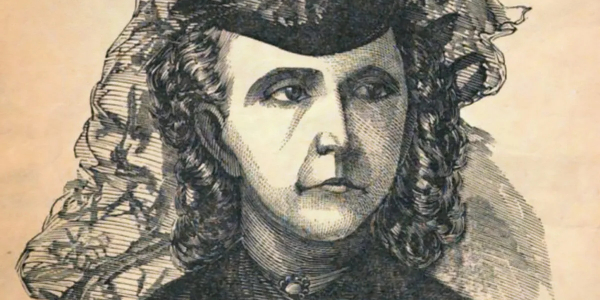
A lovely lady on a swing, dipping, swooping, gliding, soaring. A lovely lady with a lovely name. Lara. Lara with a rose twisted in her hair. And on the ground, her mother, my daughter.
And Mr. Crittenden, late of West Point, Kentucky and Virginia City. Truly the fairest of the pair. Mrs. Lane. Bewitching. If I didn't know otherwise, I'd say she'd been bred in the bluegrass.
[00:05:44] Speaker E: My daughter's first husband was from the bluegrass country.
[00:05:48] Speaker D: How about her second husband?
[00:05:49] Speaker E: He never did say. There was no one around who would ask him either. Oh, he was forever shooting things. Walls, chickens, various things.
[00:06:00] Speaker D: Your fair daughter has lived a fulsome life.
[00:06:03] Speaker E: Look at her up there, like a lady first.
[00:06:07] Speaker D: Hello, Laura. Up there, like a ladybird.
[00:06:12] Speaker E: You're going to MARRY My daughter, Mr. Crittenden.
[00:06:15] Speaker D: I fear she still grieves for her late husband.
[00:06:18] Speaker E: Her third husband was tragic.
Poor Colonel Fair.
[00:06:22] Speaker D: That's the one who blew out his brains, isn't he?
[00:06:25] Speaker E: I wonder why, Mr. Crittenden. Yes, you're going to marry my daughter.
[00:06:32] Speaker D: If she weren't still grieving for the Colonel. Why does she still bear his name? Why does she still call herself Laura Fair?
[00:06:40] Speaker E: Why not?
Look at her swinging like she does. Have you seen a woman more fair?
[00:06:47] Speaker D: No.
[00:06:49] Speaker E: Laura.
Laura, come down here.
Oh, the grace of my daughter.
[00:06:55] Speaker D: She is lovely.
[00:06:57] Speaker E: About 32, going on 33. And she doesn't swing as high as she used to.
Mr. Crittenden.
[00:07:07] Speaker D: Yes?
[00:07:07] Speaker E: Forgive me for being rude. I forgot to ask you. How is your wife?
[00:07:13] Speaker D: In the best of health, thank you.
[00:07:14] Speaker E: You must tell her soon that. Mama dear. You get on the swing, Mama dear. Mr. Crittenden will give you a star. Oh, some other time.
Mr. Crittenden and I were just talking about Mrs. Crittenson, dear. Oh, how is she?
[00:07:28] Speaker D: In the best of health, thank you.
[00:07:29] Speaker E: Have you told her?
[00:07:31] Speaker D: I told her you bore her no malice.
[00:07:33] Speaker E: What did she say?
[00:07:35] Speaker D: That she likes you too.
[00:07:36] Speaker E: Oh, I'm so happy. Now you go home and tell her you want to marry me.
[00:07:42] Speaker D: My dear Laura, you go home and
[00:07:44] Speaker E: tell your wife you want to marry my daughter.
Come along, Laura dear.
Let's cat.
[00:08:07] Speaker D: So they went into the house and they tatted Mama and Laura.
And while they're doing this, let me fill you in with some background notes.
Laura and Mama had newly arrived from Virginia City, where their family style rooming house had netted them $45,000. During the years and the welter of collecting the rents, changing sheets and towels and setting the board with succulents. Mama had gained and lost three sons in law. It seemed the fate consistently made her daughter a hard woman to be married to. Laura's three husbands, each of them died.
And as to our other principal, Alexander Parker Crittenden. He was a corporation lawyer with a wife and seven children and two grandchildren. Once hot and dusty and alone in Virginia City, he happened into Laura's house, made known his desire for a bath and rest. No sooner had he changed into fresh linens and had listened to Laura's tale of how she had become widowed recently, than he became that weekend, her star border. And in turn, Laura and Mama were so taken with his quips and twinklings that they followed him to San Francisco.
They took a house on Nob Hill and there tatted and waited for a proposal of marriage. They understood the delay. They comprehended that Mr. Crittenden's wife was of a peculiar mold.
[00:09:28] Speaker E: How is Laura, Alexander?
[00:09:30] Speaker D: Fine, ma'. Am. Just fine.
[00:09:32] Speaker E: And her mother?
[00:09:33] Speaker D: Eager.
[00:09:34] Speaker E: Eager?
[00:09:35] Speaker D: Yes, ma'. Am. She wants me for her son in law.
[00:09:38] Speaker E: And no wonder. You're a fine man, Alexander.
[00:09:42] Speaker D: Thank you, ma'. Am.
[00:09:43] Speaker E: And a good father I try to be. And an excellent husband.
[00:09:47] Speaker D: Yes, ma'. Am.
[00:09:48] Speaker E: Such a man as you is hard to come by. Alexander, dear.
I should miss you.
[00:09:53] Speaker D: I should miss you.
[00:09:54] Speaker E: Then it's settled. Laura and her mother will be our good friend.
[00:09:59] Speaker D: But Laura wants me for her husband. She keeps asking me. And her mother, too, dear. What?
[00:10:06] Speaker E: Tell him. No, but nicely.
[00:10:09] Speaker D: I've told them.
[00:10:10] Speaker E: Keep telling them.
[00:10:13] Speaker D: You're a remarkable woman.
[00:10:15] Speaker E: Thank you, Alexander.
[00:10:16] Speaker D: To be friends with a woman who wants to take me away from you.
[00:10:20] Speaker E: I respect ambitions and honesty. Laura has both.
That she should love you has my complete understanding.
[00:10:27] Speaker D: Ma'. Am.
[00:10:28] Speaker E: Yes.
[00:10:29] Speaker D: Alexander, I must tell you that you are a flower.
Womanhood should be proud to number you among its sisters.
[00:10:38] Speaker E: How many's the time, Alexander? We have an appointment for dinner tonight.
[00:10:42] Speaker D: Yes, ma'. Am.
Ma'. Am.
[00:10:44] Speaker E: What is it, Alexander?
[00:10:46] Speaker D: Laura loves me. And I think I might love her right back.
[00:10:50] Speaker E: Why then eat your heart out, Alexander.
Now hurry, dear. We're going out to dinner. Oh, I've sent a message to Laura to meet us at Furbisher's for dinner. Oh, I do so enjoy watching her eat. She's so ravenous.
Well, hurry. Hurry along.
Mr. Crittenden.
[00:11:30] Speaker D: Yes, Laura?
[00:11:32] Speaker E: Isn't today a pleasant one, though?
[00:11:34] Speaker D: Every day is pleasant when I'm near you, dear Laura.
[00:11:37] Speaker E: And last night. How wonderful sitting between you and your wife.
What a wonderful woman she is.
[00:11:44] Speaker D: I wish you two wouldn't like each other so much.
[00:11:46] Speaker E: We both have the same consuming interest in life, Mr. Crittenden. Me.
[00:11:51] Speaker D: Laura.
[00:11:52] Speaker E: Yes.
[00:11:53] Speaker D: I must tell you that you are a flower.
Womanhood should be proud.
[00:11:59] Speaker E: When are we going to get married, Sue? Upon your honor.
[00:12:02] Speaker D: Upon mine.
[00:12:03] Speaker E: You're a liar, Mr. Crittenden. Therefore. Therefore I shall not see you again. Ever.
[00:12:08] Speaker D: Laura.
[00:12:08] Speaker E: I've thought it over. And that's the way.
[00:12:10] Speaker D: I love you, Laura.
[00:12:11] Speaker E: And you love your wife, too.
[00:12:12] Speaker D: I die without you.
[00:12:13] Speaker E: Love your wife more than you love me.
[00:12:16] Speaker D: No.
[00:12:16] Speaker E: Swear it.
[00:12:18] Speaker D: I swear it.
[00:12:18] Speaker E: Liar.
[00:12:19] Speaker D: I mean it, Laura. You'll see. I'll get rid of her somehow and I'll marry you. I'll make her see that I don't love her.
I won't even kiss her anymore.
[00:12:30] Speaker E: Swear it.
[00:12:31] Speaker D: I swear.
[00:12:34] Speaker E: I'll race you to the tree, Mr. Cricken.
[00:12:36] Speaker D: All right.
[00:12:37] Speaker E: Come on. Come on, mister.
[00:12:58] Speaker D: After that, there were more foot races.
[00:13:00] Speaker E: When is he going to marry you, Laura? Soon.
[00:13:03] Speaker D: And much swinging in the garden.
[00:13:05] Speaker E: Has he set the date for your marriage yet? Laura.
Laura, Come down out of there and talk to me.
[00:13:13] Speaker D: And the tatting session.
[00:13:15] Speaker E: Mama.
What? I'm weary of his excuses.
[00:13:19] Speaker D: And one day, wearily, she wandered down Market Street.
There was a shop on Market street run by a fellow who specialized in four shooters.
Now, a four shooter is the same thing as a six shooter. But it's for ladies because it weighs two shots less.
Now, this fellow who specialized in four shooters was such a persuasive salesman that no sooner had Laura pressed her pert little nose against the shop window than that he had her inside measuring her palm for pistol grips when this chap let her go. Laura was the proud owner of a pearl handle pistol which this chap personally guaranteed. And that was in the days when a guarantee meant something.
Also, you must be told that on the morning the purchase was made, Laura had been without a husband for one whole year. Laura had never experienced this omission since she was 18 years old.
So, gun in purse, she took to following Mr. Crittenden around.
One night she followed the gentleman and his wife through the fog onto a boat called El Capitan. This was the ferry boat between Oakland and San Francisco. Its skipper, you remember, was Bill Tranchell, the heavy handed fellow who liked to entertain on his glass enclosed bridge.
A toast.
Thank you, Captain. Thank you very much. To your very good health, sir. And to the health of your very charming wife.
[00:14:43] Speaker E: And to yours, Captain.
[00:14:45] Speaker D: Thank you, ma'. Am.
This place is getting overrun with chugboats.
That'll show em.
Well, shall we drink? Go right ahead.
Ah, ma'. Am.
[00:15:06] Speaker E: Yes, Alexander?
[00:15:07] Speaker D: Tonight, somehow you appear radiant.
[00:15:12] Speaker E: Oh, dear Alexander.
[00:15:15] Speaker D: Ma'. Am.
You're very dear to me, dear, dear Captain. You don't mind if I kiss the lady?
You just go right ahead.
Ah, dear lady Laura.
Now you listen here.
[00:15:38] Speaker E: You said you wouldn't kiss her anymore.
[00:15:53] Speaker D: I leave you for the moment with this note.
Though he died face to the deck, Mr. Crittenden was not buried at sea.
You are listening to crime classics and your host, Thomas Highland, and his report to you on the incredible trial of Laura D. Fair.
In 1870, San Francisco was a city where violence was commonplace. But this violence was by far predominantly of the species male slaughtering male or male doing in female. So when Laura Fair shot Mr. Crittenden on a ferry boat, he practically invented a category and thereby caused a stir. It planted ideas in feminine minds where such ideas never dared to be.
The sale of four shooters skyrocketed and somehow the sale of marriage licenses. Likewise. The episode on the ferryboat was a shot in the arm for the suffragette movement to the entertainment business slump, as many a husband spent more evenings in the bosom of his family. It was a city seething with unrest, with slow change, with static passion. It was a city whose entire attentions were focused on the trial of Laura D. Fair. For the murder of Alexander Parker Crittenden.
There will be Order in the court.
You may continue with your testimony, Captain Fanshell.
There he was, kissing that lady over there.
[00:18:08] Speaker E: I refuse to be referred to as that lady over there. I was his wife. No, you are not. I was
[00:18:17] Speaker D: Mrs. Ferrer.
[00:18:18] Speaker E: Yes, your Honor.
[00:18:19] Speaker D: How do you explain you were Mr. Crittenden's wife?
[00:18:23] Speaker E: I was not that woman over there. I refuse to be referred to as that.
[00:18:28] Speaker D: You will get your chance to testify, Mrs. Crittenden. Mrs. Fair will answer the question. I thought I was on the witness box here. You're right. In a moment, Captain, I wish to hear why Mrs. Fair considered herself to be the wife of Mr. Crittenden.
[00:18:42] Speaker E: Since the moment we were both born, our love was made in heaven. And our marriage, too.
[00:18:50] Speaker D: Will I warn the Vexators that another such outburst may cause me to clear the court?
Go on, Mrs. Pear.
[00:18:59] Speaker E: Thank you.
[00:19:00] Speaker D: You're quite welcome.
[00:19:01] Speaker E: My feelings for Mr. Crittenden would have been profane had they not been made sacred in heaven.
[00:19:09] Speaker D: Silas.
Silence.
Silence.
The sergeant at arms will bring forward immediately the parties that applaud it.
[00:19:17] Speaker E: I applaud it more than anyone else, you, Honor.
[00:19:20] Speaker D: The sergeant at arms will bring forward that lady applauded more than hurt. And will bring forward that man, too.
[00:19:26] Speaker E: Judge, it was my fault.
[00:19:27] Speaker D: Of course not, Mrs. Spratt. You were not to blame for the disturbance.
[00:19:32] Speaker E: Well, Judge, human nature could not stand the denial of the truth by that lady over there.
It was I, indeed, who was married to Mr. Crittenden.
[00:19:42] Speaker D: What is your name, sir? Francis M. Hughes. Did you applaud? I stamped my foot. Why did you stamp your foot?
I felt a compulsion. Why? I was carried away with what Mrs. Fair said, and I felt a compulsion. I fine you $25, Judge.
Yes, Mrs. Fair.
[00:19:58] Speaker E: I will pay it.
[00:19:59] Speaker D: You are dismissed, Mr. Hume. Bless you, Mrs. Fair. Bless you, ma'. Am.
[00:20:03] Speaker E: Thank you, Mr. Hume.
[00:20:05] Speaker D: And your name, madam?
[00:20:06] Speaker E: Emily Pitt Stevens.
[00:20:07] Speaker D: Did you applaud?
[00:20:08] Speaker E: I said.
[00:20:09] Speaker D: Good, good.
[00:20:10] Speaker E: And I put my hand down on the bench in front of me to go.
[00:20:13] Speaker D: You are fined $25.
[00:20:14] Speaker E: But I made no noise with my feet.
[00:20:17] Speaker D: But with your hand.
[00:20:18] Speaker E: You did with my hand. I did.
[00:20:20] Speaker D: You were fined $25.
[00:20:22] Speaker E: I will pay it. Thank you, Mrs. Fair, and thank you. I rather believe you than that woman over there.
[00:20:29] Speaker D: Mrs. Fair, you will have to draw heavily upon your bank if you will pay the fines of all who have brought it.
[00:20:36] Speaker E: As long as you fine them. For I will pay those fines, your honor.
[00:20:40] Speaker D: Just a moment, Captain.
I just wanted you to know what could happen, Mrs. Fair.
[00:20:46] Speaker E: Thank you, your honor.
[00:20:48] Speaker D: You're welcome, Captain. You may proceed. And Mrs. Fair came in and shot him with a four shooter.
That's all.
Thank you, Captain. You may step down.
Yes, I have the court reports here, and that's what they say.
And if you think this was an unseemly way to conduct a trial, I have something else here. I'd like to read it to you.
This is a consensus of legal opinion of the time, and I quote, the trial was conducted in the main, thoroughly and well, with somewhat less regard for the decorum of the courtroom than is customary in most Eastern cities, though far in advance of the practice in New York City in this respect.
Unquote.
And now that we have resolved any uneasiness you may have had about the conduct of the trial, let's listen in again.
Mama on the stand is an imposing figure. She wears brocaded black and a great veil that drops from her hat to her waist. Her feet, however, were cold.
Bring the lady a foot warmer.
That cushion will.
[00:22:08] Speaker E: Thank you, Manette.
I think that'll be much better, Judge. Thank you.
[00:22:13] Speaker D: Your feet will warm up in no time at all.
[00:22:16] Speaker E: Oh, I'm sure of it.
[00:22:17] Speaker D: And now, what were you saying about your daughter?
[00:22:20] Speaker E: I've always had trouble with her.
[00:22:22] Speaker D: I know what you mean, being a parent myself.
[00:22:25] Speaker E: Oh, not like Laura.
[00:22:26] Speaker D: What do you mean?
[00:22:28] Speaker E: Doctors, doctors, doctors.
My daughter has tried to kill herself on numerous occasions.
There's madness in the family.
Besides, my daughter's second husband was mad.
I don't think that helped. Grief and dust is a madness, I tell you. Raising Laura was trying, but I think I did a pretty good job.
Although my daughter is not sane, you know.
[00:22:57] Speaker D: Not sane.
[00:22:58] Speaker E: Crazy.
[00:23:10] Speaker D: And doctors were called to corroborate, and this they did. Little known facts about Laura Fair were brought to light and caused more nudging of elbows than applause.
Some of her ailments described by the learned physicians had symptoms that weren't talked about very much in those days. One medico described the raving exhibition put on by Laura, a recounting of which held spellbound his students at Medical College. Another doctor described the malady owned by Laura Fair so vividly in one of the trade journals that he was considered 20 years ahead of his time.
When faced with these revelations, Laura accepted them by lowering her eyes modestly.
Dr. Leonard Bifrosser, Chief spokesman for the doctors, summed up medical testimony by suggesting strongly that Laura was unconscious when she shot Mr. Critten. Just a moment.
That's what it says.
Laura was unconscious when she shot Mr. Crittenden.
Back to the trial now. And the lady who became Mrs. Crittenden by marrying Alexander in the city hall somewhere in Kentucky.
[00:24:15] Speaker E: It is ridiculous to believe there is madness in that woman over there. She's vicious, predatory. And since the moment she was thrown in contact with my husband, she pursued him, worried him, and pled with him to marry her.
That this necessitated getting rid of me didn't worry her in the least. She killed my husband out of frustration and anger. That woman there.
[00:24:38] Speaker D: The high spot of the trial was on a morning in November. The court had denied Laura permission to lie on her lounge, upon which she had reclined throughout the trial. So Laura has been made to arise and take the stand. Was so sworn in, demanded and received a foot warmer and said interesting things like this.
[00:24:58] Speaker E: I told Mr. Crittenden to let his wife keep the furniture. I told him we could get new furniture and a new home.
And that in every corner in each room we could kiss. And he could hold me in his arms in each chair, sit by me on the sofa, hang over me while I played his favorite march on the
[00:25:16] Speaker D: piano in the afternoon. She enthralled listeners with this.
[00:25:21] Speaker E: And I remember well when Mr. Crittenden took me on his knee, put arm about my neck, his dear face close to mine.
And he whispered, shall I say it, Jack?
[00:25:33] Speaker D: Please do.
[00:25:35] Speaker E: He whispered that he would cross mountains unsharved, walk through storm uncovered to come to me. He said he cared not for hardship nor exposure. For every step he took brought him nearer to me, to the other and better half of his own soul. He would tell me, shall I go home?
[00:25:53] Speaker D: Please do.
[00:25:55] Speaker E: The night it is said, I shot him, I can remember only glass. Glass cold to the touch. And through it a disagreeable and peculiar voice.
[00:26:04] Speaker D: Did you recognize the voice?
[00:26:07] Speaker E: That woman over there?
[00:26:09] Speaker D: Continue.
[00:26:10] Speaker E: I put my hand against this glass, and it opened. And I saw Mr. Crittenden leaning close to a woman and kissing her. And I felt myself slip into an awful pit of blackness.
I do not remember how I got away from there, of what was done to me after.
[00:26:44] Speaker D: Gentlemen of the jury, have you reached a verdict? We have, your honor. The accused will rise from her lounge and face the jury.
The jury will face the accused.
And what is your verdict?
Guilty of murder in the first degree.
Laura was led away to jail. An enterprising young reporter of the time, Garth Prebles, interviewed her in her cell, where he learned and had published the fact that Mrs. Fair had spent $12,000 in her defense. Chicken feed to what she spent on her second trial, which was in the amount of $30,000. And which broke her. Where this 30,000 went to is a mystery, since the second trial was not nearly so spectacular as the first. Captain Billy Transell of the ferry boat El Capitan somehow was not there as a witness. There was a new judge, too, who in later years became known as Kindly Judge Reardon. And a new jury. 12 men and true out of 400 examined.
[00:27:58] Speaker E: And our love was a greater love than is given to most women.
[00:28:02] Speaker D: That was the second trial, and that was Laura again. And this time, another verdict. Not guilty.
So after acquittal, she went on a lecture tour and told of her hardships.
That was Mama Tambourine handler, advance man and treasurer.
[00:28:20] Speaker E: How did we do, Mama? A dollar eighty five when you left it tonight, honey.
Pet it up a little. Promise, Mama, will you? I'll make it real peppy, Ma.
[00:28:43] Speaker D: Mama passed her last tambourine one cold winter's night in Sacramento in the year 1889. But Laura lived on. She lived until the age of 82, after another husband and another long period of widowhood. Until the moment of her death, she insisted that Mr. Crittenden had only been her very good friend. And once, in a moment of mutual transgression, they held each other's hand.
That's what it says right here.
[00:29:39] Speaker E: Foreign.
[00:29:44] Speaker D: Just a moment. Thomas island will tell you about next week's crime classic, Laura D. Fair. Tonight's crime classic was adapted from the original court reports and newspaper accounts by Morton Fine and David Friedkin. The music was adapted from themes of the period and conducted by Bernard Herman. And the program is produced and directed by Elliot Lewis. Thomas island is portrayed on radio by Lou Marrow. In tonight's story, Mary Jane Croft was heard as Laura and Florence Walker as Mama. Featured in the cast were Herb Butterfield, William Johnstone, Paula Winslow, Gene Wood and Joseph Granby. Hugh Douglas speaking. And here again is Thomas Hyland. Next week, Ham, England, in the year 1673, a time of money cutting and highwaymen and, of course, violent death. My report to you will be on the Allsop family. How it diminished and grew again. Thank you. Good night.
Crime Classics has come to you through the worldwide facilities of the United States Armed Forces Radio and Television Service.
[00:30:53] Speaker A: That was the incredible trial of Laura D. Fair from Crime Classics, here on the Mysterious Old Radio Listening Society podcast once again.
[00:31:02] Speaker D: I'm Eric. I'm Tim.
[00:31:03] Speaker C: And I'm Joshua.
[00:31:05] Speaker A: They should have renamed named this. Wait. What?
What?
Huh? That should have been the name of this one. Huh? Are you kidding me? What? That was my reaction the entire time of listening to this. This is so Crazy. This trial, this story. What?
I should not have enjoyed this. There's nothing about this that goes into my sphere of, oh, I'll like that.
[00:31:30] Speaker B: This is exactly the. The line of discussion I was interested in hearing about this episode.
[00:31:36] Speaker A: But I'll be damned.
Wow, that was fun in a really crazy way from the narrator host. I loved his style of wait, like, silence for 10 seconds. Yep, that's what it says.
That stuff was killing me. But also, what was. What is happening that this woman got free. Which, by the way, I'm really jumping all over the place. But the $30,000 for a second trial, they don't know where the money went. She obviously bought everybody off the judge, Everybody to get out of this. The boat captain that didn't come back, he got paid to not testify. This is why I think she got off. I think she used her money to get out of this. But anyway, I love this.
[00:32:21] Speaker C: Tim, did you do any research on the actual case? One bit. Okay.
[00:32:27] Speaker A: That a boy.
[00:32:30] Speaker C: I'm glad I did.
We can come back to that later. I think this stands on its own, but the trial itself is interesting, and the main reason I looked it up is because of some vagaries within the script.
Specifically the weird dancing around her psychological condition and how it was something we didn't talk a lot about. And the professor who spoke to it was considered 20 years ahead of his time. And that's. It's during this segment that is one of the moments in which Hyland double checks his notes like, this is crazy. And all of that leads to her claim that she blacked out and doesn't remember committing the murder.
[00:33:14] Speaker B: Right.
[00:33:15] Speaker C: So that just seemed like there's something weird here that they can't talk about in 1953.
[00:33:22] Speaker B: I'll actually start with why did I bring crime Classics to our desk?
One is, hey, we all work really hard and we're good people. We deserve crime classics.
Hey, I think I'd like a Crime Classics and I can have one. The Grown Ups.
[00:33:37] Speaker D: Yeah.
[00:33:40] Speaker B: So I dug around a little bit, and when I heard this one, I was intrigued by this notion that at the outset, it's this whole collection of characters who are behaving absurdly, irrationally, incorrectly.
And it's a topic that we have discussed in this podcast before. I know Eric has mentioned that if there's a story where characters just react to things wrong, disengages correct. I think I have a similar thing to if characters make bad decisions for no reason beyond just because the plot's gotta go. So I Gotta be dumb for a minute.
[00:34:16] Speaker A: Sure.
[00:34:17] Speaker B: That I disengage.
[00:34:18] Speaker A: Deus ex Domina.
[00:34:20] Speaker C: Yes.
Domino. Bah.
[00:34:24] Speaker B: I think Joshua has a little more tolerance for characters.
[00:34:27] Speaker C: I'll listen to anything.
Characters being weird.
[00:34:31] Speaker B: But I think because the context of there's this lady who wants this guy to leave her husband and marry her. Like that part makes sense. And within that context, everyone's just behaving so weird.
Everyone's weird.
[00:34:44] Speaker C: But underneath it all is a clear satirical point. I don't know who said it, but comedy is just a funny way of being serious.
I think this script communicates the story and the drama and the stakes of the story, but does it in a satirical, exaggerated manner that I'm totally on board for?
[00:35:07] Speaker B: Yeah. And I believe this very successful version of something that other places we've been critical of characters are behaving strangely. That here it's correct and right. That they're behaving wrong.
[00:35:17] Speaker A: Yeah.
Here's my take on the production of telling this story.
So the story itself is a lot of, whoa. Thank you for sharing that with me and telling me that, like a documentary, like, did you know this happened? So I love that part of it. But now how they told the story Right. And Joshua just hit on it. When you read this, it's so crazy and ridiculous. I think the only way you can tell this story is by doing it as an over the top farcical weirdness. Everybody was so okay with everything that was going on and so removed from reality of how weird everything was.
[00:35:55] Speaker B: And I'll put in there that description of San Francisco is a place now where you carry your gun under your jacket and you can watch the Can Cannon Mix Company. I love that line setting the tone of this is a place where just feral bestial murder is barely contained by civilized behavior.
[00:36:16] Speaker C: And this case shocked and captivated those people at that time.
[00:36:21] Speaker B: Yes.
[00:36:21] Speaker C: So even above and beyond.
[00:36:23] Speaker B: So it makes a strange version of both of those things. This is a strange version of violence and a bizarre version of just polite society.
[00:36:32] Speaker A: But I like the fact you read this, say, okay, we're turning this into a crime classics. How are we going to write this? I'm repeating myself. But I just want to make sure.
I love that you read this and you go, you guys, we got to do this as a farcical.
You know?
[00:36:46] Speaker C: But that's true of all the crime classics.
[00:36:49] Speaker A: The Hanging, the Picture. Wasn't that a crime classic? Yeah, I thought that was pretty straight.
[00:36:56] Speaker C: Oh, there's a lot of tongue in cheek. A lot of sardonic shifts further.
[00:37:02] Speaker A: It seemed much further than the picture hanger.
[00:37:05] Speaker C: It starts right away with some comedy gold, in my opinion, which is the desperate, impotent, post shooting tooting of the foghorn.
[00:37:18] Speaker A: Yes.
[00:37:24] Speaker C: Iceberg.
[00:37:25] Speaker D: Yeah.
[00:37:27] Speaker C: I mean, even if they didn't go for the joke that he inadvertently communicated that there were icebergs in the San Francisco Bay, it's still just a hilarious use of that sound effect.
[00:37:38] Speaker A: Didn't he also say something about another stupid tugboat?
[00:37:41] Speaker B: Yes. And he was.
It got to the point of explaining why he leaned so heavily on this is because.
Cause he hates the tugboat.
[00:37:47] Speaker A: Cause he hates the tugboats so much.
[00:37:50] Speaker C: But it is just such a non alarming sound to alert people to murder.
Reminds me of that Zamboni scene in Austin Powers where it's like slowly coming at him and he's screaming as if he's about to be run over at any second.
[00:38:07] Speaker A: Steamroller in A Fish Called Wanda.
[00:38:09] Speaker C: Yes.
I also want to call out Bill Johnstone, the Shadow as.
What was his name? It was really hard to say. All of them struggled to say it, but they did an admirable job.
Crittenden, he was fantastic. Everyone's fantastic in this.
[00:38:26] Speaker A: Yes, Fantastic in. It's so weird.
[00:38:30] Speaker B: Well, fantastic thing. I can't wait for the next one to talk.
[00:38:33] Speaker C: Yeah.
[00:38:34] Speaker B: Now you say something bizarre. Now you say something.
[00:38:37] Speaker C: I love entering that first scene where Laura is on the swing and she's got flowers in her hair and her mother is there. And immediately I'm imagining that this is a very young girl, teenage girl.
And so then when she says, oh, she's 32 going on 33, she can't swing as high as she used to.
[00:39:01] Speaker B: These lines are all just sort of charged with entendre.
[00:39:05] Speaker C: Yes.
And then just the complete audio double take you do when the story moves from Mr. Crichton winner going to marry my daughter to Mr. Crichton, how was your wife?
[00:39:18] Speaker A: Yes.
That moment is literally sit up and hit pause, go back 10 seconds because I obviously just fell asleep or something like what is happening.
[00:39:31] Speaker C: What I enjoy is it keeps one upping itself because then we switch to the scene with Mrs. Crichton and she's absolutely dispassionate about the entire affair between
[00:39:45] Speaker B: their household of the transition of let's go tat.
[00:39:50] Speaker C: While they are tatting, presumably they're tattooing each other. I had to look it up. It's making lace.
I love how romantically stirred Bill Johnstone's character, Mr. Crichton, is by his.
By whatever's in front of him.
It's so hot how you accept my love of this other woman.
Kiss me.
[00:40:16] Speaker A: Yeah.
This story makes me not pay any attention to the telling of the story, meaning the production value or what they chose or all. I mean, I did, and we obviously already talked about that, but you couldn't screw this up for me listening for 30 minutes. Like, you could tell this story any way you wanted to, and I'd be like, what?
What is happening?
Who cheered? That's $25 fine.
[00:40:48] Speaker B: I don't notice my feet, but I pounded my fist like this. Right.
[00:40:52] Speaker C: But did you catch who that is? Who says I made no noise and pounded with my feet? Emily Pitt Stevens, who is a famous reformer. She was a leader in the suffrage movement as well as the temperance movement. So she was like, 50. 50, right.
So that is an important clue to the real case of Laura Farre.
[00:41:22] Speaker A: You looked it up?
[00:41:23] Speaker C: Yes.
[00:41:24] Speaker A: Tell us about it.
[00:41:25] Speaker C: So the ailment and her defense was menstrual insanity.
[00:41:29] Speaker B: Oh, no.
[00:41:30] Speaker C: But that's her defense.
[00:41:32] Speaker B: I was a little bit like, is that real?
[00:41:35] Speaker C: It's her defense. And she was also supported fully by the suffrage movement. Emily Pitt Stevens. Susan B. Anthony came to visit her.
[00:41:46] Speaker B: Wow.
[00:41:47] Speaker C: And they made a big case out of this case.
By today's standards, that seems like a little bit of a paradox. Because it does.
[00:41:55] Speaker B: I suppose that tucks into. This was the first time that a woman killed a man.
[00:41:59] Speaker C: Really? Yes. They hint at it throughout this script.
[00:42:03] Speaker B: If this is an acceptable defense, then there's gonna be a lot of dead men.
[00:42:08] Speaker C: Which I think was a 1950s point of view creeping as well. But some of the money, some of the effort to get her that second trial came from the suffrage movement.
Yes. That is a very Victorian idea that women are ruled by their weak bodies, that they are gonna snap vapors. Yes. And go crazy at any moment. But it was the only available defense to her.
[00:42:39] Speaker A: So she's not responsible due to mental insanity due to being female. I still like.
[00:42:45] Speaker C: You know, they're also fighting back against this double standard that wasn't addressed, obviously, in this funny 1950s version of it of Mr. Crittenden faced zero social or economic ramifications for having a wife and a mistress. But that can destroy a woman.
She is on trial. And yes, she did shoot this guy, but he made these promises. She has no recourse. This is a.
Literally a court of men. Women cannot serve on the jury. So the people sentencing her to death are all men. So it makes sense to play on the male stereotypes of what would drive a woman to do this. And in my research, the prosecution just hit hard that she's a vixen and a sexual predator, whatever the Victorian equivalent of sexual predator was.
[00:43:38] Speaker D: Woman.
[00:43:40] Speaker C: Trollop, Anthony Trollop. A very interesting case that I would love to read more about.
[00:43:48] Speaker B: That's also an interesting pair with the argument of we were married because my feelings, if they were not sanctified by marriage, would be profane to kind of fend off the sinfulness of her womanhood by arguing that my feelings are inherently righteous.
[00:44:08] Speaker C: Yes. And from the little bit I read, she got the second trial because of improper jury instructions given. In the first trial, the judge described the standards for insanity in too narrow of a way, and he told them
[00:44:25] Speaker A: to go into the room and find her guilty.
[00:44:29] Speaker C: Yeah. So in the second trial, they had more leeway to interpret the insanity defense, which makes more sense than probably, as presented in the radio show, why she was acquitted in. In the second trial.
[00:44:41] Speaker A: It's interesting because that makes more sense why her mother was saying, oh, she's crazy.
That helps her defense.
[00:44:49] Speaker D: Yeah.
[00:44:50] Speaker C: As much as I love crime classics, they are not a true account of events. And then it also. It's historical events that are seen from our point of view through yet another historical lens of the 1950s.
[00:45:04] Speaker A: Right.
[00:45:05] Speaker C: Which I think just makes it all the more engaging and fun to listen to and try to tease out all the various meanings of it all.
[00:45:14] Speaker A: If this wasn't a true story, like they just told this story, I would not like it at all.
You know, I just feel like this is boring and weird.
The hook of it is, wow, this happened. Or as Joshua's pointed out, they were close.
[00:45:32] Speaker B: As you were saying about the structure putting it of. We start with this woman shoots this man dead, and then to see what their actual relationship was is so crazy by itself, let alone. And then she's gonna shoot him.
[00:45:47] Speaker D: Yeah.
[00:45:48] Speaker B: That kept me engaged, even if it had been just pure fiction.
And then also it was sort of these three chapters of the Pre Murder the Trial, which was its own flavor of weird and nuts. And Mama needs a foot warmer.
[00:46:05] Speaker D: Yeah.
[00:46:06] Speaker A: What was that all about? Okay, I don't want to derail you.
[00:46:10] Speaker B: She was lounging the whole time in her trial.
[00:46:14] Speaker C: Well, there is the segment where Hyland comes back in and seems to be aware of just how ridiculous as presented this trial is, and goes, no, seriously, for real? Yeah.
[00:46:26] Speaker B: Yeah.
[00:46:27] Speaker C: Here's some authenticating historical facts about it. Here's an appraisal from legal experts of
[00:46:33] Speaker B: the time, and most insane thing outside of New York.
[00:46:36] Speaker C: Yes, exactly. That's a conclusion.
[00:46:40] Speaker B: Stop here. Insult New York real quick, and then go back out to our story
[00:46:46] Speaker C: again.
[00:46:47] Speaker B: For me, it paints this picture of this thin coat of civilization painted over madness.
[00:46:54] Speaker C: Exactly.
[00:46:55] Speaker D: Yeah.
[00:46:55] Speaker B: And then the third chapter of Post Trial, and I toured the countryside telling my story, and mom plays tambourine.
[00:47:04] Speaker C: And I did read she lived to be 82. She did try to do the lecture circuit, and it did not turn out well. I think she worked as a literary agent for a while.
[00:47:17] Speaker A: She widowed again.
[00:47:18] Speaker C: Yes, she widowed again.
Yeah. So that's a brave husband there.
[00:47:23] Speaker A: Yep.
[00:47:24] Speaker C: But once the fame of this trial wore off, she just sort of disappeared into obscurity. Back to that.
[00:47:30] Speaker A: So she was Kato Kalin.
[00:47:33] Speaker B: Wow.
[00:47:35] Speaker D: You.
[00:47:37] Speaker C: So we have so many historical lenses through which listeners have to peer through.
[00:47:44] Speaker A: I mean, what's that guy doing now?
[00:47:46] Speaker C: I think he died a while ago, didn't he?
[00:47:48] Speaker A: Did he? Did Cato Kaelin die?
[00:47:51] Speaker C: I sense a terrible digression.
[00:47:57] Speaker B: Hey, if you know Cato Kahlin died, please forego mentioning it in the comments,
[00:48:02] Speaker A: because we're gonna look it up.
[00:48:04] Speaker B: No one, I mean, outside of the Kahlan family needs to know.
[00:48:10] Speaker A: What if they don't?
[00:48:14] Speaker C: Well, Eric is looking this up because, of course he's going to.
One of the best lines goes to Mrs. Crittenden when she talks of inviting Laura to dinner. Oh, my God.
[00:48:26] Speaker B: Yes.
[00:48:26] Speaker C: It's the first time she gets the knife out a little bit when she says, I do so enjoy watching her eat.
She's so ravenous.
I was jealous of that line.
[00:48:37] Speaker B: It adds that little element of depth so that later on, I am not that lady. Please stop referring to me as that lady.
[00:48:44] Speaker D: Oh.
[00:48:44] Speaker C: And then Mr. Cretton is like, I wish you two wouldn't like each other so much.
[00:48:50] Speaker A: Right. Yeah. You're making this hard.
[00:48:52] Speaker C: And back to the real case. He was having an affair with Laura for so long, seven years before this. And I don't think we get that sense of or that length of time here.
[00:49:04] Speaker B: I was a favored guest at their bnb, and then they moved to San Francisco to be with me again.
[00:49:10] Speaker A: That's the most crazy, understanding wife forgiving, I should say. Yeah, okay, don't.
[00:49:17] Speaker C: You're not gonna marry her. But to the suffrage movement, what other choice did the wife have at that point?
[00:49:23] Speaker B: Well, I took as a sort of subtext here. He's a rich dude with grandkids that if he suddenly divorces his wife and marries again, that whole family's screwed.
[00:49:37] Speaker A: Sure.
[00:49:37] Speaker B: And new family's sitting in the catbird seat.
[00:49:39] Speaker D: Yep.
[00:49:40] Speaker A: I'M gonna look up catbird seat.
[00:49:42] Speaker B: Who's in raising Arizona.
[00:49:44] Speaker A: I've heard it. I just realized I don't really know the etymology. Cato Kaelin alive.
[00:49:49] Speaker C: Oh, I'm sorry. Cato.
[00:49:51] Speaker A: I want to find out.
[00:49:52] Speaker C: I'm sure he has a podcast with far more listeners than ours.
[00:49:56] Speaker A: I want to find out so badly that he is a patreon of ours at the two dollar level.
Hey, I'll take it.
[00:50:08] Speaker B: Yeah, no shade on the $2.
[00:50:10] Speaker C: No, no, I'll take a dollar.
[00:50:15] Speaker A: Well, should we vote?
[00:50:16] Speaker C: Yes.
[00:50:17] Speaker A: I enjoyed this. I don't really know if this Stand the test of time. I don't see it as much as a piece of radio drama as much as it is.
I just learned a bunch of facts about a thing that happened, so I enjoyed it, but I don't think it was a great radio show.
[00:50:38] Speaker B: I might well just listen to every Crown Classics episode, right? Classic. Classic. This is also a classic. These are all classics. That's a classic. These guys are all classics. Classics.
In particular about this one that I loved is the frenzied satire of it, the comedy of errors. Not comedy of errors, comedy of manners. And as we mentioned before, the characters are all hilarious and weird and engaging. And the host is always hilarious and weird and engaging. So I had a great time.
[00:51:09] Speaker C: Yeah, I'm gonna disagree strongly with Eric. This is absolutely a radio drama. I think it's is a unique and original radio drama because they create their own rules and follow them really well. But it is another very clever, sardonic installment of what I think is one of the golden age of radio's most underrated, in my opinion, radio programs. And I have to think it certainly is for me in 2026. But for people listening to it at the time, it is a really great antidote to the very morally didactic 1950s shows like Dragnet and this is your FBI. Cause it's very transgressive. It has this almost EC Comics quality. Isn't murder and violence hilariously fun kids?
And I think they get away with it because most of the crimes are in the past. I think we've.
[00:52:12] Speaker B: And it's educational.
[00:52:14] Speaker C: And it's educational. And then we mentioned this for Gunsmoke too. They did a lot of social commentary that I think Dragnet would never do because Jack Webb was a real buttoned up conservative guy. But they do a lot of social commentary and they get away with it because it's set in the old west. Like we're not talking about today.
[00:52:34] Speaker D: What?
[00:52:34] Speaker C: Same with X minus one we're talking about the future, not McCarthyism. Today, we're talking about space McCarthyism. So it's okay.
So I really enjoy it for that reason alone. And I think this is a really fun installment. I think it is only weakened by the fact that the restrictions of the day force them to dance around. I think what is the most fascinating aspect of this trial, and I don't think it's fair to judge them against the facts of the trial other than the first time I heard it, knowing nothing about the actual historical events.
That section in the middle where they skirt the menopausal defense seemed odd. I'm like, what aren't you saying?
Is this like a postpartum thing? Is this. There are lesbians involved in this.
What is going on?
So that's the only bump in the standing Stand the test of But I think this is absolutely a kind of forward looking, if anything else, but maybe not. I also feel like the 21st century, we've backslid in terms of returning to really morally didactic entertainment. So maybe this is a totally new breath of fresh air again in 2026.
[00:53:54] Speaker A: Don't get me wrong, I really enjoyed this.
So I just wanted to say that again, also, I enjoy it more now because you put it in a place for me that made me rethink how to view this.
Calling this an EC Comics version.
I went, oh, that's ex. I just saw the artwork of the COVID I just saw the entire comic book.
[00:54:20] Speaker C: I see that illustration of her bursting into the deck of the boat and
[00:54:24] Speaker A: blasting him or on the swing with crazy eyes.
Yeah, yeah.
[00:54:29] Speaker C: It draws itself.
[00:54:31] Speaker A: That's a really good analysis.
Tim, tell him stuff.
[00:54:34] Speaker B: Please go visit googlechwest.com, home of this podcast. We promise not to kiss our wives anymore.
[00:54:40] Speaker C: No, that's.
[00:54:40] Speaker B: That's not true.
[00:54:42] Speaker C: And by kiss, we're gonna kiss each other's wives.
[00:54:47] Speaker B: There will be some menstrual insanity.
It could be ours.
[00:54:54] Speaker A: Hey, Wendy.
[00:54:59] Speaker B: At ghoulushalights.com, you'll find other episodes dot com. Yes, other episodes of podcast we've done. We've done so many episodes. So many.
You can search around for, like, hey, have you done this one? You can put in a search bar and find out. Yes, we did that one. Maybe. Probably. We've done a lot. You'll find other crime classics we've done. Look around, have some fun. You'll also find our merchandise store. If you want to buy a T shirt or a hoodie or a coffee mug or stuff like that, you can do that. We'll sell one to you. We love you. And you'll find a link to our Patreon page.
[00:55:27] Speaker C: Yes. If you've had all the fun you possibly can
[email protected] you should go to patreon.com themorals and enter a whole new world of fun.
Sound like a Sea Monkeys advertisement?
[00:55:44] Speaker B: Sell sea monkeys.
[00:55:46] Speaker C: Yet you can become a member of the Mysterious Old Radio Listening Society.
And not only do you feel part of a community, we feel your money coming to us.
And it helps make this podcast happen.
[00:56:03] Speaker B: So it'll help pay for our next trial? Yes,
[00:56:09] Speaker C: it'll help pay for the apartment we're gonna have to rent after Tim's menstrual insanity.
So go to patreon.com themorals and become a member today.
[00:56:20] Speaker A: How many crime classics have we done?
[00:56:22] Speaker C: I would say four.
[00:56:24] Speaker A: Including this one.
[00:56:26] Speaker C: Yes.
[00:56:28] Speaker B: Yeah, I'll go with that. Four.
[00:56:29] Speaker A: This is our fifth.
[00:56:30] Speaker C: Oh, very close.
[00:56:31] Speaker A: Bathsheba Spooner.
[00:56:33] Speaker C: I love that one. Yep. And the Birkin Hare Birkenhair. The Death of a Picture Hanger.
[00:56:39] Speaker B: And then the Tarts guy.
[00:56:40] Speaker A: Bunny Bombler.
[00:56:41] Speaker B: Bunny Bombler.
[00:56:43] Speaker A: So here we go. I know. Looked it up.
[00:56:44] Speaker D: Hey.
[00:56:45] Speaker A: The Mysterious Old Radio Listening Society Theater company does performances of radio drama live on stage.
Classic old time radio shows, recreations of those and a lot of our own original work. Come see us performing radio drama live by going to ghoulishdelights.com there you'll find where to get tickets and get. And what we're performing and where and all of that.
[00:57:09] Speaker C: Always performing.
[00:57:10] Speaker D: Always.
[00:57:10] Speaker A: Constantly.
[00:57:13] Speaker C: We are stopping.
[00:57:16] Speaker A: I think it's about eight times a year. So every six weeks.
[00:57:18] Speaker C: Every six weeks. We are the late periods of Alzheimer recreation.
Just to keep that whole menstrual thing going, we
[00:57:29] Speaker A: also record.
[00:57:32] Speaker C: Quick check Patreon. How many people have we lost?
[00:57:36] Speaker A: We record the audio of those shows. That's another perk of being in Patreon because you get to hear our live performances. Hey, what's coming up next?
[00:57:45] Speaker C: Next we'll be listening to a Patreon request. The Grove of Ashtaroth from Escape. Until then, it's making lace.
[00:57:57] Speaker A: Ah, so tapestries.
[00:58:04] Speaker C: Yes.
Totally worth it.
[00:58:08] Speaker A: No, no. Do you see my face? How mad I am at myself?
[00:58:14] Speaker C: Oh, it's staying in.
Damn it.