Episode Transcript
[00:00:16] Speaker A: The mysterious old radio listening society podcast.
Welcome to the Mysterious Old Radio Listening Society, a podcast dedicated to suspense, crime and horror stories from the golden age of radio. I'm Eric.
[00:00:35] Speaker B: I'm Tim.
[00:00:36] Speaker C: And I'm Joshua.
[00:00:37] Speaker B: We love mysterious old time radio stories, but do they stand the test of time? That's what we're here to find out.
[00:00:42] Speaker C: This week, our Patreon supporter James requests a discussion of Poison, an episode from CBS Radio's legendary anthology of high adventure, Escape.
[00:00:54] Speaker A: Poison is Based on the 1950 short story by renowned British author Roald Dahl. Before becoming a writer, Dahl served in world war II as a fighter pilot in the Royal Air Force. His first published story, a Piece of Cake, describing a wartime flying accident, appeared in the Saturday evening post in 1942. Throughout the 1940s and 50s, Dahl built a reputation writing dark, often ironic short stories for adults, many of which appeared in magazines such as Colliers, Harper's, and the New Yorker. It was only later, beginning in the 1960s with books like James and the Giant Peach and Charlie and the Chocolate Factory that he became widely known as a writer of children's fiction.
[00:01:35] Speaker B: Poison first appeared in Collier's magazine in June 1950. The radio adaptation was broadcast less than two months later. It was written by James Poe, who worked extensively in radio during the 1940s and 50s, penning scripts for programs including Escape, Suspense and the Adventures of Sam Spade. Poe later transitioned to film, where he received Academy Award nominations for his screenplays for around The World in 80 Days and Cat on a Hot Tin Roof.
[00:01:58] Speaker C: There have been at least three other notable adaptations of Poison in the 75 years since it was first published.
Eight years after the escape version aired, the story was filmed as an episode of the television series Alfred Hitchcock Presents, directed by Hitchcock himself. Dahl later revisited the story for his British television anthology Tales of the Unexpected, where it appeared in 1980. Most recently in 2023. The story was adapted for Netflix as a short film by director Wes Anderson star Benedict Cumberbatch as Harry Pope. All four versions differ in striking ways, not only from one another, but from Dahl's original story itself. We'll discuss that in more detail later in the podcast.
[00:02:48] Speaker A: And now let's listen to Poison, starring Jack Webb and William Conrad. First broadcast July 28, 1950.
[00:02:58] Speaker B: It's late at night and a chill has set in. You're alone and the only light you see is coming from an antique radio. Listen to the sounds coming from the speaker, listen to the music and listen to the voices.
[00:03:10] Speaker D: Tired of the everyday routine?
Ever dream of a Life of romantic adventure.
Want to get away from it all?
[00:03:20] Speaker E: We offer you escape.
Escape designed to free you from the four walls of today for a half hour of high adventure.
Escape brought to you by your Richfield gasoline dealer and the Richfield Oil Corporation of New York. Marketers of Richfield Gasolines with xylene rich lube, all weather motor oil and other famous petroleum products. Look for the Richfield Eagle on the cream and blue pump.
[00:04:03] Speaker D: Tonight we escape to India and the story of a man trapped in his bed by a crate.
The most deadly poisonous snake in the world.
As Raoul Dahl tells it in his terrifying story, Poison.
[00:04:27] Speaker F: Listen, it's an awful good story. But to get the point, you gotta understand about two things. What kind of a guy Harry Pope was and what kind of a snake a krait is.
First, the krait.
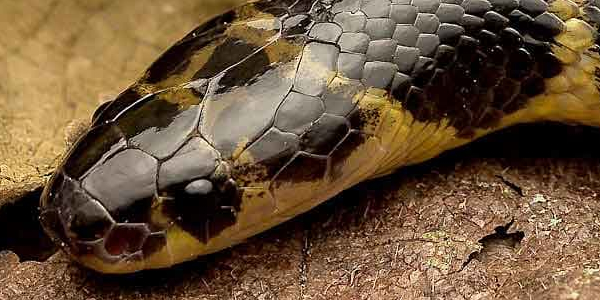
You spell it. K, R, A I, T. There in India, the crates are little snakes, sometimes not more than three or four inches long.
You have to look real careful if you're gonna see one at all. Really? Almost like a worm, except that it's the most poisonous snake in the world.
It can bite faster than a bumblebee. And when it does, you go off like a firecracker, swell up like a hot water bottle and in fly the angels crate.
Tiny little snake.
Now, about Harry. Harry Pope.
Funny guy.
He had it in for anybody who wasn't American, who didn't speak his language.
He called them foreigners. And he called them that army word, gook. Didn't matter if they were French, Italian or Japanese.
[00:05:19] Speaker G: Gook.
[00:05:20] Speaker F: Foreigner, he'd say. He was kind of buggy on the subject. Funny guy.
Well, Harry and me, we got sent out to Bombay on this construction job. And that's where the trouble started.
You see, except for the two of us, the crew was made up of local boys. Hindus and Moslems. 40 of them. Harry was like a cat in a room full of dogs. Had his back up every minute.
After a month or so, it began to wear him out. Got so his appetite wasn't right. He was smoking three and four packs a day and he wasn't getting his sleep. I used to try to straighten him out. Used to tell him he was wrong. Nah, Woody, there's no use talking. Listen, Harry, they're all good boys. Why don't you take it easy? Woody, you and I are good friends, but there are a lot of things you just don't understand. You ought to take it easy, Harry. They're all human beings, just like you and me. They're gooks, Woody. Foreigners. Look it, think about it this way. How'd you like your sister to marry one of them? I haven't got a sister. And anyway, you've asked me that before. Yeah, you see, you won't even make
[00:06:14] Speaker G: the effort to understand.
[00:06:21] Speaker F: Well, that's how it was with Harry. And you know about the crate.
Now, about what happened. It was June of last year. It was hot and sticky, even though the sun was down. I was putting on a clean shirt to go out.
[00:06:35] Speaker G: Oh, man, I'm really beat tonight.
[00:06:39] Speaker F: What's with you, Woody?
What's a clean shirt for? Going out? What do you got, a date? No, I thought I'd stop off at Dr. Ganderby's. He promised he'd show me the photos he made down in the leper colony.
[00:06:50] Speaker G: Ganderby?
[00:06:51] Speaker F: Yeah. These photos are supposed to be pretty interesting stuff.
How about it, Harry? Would you like to come along?
[00:06:56] Speaker G: Ganderby?
He's a Hindu. A gook. Foreigner. I don't want to spend no evening with a gook.
Shoot. Not old Harry.
[00:07:09] Speaker F: So I went off to the doctors, and Harry went to bed with the detective story. I had a very interesting evening later. Old Harry was plenty sorry that he stayed home.
I didn't leave the doctors until around midnight. And when I drove back through the sleeping city, it was very quiet and dark.
I thought about the pictures of the lepers I'd seen.
I remember thinking, I hope Harry's awake, because I'd like to tell him about those pictures.
And when I got home, I was glad to see the light in his room was still burning.
Harry, you up?
I didn't get an answer. Probably fell asleep reading.
Harry, you awake? Harry?
[00:07:55] Speaker G: Woody, stop yelling.
[00:07:57] Speaker F: Harry, boy. What's the matter, kid?
[00:08:00] Speaker G: Stop. Woody.
Take off your shoes.
[00:08:04] Speaker F: I couldn't tell what was the matter, but I knew he was serious, whatever it was about. So I did what he wanted.
He was in bed under his netting with a reading light on, his book on the floor.
He lay quite still, and the sheet came halfway up his chest.
He was wearing those corny pajamas of his with the big checks all over them. And the pajamas were soaked in the sweat that was rolling off his face.
He lay like a corpse, flat on his back with his hands lying dead on the bed. His hands, even the backs of him, were sweating.
His eyes looked like he was watching. Somebody saw his leg off. Woody. What's the matter, boy? Shh.
[00:08:42] Speaker G: It's a crate.
[00:08:45] Speaker F: Crate? Where?
[00:08:46] Speaker H: Shh.
[00:08:46] Speaker G: For Mary's sake.
[00:08:47] Speaker F: Shh.
Where? Where's the crate? In here.
Under the netting?
[00:08:53] Speaker G: No, under the sheet.
[00:08:57] Speaker F: Where'd it bite you?
[00:08:58] Speaker G: It hasn't yet.
[00:09:01] Speaker F: Where under the sheet.
[00:09:03] Speaker G: Right on my belly.
[00:09:04] Speaker H: Holy son.
[00:09:06] Speaker G: You gonna wake it up if you don't cut out that yellow.
[00:09:10] Speaker F: How'd it get in there?
[00:09:11] Speaker G: I don't know.
Came up under the net, I guess.
Or it's been in the bed all day.
[00:09:18] Speaker F: Is it a big one?
[00:09:19] Speaker G: No, crate don't have to be big.
Looked about 3 or 4 inches come along my side.
I didn't move.
Went under the sheet.
One of them folds, one of them wrinkles there over my belly.
[00:09:34] Speaker F: How long ago did it come?
[00:09:36] Speaker G: Hours.
Hours and hours and days and weeks. Woody, I've been waiting a year for you to get home.
[00:09:42] Speaker F: Must be sleeping in there, huh?
[00:09:44] Speaker G: Yeah, I think it is.
[00:09:46] Speaker F: Now listen, Harry.
Maybe it'll wake up and go away. Go home or something, huh?
[00:09:50] Speaker G: I can't wait, Woody. I've been lying here scared I'd move. Suddenly wake it up.
[00:09:54] Speaker F: Yeah, you're scared and it'll bite.
[00:09:56] Speaker G: I've been lying here scared to death. I cough.
[00:09:58] Speaker F: All right. Don't you worry about a thing, Harry. I know just what to do.
[00:10:01] Speaker G: Where you going? Woody, don't leave me.
[00:10:04] Speaker F: The thing was to be ready to cauterize the bite right away. I'd heard about one method. I went out to the kitchen and I got a whole fistful of those big kitchen matches and I took them back to the bedroom, arranged them all with the heads together. Held them like you'd hold a torch.
[00:10:16] Speaker G: What are you gonna do? What are the matches for?
[00:10:18] Speaker F: Now listen, Harry, here's how it goes. These will cauterize, see? So we count three, flip back the sheath and you jump out of bed. Now, you follow me. No, no. Listen, Harry, if the crate bites you, I strike the bundle and press it against the spot and it burns out the poison, see, while the matches.
[00:10:30] Speaker G: Get away from me. You're a bubble headed maniac.
[00:10:32] Speaker F: No, Harry, I'm only trying to.
[00:10:33] Speaker G: Shh. Listen, Woody, take your matches and your bright ideas and get the heck out of here. Call the doctor.
[00:10:38] Speaker F: The doctor? I never thought of that.
[00:10:40] Speaker I: Shh.
[00:10:40] Speaker G: I get to it.
[00:10:41] Speaker F: Okay, Harry, who do you want? Ganderby or Forsyth? Forsyth.
[00:10:45] Speaker G: Things are bad enough without you. Gotta bring that gook in here.
[00:10:53] Speaker F: I dug through the telephone book And I found Dr. Mattson B. Forsyth's number and I dialed it.
[00:11:07] Speaker J: This is the residence of the Dr. Matumbi. Forsyth, please.
[00:11:12] Speaker F: Yeah, let me speak to the doctor. It's very urgent.
[00:11:14] Speaker J: Who is calling, please?
[00:11:15] Speaker F: Arthur Woods.
[00:11:17] Speaker I: Who?
[00:11:18] Speaker F: Woods. Arthur Woods.
[00:11:20] Speaker J: Spell, please.
[00:11:22] Speaker F: Woods.
W, W, O O. O.
[00:11:28] Speaker J: You have already said. Oh, I have already written O. Have the kindness to give me the next letter, please.
[00:11:36] Speaker F: O. It's O after O.
[00:11:38] Speaker J: Please.
[00:11:39] Speaker F: Look, my name is Woods.
[00:11:41] Speaker J: Spell, please.
[00:11:43] Speaker F: W, O, O. D, R, w, o, o.
Ah, d, s. Woods.
[00:11:52] Speaker J: Woods. W, o, o, d. Mr. Wood.
[00:11:55] Speaker F: That's right. That's just right. Now, let me speak to the doctor, please.
[00:11:58] Speaker J: Sorry, Doctor not in. Call tomorrow.
[00:12:04] Speaker F: Across the room, Harry lay very still, sweating, trying to keep every muscle relaxed. His face was beginning to twitch a little. I was scared. If that twitch should spread.
I called the doctor's house again.
[00:12:19] Speaker J: Please, I do not understand.
[00:12:22] Speaker F: Look, I said, if you don't tell me where the doctor is, I'm going to come over there and pull your arms off, and then I'm going to take you by the neck.
[00:12:26] Speaker J: The doctor is at the club, please.
[00:12:28] Speaker F: What club?
[00:12:30] Speaker J: The country club. Ring six, seven, three.
[00:12:38] Speaker F: Harry lay very still, fighting the twitches, trying to keep from jumping out of his skin, while I waited for the bartender at the Club to locate Dr. Forsyth.
After about five minutes of nothing, I got this.
Listen, Doctor, you gotta get over here right away. This is Arthur woods and my partner. He's got a snake in the bed with him, Doctor.
[00:13:01] Speaker I: Would you mind repeating that, old boy?
[00:13:03] Speaker F: I said snake. He's got a snake in the bed with him.
[00:13:06] Speaker H: Snake.
[00:13:06] Speaker I: Oh, jolly, Jolly, I say. Who is this? This is Captain Smythe speaking.
[00:13:11] Speaker F: Please, Doctor, you gotta get over here right away. It's urgent.
[00:13:14] Speaker I: Smile. You can't. You don't fool me enough for an instance.
[00:13:17] Speaker F: You die, aren't you?
[00:13:18] Speaker I: Please, Doctor, it's making begs.
[00:13:22] Speaker F: Listen, is this Dr. Forsyth speaking?
[00:13:24] Speaker I: I say, of course not. It's Colonel Harcourt.
[00:13:26] Speaker F: Oh, well, let me speak to the doctor, please.
[00:13:28] Speaker I: But you can't, old fellow.
[00:13:30] Speaker F: Why not?
[00:13:31] Speaker I: Why, he's jolly well passed out, don't you know?
[00:13:34] Speaker F: Passed out like a mackerel.
[00:13:38] Speaker I: Snake in the.
[00:13:43] Speaker F: Listen, Harry, you gotta forget all this prejudice stuff. Ganderby's your only chance.
[00:13:49] Speaker G: No, no, he. He's a gook.
[00:13:52] Speaker F: He went to Oxford.
[00:13:53] Speaker G: Harry, he's a gook.
[00:13:54] Speaker F: It's him or the undertaker.
[00:13:55] Speaker G: He's a gook.
[00:13:56] Speaker F: I'm gonna call him, Harry.
[00:13:58] Speaker G: All right, go ahead, call him.
But he's a gook.
[00:14:05] Speaker F: I called him. When I mentioned crate, he was quiet for a good 10 seconds, and then he said he'd be right over. And he was. Within five minutes, he was wearing felt slippers, and he moved silently into the bedroom. He was carrying his black satchel. And when I saw the lamplight glinting softly in his steel rimmed spectacles.
Saw his wise, gentle eyes, his bald brown head.
I thought to myself, why, he looks just like Mahatma Gandhi.
He looked silently at Harry and smiled encouragingly.
Harry looked at him, looked at me and looked away.
[00:14:42] Speaker H: Now, first we must very carefully remove the netting from about the bed.
Mr. Pope, I want you to pay no attention to us. You are to concentrate on being very quiet, on letting the little snake sleep. It is a very little snake and it is very tired. You must tell yourself this. And you must believe it is necessary for it to sleep.
[00:15:06] Speaker G: Yeah, yeah.
[00:15:08] Speaker H: Mr. Wood, help me lift the netting very slowly.
[00:15:13] Speaker F: Up and up.
[00:15:16] Speaker H: Good. Good.
[00:15:18] Speaker G: What are you gonna do for me?
[00:15:21] Speaker H: Think about the little snake.
[00:15:22] Speaker G: What do you think I'm thinking about? What are you gonna do for me?
[00:15:26] Speaker H: The snake, it is here.
[00:15:29] Speaker F: It's in one of those folds. Over. Is it abdomen, doctor?
[00:15:34] Speaker G: Now we all know where it is.
[00:15:36] Speaker F: Shh.
[00:15:38] Speaker H: Pretend you are the mother of the little snake. You are keeping it warm. It is sleeping.
That is good.
[00:15:46] Speaker G: Just so that don't wake up and want breakfast.
[00:15:49] Speaker H: You joke. That is good.
[00:15:51] Speaker G: I wish I was back home in the good old USA now, baby.
[00:15:56] Speaker F: What are you gonna do?
[00:15:57] Speaker H: Doctor, I have a serum here. We will inject it into the blood of Mr. Pope. Then, as he puts it, the little snake made breakfast to his heart's content without harm to.
Without harm to Mama.
[00:16:13] Speaker F: His hands were brown and slender and astonishingly deft. He poked the hypodermic into a capsule of thick yellowish stuff. The serum. And then, with infinite care, he drew the plunger slowly and steadily upward.
The glistening chamber filled. He withdrew the needle, laid the hypodermic down. And then, with all the gentleness in the world, he began to fold back Harry's sleeve. It was as though he were folding rare old lace.
He inched the sleeve carefully under and up Harry's arm until the vein came into view.
[00:16:44] Speaker H: I'm going to fasten a tourniquet on your arm. Now, it will be just above the elbow. Do not move your arm. Do not twitch your muscle.
[00:16:54] Speaker F: Gently, gently, he tightened the rubber tourniquet. And Harry's arm began to flush dark. The vein began to swell blue and tight.
Harry kept his eyes on the ceiling.
[00:17:04] Speaker H: Now I'm going to insert the needle in the vein. You must not react. By that I mean you must not tend your abdominal muscles.
Believe me, Mr. Pope, this will not hurt.
[00:17:18] Speaker F: Very carefully, he placed the syringe almost flat against the arm.
Slid the needle in sideways through the skin and into the blue vein. Slid it slowly, but so firmly that it went in smooth. Smooth as a knife going into a cheese.
[00:17:33] Speaker G: Doc.
[00:17:34] Speaker H: Shh. Shh.
[00:17:35] Speaker G: You're good, aren't you, Doc?
[00:17:37] Speaker H: You must believe that.
[00:17:38] Speaker G: You aren't gonna let me die, are you, Doc?
[00:17:40] Speaker H: I'm your friend.
You must believe that.
[00:17:43] Speaker G: Are you, Doc? You won't let me die?
[00:17:45] Speaker F: No.
[00:17:45] Speaker H: No, I will not let you die. Now be still and think about that
[00:17:52] Speaker F: with all the care in the world. As he had pushed the needle into the vein, now he pressed the plunger down, pressed the serum through the needle and into Harry Pope's body.
I watched Harry. His eyes were on the wise, gentle face of Dr. Ganderby.
His eyes wanted desperately to believe what Ganderby had told him.
Now the hypodermic was empty, and slowly it was withdrawn.
And then slowly, the deft, graceful little hands loosened the rubber tourniquet.
And then Ganderby looked up, met Harry's eyes and smiled.
Harry tried to smile back, but the smile jumped and twitched and died.
[00:18:29] Speaker G: You're taking care of me, huh? Duck.
[00:18:32] Speaker H: Yes, my son. Now you must be still while the serum is pumped through your body. Be very still and be very assured. I'm your friend.
The serum will save you. You will escape harm.
[00:18:47] Speaker F: He beckoned to me, and I followed him out of the room and out onto the dark porch. The air was heavy and hot.
Ganderby stared out at the blackness, drummed his fingers softly on the railing.
[00:18:59] Speaker H: Your.
Your friend is in grave danger.
[00:19:03] Speaker F: Yeah, but the serum. You gave him the serum.
[00:19:07] Speaker H: I gave him the serum
[00:19:12] Speaker F: isn't any good.
[00:19:13] Speaker H: It is the finest known to medical science, and it is worthless.
[00:19:28] Speaker E: To most of us. Science is something strange and mysterious.
We think of magic medicines and supersonic planes.
But here's a scientific achievement that's as real as your car and as near as your Richfield dealer. It's xylene, one of the highest Anunak gasoline components ever discovered by scientific research.
And xylene can benefit you today because every gallon of Richfield gasoline now contains xylene.
Xylene to give your car that smooth, knockless power that eats up the miles.
Xylene for that swift, eager response you need in traffic.
Furthermore, there's a Richfield gasoline to fit your motor. Your Richfield dealer offers two great Richfield gasolines, both with xylene. Get Richfield High Octane at regular price for the average motor or Richfield Ethyl ethyl at its best for top results in highest compression motors. Get Richfield Gasoline. Tomorrow, stop where you see the Richfield eagle on the cream and blue pumps.
And now we return you to escape.
[00:20:35] Speaker F: So there it was. Harry Pope, the man who had been an enemy of anyone and everyone who didn't come from his country or speak his language was now halfway through death's door. And his only hope lay in a Dr. Ganderby of another race, another creed, another country and another color.
Now, for the first time in his life, Harry had made a gesture of friendship toward a person of another race.
First time, and it seemed to me, the last.
[00:20:59] Speaker H: No, my friend. The serum is worthless.
[00:21:02] Speaker F: What can we do then? The snake is bound to wake sooner or later. Harry will move. He won't be able to help himself, and the snake will strike.
[00:21:08] Speaker H: We must think.
[00:21:10] Speaker F: Look, I'll shoot it. I can hold the gun low and flat so that even if I hit Harry, it won't be a penetrating wound and I'll blow the snake sheet and all clear the bed, huh?
[00:21:16] Speaker H: But you don't even know which of the many folds increases in that sheet is the harbor of the snake. Yeah, you might shoot the air. Yeah, you would most certainly wake the snake.
[00:21:26] Speaker F: Vade. No, we can't do that.
[00:21:28] Speaker H: I.
I think.
I think I have a solution, Mr. Woods. Yeah, we will.
We will anesthetize the snake, yes.
We will use nitrous oxide or ether or chloroform.
I think the last. Chloroform. Yes.
[00:21:51] Speaker F: We put the snake out right while he's lying on Harry. Is that the idea?
[00:21:54] Speaker H: That is it, Mr. Woods. Now, if you will please drive quickly down to my house, my boy will show you where I keep my supplies. The chloroform is in a bottle with an orange label.
[00:22:03] Speaker F: Orange label?
[00:22:04] Speaker H: Yes. Bring it back as quickly as you can. I will stay with Mr. Pope and try to keep him assured.
[00:22:09] Speaker F: He seems to like you.
[00:22:11] Speaker H: We all like the doctor when we are sick.
[00:22:19] Speaker F: I drove it as fast as I could. The houseboy at the doctor's thought I was a madman at first. But then he decided in my favor, showed me where the stuff was. I found the bottle with the orange label, smelled it to make sure, and then took off back to the house. I eased the car up the driveway and tiptoed into the bedroom.
[00:22:32] Speaker G: You're my friend, Doctor, huh?
My pal.
[00:22:37] Speaker H: Yes, I am your friend. And I am not going to let any harm come to you.
[00:22:43] Speaker G: Here's Woody.
He's my friend, too, Doc.
[00:22:46] Speaker F: Here's the stuff, doctor.
[00:22:49] Speaker G: Woody, I've been an awful dope all my life. You know that, Woody.
[00:22:53] Speaker F: It's okay, Harry. You're gonna be okay from now on,
[00:22:56] Speaker G: the doc here, my friend here.
I didn't like him when he first come into the room.
[00:23:05] Speaker F: Why?
[00:23:06] Speaker G: Because he wasn't an American, Even an Englishman.
What do you know about that, huh?
He's my friend.
[00:23:14] Speaker F: Ah. It's okay, Harry. You're gonna be okay now. Boy.
[00:23:17] Speaker G: I've been a prize dope, Mr. Woods.
[00:23:20] Speaker H: You'll have to help me.
[00:23:21] Speaker F: Right.
He pulled a prescription pad out of his case, tore the cardboard backing off and twisted it into a neat little funnel. He laid this on the edge of the bed.
Then he took the piece of hollow rubber tubing which had been used as a tourniquet, and he began to slide it into the sheet. It went in where the sheet ended, across Harry's chest. And he slid it down.
He slid it slowly. So slowly that although I was watching it, I didn't see it move.
Hours seemed to crawl by. The tube inched invisibly on and down, down and down. Past the unseen buttons of his jacket, past the unseen cord to his trousers. And then it stopped. Ganderby had sent it by a route which did not cross any of the creases in the sheet. He was being very careful not to prod the snake with it. He was sweating too now. Sweating and biting his lip with his teeth. Funny. I remember now. One was gold. I remember staring at it while he inched that tube.
[00:24:16] Speaker H: Now, the funnel.
I fit it into the end of the tube and we are ready, Mr. Pope. This is going to be very cold. The evaporation of the chloroform will cause a sharp lowering of the temperature. You must be prepared for this. It will take rather a long time. Another factor for which you must prepare yourself.
The snake is a reptile. And reptiles do not react quickly to the anesthetics which are intended for the use of warm blooded animals. Bear these things in mind.
Are you ready?
[00:24:47] Speaker G: Sure, friend.
[00:24:51] Speaker F: He opened the bottle and began to drip the stuff into the funnel. Slowly, very slowly, drop by drop. The clear liquid entered the tube and traveled a long, dark route to Harry Pope's stomach, where the crate lay sleeping. Drop by drop. A pale, swirling vapor hung over the funnel. Down there on the sheet where the tube ended, a wet gray patch began to spread. The chloroform spreading and evaporating, spreading and evaporating. The room began to reek of it. And I remembered other places and other times. Hospitals, operations. The death of loved ones. Smell of chloroform.
Harry began to twitch. Now his nose. He seemed to be in agony.
[00:25:26] Speaker G: Woody.
[00:25:26] Speaker F: Harry. What is it?
[00:25:28] Speaker G: I think I'm Gonna sneeze.
[00:25:32] Speaker F: Don't do it, boy. Hang on, Harry. You gotta hang on.
[00:25:35] Speaker H: Don't.
[00:25:37] Speaker F: Ganderby looked at Harry's face. He reached up, pressed his knuckle against some nerve on Harry's upper lip. And the agonized look vanished.
The relentless dripping of the chloroform continued.
Harry was getting cold. I could see goose flesh along his arms, across the top of his chest with it.
Ganderby looked at this and stopped pouring.
[00:25:55] Speaker H: That is enough.
I think our little friend should be thoroughly unconscious now. Mr. Pope, you must remain very still.
We are going to remove the sheet now.
[00:26:06] Speaker G: Anything you say, doctor.
[00:26:09] Speaker H: Mr. Woods, you take the other side. We will have to do this ever so carefully.
[00:26:16] Speaker F: We each took a side of the hymn. I watched. Ganderbein did everything that he did.
Harry's arms were still flat on the bed, pointing toward his feet.
We inched the sheet under and free of these.
It was rough because we had to do it without disturbing the main area of the sheet.
When it was free of his arms, we began to raise it slowly gathering the material in our hands. As we progressed ever so slowly down Harry's chest.
We reached the end of his jacket.
No sign of the snake.
My hands were beginning to shake.
Ganderby paused while I turned my head away for air. The odor of chloroform was stifling. And then we went on slowly, thread by thread, raising the sheet and easing it away. Down past the cord of his pajamas. Down and down. And still no sign of the snake.
I'd stopped looking for it by now. I was concentrating on keeping my arms from shaking.
And then, quite suddenly, we were done.
Ganderby dropped the sheet on the floor.
Harry lay on his back, not moving, but watching us with wide, terrorized eyes.
Ganderby squinted at both sides of Harry. At his legs.
[00:27:27] Speaker G: Where is.
[00:27:29] Speaker H: Is not as you suppose, on the outside of your pajama pens.
It must be up one of the legs.
[00:27:42] Speaker F: Harry. No.
[00:27:43] Speaker I: You.
[00:27:56] Speaker F: I don't see it. Kick.
[00:27:57] Speaker H: Those tatters of cloth. The remains of his pants.
[00:28:00] Speaker F: No, nothing.
[00:28:01] Speaker H: The bed.
[00:28:01] Speaker C: Under the bed.
[00:28:02] Speaker F: Yeah.
[00:28:03] Speaker I: My feet.
[00:28:04] Speaker F: Harry. Harry, move your feet. No, there's nothing.
[00:28:07] Speaker H: Mr. Pope, are you. Are you quite certain you saw a snake?
Sometimes when we are very tired, we find our auto suggestive faculties run a bit out of hand.
[00:28:17] Speaker I: Are you calling me a liar?
[00:28:19] Speaker H: Why, no, no. I merely say that the autosuggest.
[00:28:21] Speaker I: Are you.
Are you telling me I'm a liar, Harry? Why, you lousy little quack. Call me a liar. You stink a little. Hindo Witch doctor. With your fancy pants tongue. Harry, come in here. Sticking me for your cheap, no good medicine. Harry, don't pour that freezing cold up all over. Harry. Take it easy. Harry's your friend. My friend?
That little hunk of foreign trash? My friend.
Where I come from, where youse guys live kanking like him for busboys you make a mistake. You are wrong for busboys, for waiters, for nothing.
You're a foreigner. You're a gook. You're a naked beat you to a bloody pup. You and your chloroform. You. You and your stuff about friendship and mama snake and I must make out like I like you.
How to split your head wide open. You go.
You go. You go.
[00:29:24] Speaker F: Please doctor, forgive him.
He's been under a great strain.
He doesn't mean it.
[00:29:32] Speaker H: A great strain. Yes, he needs a good holiday.
Good night, Mr. Woods.
[00:29:47] Speaker F: That's all.
I couldn't tell this if old Harry was still alive.
Poor old Harry.
He didn't die in India.
He died in Chicago in the Loop.
Got run over by a taxicab.
The driver was third generation Irish. A real hundred percent white American.
Maybe that means something. I don't know.
Poor old Harry.
[00:30:23] Speaker E: Believe it or not, but the very life of your car depends on oil.
Without oil, your motor would grind itself to pieces in a matter of minutes. That's why you need an oil that stands up under every driving condition.
That's why you need rich lube. All weather motor oil. Rich lube is refined 100% from the finest Pennsylvania crude oil ever discovered. That's your guarantee that rich lube won't burn up even under the terrific heat of hard summer driving.
Its tough, long lasting oil film is your faithful watchdog. It protects your motor every mile you drive. You can depend on it. Moreover, rich lube motor oil combats carbon and other harmful deposits by its special cleansing action.
It cleans as it lubricates your motor. Keep your motor young. Keep your motor clean. See your Richfield gasoline dealer tomorrow. Ask him to change your oil to rich lube. All weather motor Oil Escape is produced and directed by William and Robeson. And tonight is presented poisoned by Roald Dahl and adapted for radio by James Poe. Featured in tonight's cast were Jack Webb as Woody, Bill Conrad as Harry, Jay Novello as Ganderby and Charlie Long as the houseboy. Special music arranged and played by Ivan Ditmars.
Next week
[00:31:39] Speaker D: you are lost in the headhunter territory of New guinea, fighting your way through the swamps in search of gold.
With you is a giant brute of a Man and his beautiful wife, who doesn't care which of you is killed or who kills him and from whose evil treachery, there is no escape.
[00:32:03] Speaker E: Next week at this time, the Richfield Oil Corporation of New York invites you to Escape with an exciting story of evil and violence in the deadly swamps of New Guinea. As Jules Archer tells it in Two Came Back. Goodbye, then until the same time next week when once again, we offer you escape.
Tom Hanlon speaking over cbs, the Columbia Broadcasting System.
[00:32:28] Speaker A: That was poison from Escape here on the mysterious old Radio Listening Society podcast once again. I'm Eric.
[00:32:35] Speaker B: I'm Tim.
[00:32:35] Speaker C: And I'm Joshua.
[00:32:37] Speaker A: That was brought to us and requested by our patreon, James. Thank you, James, for being a patreon, but I would like to not thank you for bringing that episode to the podcast. I am horrified.
Either James knows or. And you're super mean. You're just mean. If you know, James, or you didn't know and I kind of forgive you. This was the most hellish thing I've ever been through in the entire history of this radio broadcast podcast.
[00:33:06] Speaker C: Is it because you're super racist?
[00:33:08] Speaker A: Yes, because I'm super racist.
[00:33:12] Speaker B: No, it's the tiny snake.
[00:33:14] Speaker A: Oh, my God. I almost. So the text. I almost even saved the text that I didn't send to you. I'm not listening to any more of this.
I was halfway through. I'm not kidding. I was halfway through it. I walked around my room, I threw my headphones off. I was like, oh, my God, oh, my God, oh my God. So I does accomplish something quite visceral and real and wanted to escape.
[00:33:39] Speaker I: Yes.
[00:33:40] Speaker A: And it was, it was impactful. But if someone called me and said, I'm four blocks from you and there's a snake here, I might move, I. I hate them so much. I'm so terrified of them. The fact that a 4 inch one that can kill you really fast and painfully was on his. In his bed and then he couldn't move, by the way. And not to jump to the end, but the end when he jumped up screaming and like that, I had it within four seconds. That's what I would have done.
There's no way I would have laid there that long. That was really, really hard for me. Really hard.
[00:34:22] Speaker C: So did you have a negative encounter with a snake as a young man?
[00:34:27] Speaker A: Not really.
Not really. I just, I see them and they don't have arms or legs and they're moving and look at me right now. You can't see me. I am freaking out thinking about this.
[00:34:38] Speaker B: I have heard that we have in our brains hardwired, not necessarily universally, but the movement of the snake to react to it.
[00:34:47] Speaker C: So what I hear you saying is that snakes are different from you. They are other than you. And so you feel nothing but animosity towards them.
[00:34:55] Speaker A: I'm racist towards.
[00:34:56] Speaker C: Does that fit into our opinion?
[00:34:58] Speaker B: You know how many jobs I've had taken me by a snake?
[00:35:01] Speaker C: They just keep pouring into this country.
[00:35:05] Speaker A: We got to build something at a snake wall.
Like a four inch high wall.
[00:35:15] Speaker C: Too expensive.
[00:35:16] Speaker A: You're right.
I.
Yeah, that was terrifying for me and literally could not stand it. Also, the ending I got no satisfaction from. I really wanted him to live. And they killed the snake. You know what I mean? Like, I just. The fact that it was just gone. I was like, oh, God, it's up his butt or it's in his cupboard. Like I would. There's no way I could live in that house anymore without finding it. Well, it's in here somewhere. So. See, everybody could be my butt could be everybody. You own all my stuff.
I now live in pajamas. Good night.
If that's the intent of this, to create that fear and apprehension and stress and suspense. It was really well done. I hated every second of listening to that. We should probably, though, address what we brought up about snake racism, but just racism in general.
That didn't bother me in this. That he says the derogatory term over and over. But it is imperative to the narrative. So that's who he is. So it's not a throwaway. It's. To me, the entire intent of this story is to show how wrong he is for being that way.
[00:36:36] Speaker C: Yeah. Especially in the hands of this adapter. That is the emphasis. And I do think there are multiple lenses through which to listen to this. Mix my metaphors here. Listen to this radio show. And I think we're always looking at the historical context on this podcast and then comparing it to our contemporary context as we listen to it. And that's how we figure out if it stands the test of time or not. But I think this one almost has three different ones.
And they are sometimes in conflict with one another in that there is the in story setting of this, which is colonial Bombay, India.
Clearly. Even though it's 1950, I think this story has to take place before Indian independence in the partition in 1948.
[00:37:30] Speaker B: They address both Hindu and Islamic without sort of addressing the.
[00:37:35] Speaker C: Yeah. And they're working together in the crew. Yeah. So. And our protagonist Wood is looking backwards in time. So I think it's safe to assume that much.
And then I think you do have to keep in mind 1950 United States, when this was adapted and broadcast, which has a very different environment in that this came out about a month after the short story, but literally days, I think, after the Korean War started.
[00:38:10] Speaker D: Right.
[00:38:11] Speaker C: And it's 1950. So we are in a very xenophobic, anti communist fervor in this country and racial segregation. So you have this really tense time.
[00:38:23] Speaker G: Yep.
[00:38:25] Speaker C: And then we're listening to it in our contemporary time, which is difficult in and of itself. First of all, just, I think interesting hearing this story today is what we now know about Roald Dahl, who is a well documented anti Semite, like viciously so. Not just, oh, he used some subtle derogatory tropes in his stories, like in interviews. Well, first of all, he just said I'm anti Semitic. He just says it in the interview. You have to be really careful about it. He said that Jews often bring it on themselves. Even a stinker, though that was his word. Like Hitler didn't pick on him for no reason. So these are just like straight undisputed mainstream media interviews with him.
[00:39:18] Speaker A: Oh, I did not know that.
[00:39:19] Speaker C: So that makes this story even more
[00:39:22] Speaker A: fascinating because that seems to be opposite of what the intent of the story is.
[00:39:26] Speaker C: Yeah. And even the meaning, and it is described in the story, the meaning of the racial slur gook that they use has altered and it has a very specific racial connotation when here they're using it in a more xenophobic connotation, which includes racism, but just other of any kind. Because Wood even says French, Italian. Like anybody who is an American doesn't speak his language, he dismisses with his slur.
[00:40:02] Speaker A: Right.
[00:40:03] Speaker C: If you're not queued into that. Just hearing him scream that over and over again has a different quality than
[00:40:10] Speaker A: it does in 1950, that explanation of him applying that term to anybody that wasn't, you know, white. And him did soften hearing it for me because I now understood what that character meant by it.
And that doesn't make it better, but he just hates everybody.
So, yeah, I think that was helpful to get through it.
[00:40:38] Speaker C: But because the xenophobia is where, to me it ties into that 1950s where the red Scare, where anything not American was immediately suspicious.
So I just wanted to kind of spread that out on the table before we got into our discussion that I think those are the hurdles for our listeners and as well as, I think some confusing components to the story. And I would like to discuss more about adaptations a little later. In the podcast. But I will say that significant change to the version that James Poe wrote is that the xenophobia or racism is way out front in his version and way more explicit than it is in the original version.
[00:41:27] Speaker A: Yeah, I think it's important for us to address that though, here at the top. I mean, just to make sure our listeners understand yet we're not unaware of what that might make you feel like or what that was and, but also to make you aware of why we're okay with airing it and, and putting on the podcast.
[00:41:46] Speaker C: Because context is everything.
[00:41:48] Speaker A: Context is everything.
[00:41:49] Speaker C: Context is language and art.
[00:41:51] Speaker A: But yeah, we're not unaware of the difficulty of.
[00:41:54] Speaker B: Yeah, there is a stand up comedian's bit about the. The heroism of those white actors who are willing to play racists in films
[00:42:00] Speaker C: nowadays,
[00:42:04] Speaker B: doing good work for black people. You gotta go away for a little while. You can come back. But thank you for your awful service.
[00:42:11] Speaker A: The joke in the Twin Cities actor community is if you're white and you get a call from Penumbra, which is the all black theater, internationally recognized, amazing work. But if they call you, you're playing a racist.
They need their. They need the white guy racist. I've been called twice.
[00:42:32] Speaker C: Yeah.
Answer the phone in a German accent and they're more likely to get the bar.
But that being said, as you said at the top, what makes this for me honestly a great piece of radio drama is the suspense elements.
[00:42:52] Speaker A: Yeah.
[00:42:52] Speaker C: Because they're interwoven, they're critical to. To one another. Because you need to experience the same kind of terrible anxiety that Harry Pope is going through. And you have to feel this expectation for something to happen either for him to escape somehow, this situation.
And it's not just because you're sympathetic with this awful character, Harry Pope, but you're sympathetic. Pathetic. To the doctor.
[00:43:24] Speaker A: Yeah.
[00:43:25] Speaker C: And to Wood. You want them not to fail at saving him more than you want him saved. Correct. So all of this tension is on the same page and it makes it a little uncomfortable because you're kind of like, save this awful person.
And then they do a little.
[00:43:44] Speaker A: We want them to say, sorry to interrupt, but we want them to save that awful person to prove to that awful person that he's an awful person.
[00:43:51] Speaker C: Exactly. That's a very good point too. It's a bigger victory at that point.
[00:43:56] Speaker A: Yes.
[00:43:57] Speaker B: They have an interesting rhythm to their suspense elements of it's not. It's bad, it's worse. It's worse. It's always just on the brink of it's fine and never Quite there. Like, right away. Zulu, just let him bite you and I'll burn it.
[00:44:15] Speaker C: You'll be fine.
[00:44:16] Speaker B: No, that won't work. All right, we got a doctor. I have some antiserm. Let me give you that.
[00:44:22] Speaker C: An agonizingly, brilliantly, agonizingly long sequence of him finding that vein, inserting the needle like, okay, he's got the serum.
[00:44:34] Speaker B: No, he does not.
[00:44:35] Speaker C: That doesn't work at all. Right.
[00:44:37] Speaker A: I will make an argument for not dying on a hill. Argument, but just a soft argument that you can take. Don't. That I can.
[00:44:46] Speaker C: You're saying there should be a snake.
[00:44:50] Speaker A: Well, no, there's. That, too. That's a whole other thing that you can take away. All of that interplay.
Those levels are great. Those levels of everything you just said are great. All the things working against each other. I get it. But if it was a story just about a guy had a snake in his bed and we had to get him out, that would work, too, without all the other elements. Just the suspense of trying to get the snake out of the bed.
[00:45:12] Speaker B: I got a snake in my bed.
[00:45:13] Speaker C: Who are you?
[00:45:16] Speaker B: What kind of a person are you?
[00:45:18] Speaker C: It doesn't matter.
[00:45:19] Speaker A: It doesn't matter. But I'm just saying there's something to.
[00:45:22] Speaker C: I hear your point, but I think for it to work on this same level that it affected me, I would need to have your irrational fear of snakes.
[00:45:29] Speaker A: Correct.
[00:45:30] Speaker C: Which I don't.
[00:45:31] Speaker A: Yeah. You own snakes. You put them around.
[00:45:33] Speaker C: I have a rational fear of snakes that can not be easily seen and kill you instantly. That's rational. But not of all snakes.
[00:45:41] Speaker A: Yeah, you put snakes around your neck and stuff and let them crawl on you.
[00:45:45] Speaker B: Burlesque number.
[00:45:46] Speaker C: Yes.
That's contextual.
That meant something different in 1950.
[00:45:53] Speaker A: Just saying. And I guess we can edit this out, but the mention last week of
[00:45:59] Speaker C: you being several weeks ago.
[00:46:00] Speaker A: Several.
[00:46:00] Speaker B: Snake handler.
[00:46:01] Speaker A: Yeah.
[00:46:02] Speaker B: Not literally a snake handler. Okay.
I grew up as a Pentecostal who are.
As a denomination known for snake handling. The. The church in South Dakota were not snake handlers. Although I suppose we could. We had rattlesnakes up there, but. Okay, we're off topic here.
I suppose.
[00:46:19] Speaker A: Right.
[00:46:19] Speaker C: On topic.
[00:46:19] Speaker A: We'd be on topic if you were like, yeah, you would get a snake when you walked into the church. We sat with it, whipped it around
[00:46:26] Speaker B: our head a few times for unrelated reasons. I did some research into Pentecostal snake handling, and they get bit.
[00:46:35] Speaker A: What the hell?
[00:46:38] Speaker C: God works in mysterious but yet often predictable ways.
[00:46:45] Speaker A: What are they doing?
I grew up in A church that did money handling it was super.
[00:46:52] Speaker B: A lot of snuggling is poisonous.
[00:46:55] Speaker C: Let's stop talking about what people in church handle.
Because I grew up Catholic. Okay.
One difference, strange, small difference between the radio version and the story that Tim brought up is the burning out the venom. Cauterizing the wound. Yes, cauterizing the wound. And in the story, in every other version of this, it's that he's gonna suck the poison out. The classic snake thing. And I was just had to assume that in 1950, like some male on male sucking action. It's just given the second tension between
[00:47:36] Speaker B: William Conrad and Jack Webb.
[00:47:38] Speaker C: Oh, yeah.
[00:47:39] Speaker A: Can I bring that up?
[00:47:40] Speaker B: The sexual tension?
[00:47:41] Speaker A: Yeah. No.
[00:47:42] Speaker C: Can you tamp it down a little, buddy?
[00:47:46] Speaker A: I love.
Okay, so I consider this a gift that I don't recognize actors and. Or in this case, voices like, oh, that actor. I'm watching something that I'm enjoying. Oh, that was so and so in that. And I go, oh, yeah, Like I'd never know, right? Like not never never, but a lot. In old time radio, it is very frequent that I'm just enjoying something. It was at the end of this that I went, that was Jack Webb and William Conrad.
[00:48:21] Speaker C: Wow.
[00:48:22] Speaker A: So here's why I love that. Because I thought the actors were really great.
That is testimony.
[00:48:28] Speaker B: Then you learn that they were.
[00:48:29] Speaker A: Yeah. No, it's testimony to how great they are that I'm not going, that's Jack Webb and William Conrad. I'm just listening to characters, not actors. Do you see what I'm saying?
[00:48:39] Speaker C: They're very clearly Jack Webb and William.
[00:48:41] Speaker A: But it didn't. But it doesn't occur to me.
[00:48:43] Speaker C: And at the top, they say, starring Jack Webb and William Conrad.
[00:48:47] Speaker A: As you know, I'm 20 seconds in before I really start listening.
[00:48:52] Speaker B: I mean, William Conrad could have been playing the snake.
[00:48:59] Speaker A: He's so good. He's so good. Little tiny and snoring. Tiny snores.
But in general, again, Jack Webb and William Conrad are really good actors. That's what I'm really trying to get. They're really good. I love them so much.
[00:49:15] Speaker C: Conrad has the showy performance, you know, so it's very easy and I think he deserves it to be given a lot of credit for his performance. But Jack Webb as the narrator, as this dramatic version of a straight man.
[00:49:27] Speaker A: Yeah, yeah.
[00:49:29] Speaker B: Proxy.
[00:49:29] Speaker C: Yeah.
Keeps everything really grounded and keeps the stakes.
[00:49:35] Speaker A: Keeps the stakes real.
[00:49:36] Speaker C: Yeah, yeah, yeah.
[00:49:38] Speaker A: Anyway, yeah. I don't know why I don't recognize stuff. I'm really glad I don't.
I think it's distracting to go, oh, that's so and so. And then I think about them until I don't. Instead of, I'm not thinking about them at all.
[00:49:50] Speaker C: If you didn't have caller ID and I called you, would you just start screaming, who are you? Who are you?
[00:49:56] Speaker A: At me maybe.
[00:49:58] Speaker B: Okay, well, what's extra distracting is when you're sitting next to someone who's like, who's that guy? Where do I know him from?
[00:50:06] Speaker A: You guys can't get your ringtone is who knows what evil lurks in the hearts of men?
[00:50:11] Speaker C: Jack Webb.
[00:50:13] Speaker A: Yeah.
[00:50:14] Speaker C: But to the William Conrad's performance. One thing I wanted to note about that is he's so amazing at conveying physical and visual information through his voice.
[00:50:25] Speaker A: Yes.
[00:50:26] Speaker C: He sounds like he's lying down.
Right. You can hear the sweat beating up on his forehead. You can hear him get cold as they're pumping the chloroform under the sheets. Like it's just an amazing visual audio performance.
[00:50:48] Speaker A: Yes.
[00:50:49] Speaker C: That's a skill.
[00:50:50] Speaker A: Yes. The guy playing the doctor was phenomenal too, by the way. I want him to be my doctor. That is the most calming, reassuring man I've ever heard in my life. I want that man to be my doctor. Because every doctor I have now, they're just so off putting. They're so off putting.
[00:51:06] Speaker C: And he demonstrates there was a few.
[00:51:09] Speaker B: Doctor is a total hero in this show. But there's also, like, you just have a place where you live, where people can. Hey, I'm supposed to get some chloroform.
That's a little red flag.
[00:51:23] Speaker C: It's not too much different from your grandma sending you to the convenience store with a note to buy cigarettes. So, yeah, it's happened within my lifetime. I'm sure if I brought a note from my grandma asking for chloroform and they had it at the 7:11, they would have been sure, kid.
[00:51:38] Speaker A: Yep.
[00:51:39] Speaker B: Man, if they had chloroform in the 7 11, these streets would just be littered with unconscious people.
[00:51:44] Speaker A: Yep.
[00:51:45] Speaker C: Chloroform. Slurpee, one of my favorite.
It's a diet product.
[00:51:50] Speaker A: Tastes like 7 11's got Slurpee chloroform cups.
[00:51:57] Speaker C: One of the things when I first heard this I was really concerned about was when Harry says to the doctor, I'm sorry I've been a louse all my life. You're a friend.
And I was afraid they were moving the story toward a possible.
Like, he learned not to be racist from this near death experience. Near death experience. But to me, I'm not saying that people can't change or that you wouldn't hope to curb some of this, but I think it's the equivalent of foxhole religion. Those type of conversions don't really last. And I didn't want this drama to portray it as something lasting because I think that might be the beginning of the work someone would have to do and not like a magical transformation.
[00:52:45] Speaker B: Some joke I heard some time ago of, like, all we need to do to stop racism is just get a million tiny snakes.
[00:52:55] Speaker C: Yes. So I was really happy when that was just a red herring.
[00:53:01] Speaker A: Right.
[00:53:02] Speaker C: Also, we should talk about the end. I have read a lot of reviews of this original story as well as this, and they're disappointed sometimes. Some very literal minded people, I think. Who?
[00:53:14] Speaker A: Here we go.
[00:53:15] Speaker C: Like, they're there for the story, right?
[00:53:17] Speaker A: Yeah.
[00:53:17] Speaker C: They're disappointed by a lack of snake.
[00:53:18] Speaker A: I am.
[00:53:19] Speaker C: I was.
[00:53:20] Speaker A: So tell me why I shouldn't be. You've changed my mind many times.
There's a great chance you will.
[00:53:26] Speaker B: What if he had a widow's gorilla in his vest?
[00:53:28] Speaker C: Would you be mad then?
[00:53:31] Speaker A: No,
[00:53:33] Speaker C: to me, you. You put the snake in here at the end. And that's like saying the Sixth Sense would have been better if Bruce Willis had been really alive. Like, to me.
[00:53:43] Speaker B: Wait, what?
[00:53:48] Speaker C: That is the twist. Right. And also it's where the power of the metaphor comes in, because what it doesn't do, it doesn't rob you of the cathartic venomous strike you're expecting from the snake. It just comes from Harry.
[00:54:07] Speaker A: Ah.
[00:54:08] Speaker C: However, I will say this about adaptations as we move into discussing some of those is that the escape version doesn't do itself a lot of favors with that ending because they've already established. Established how racist and xenophobic Harry is. Whereas in the original story, you get none of that. Oh.
[00:54:31] Speaker B: Oh, wow.
[00:54:32] Speaker C: The original story, it's two paragraphs and we're into the story. He's whispering to woods that there's a crate on his stomach and we just go. And then out of the blue, he just rips into the Doctor at the end.
[00:54:53] Speaker A: So that comes out of nowhere.
[00:54:56] Speaker C: Out of nowhere. Or then suddenly the whole colonial setting of the original story and the relationship between.
Because they're not Americans visiting, doing work, they're Brits in the original doll story. So it has a stronger colonial punch to it or critique of. Does the colonialism.
[00:55:21] Speaker B: The original story have the first attempt at a British doctor as well?
[00:55:24] Speaker A: Nope.
[00:55:25] Speaker C: Just call. The Doctor shows up. Yep. When you frontload Harry's Attitudes.
It's why the escape version has him recant a little and say he's sorry. So they can kind of try to steer you away and make you surprised again when he changes back to his old point of view.
[00:55:47] Speaker B: But there's a point even before we get to the end, where the Doctor does just double checking.
You did see a snake, right? There's a snake. Right.
That. It was that moment that I went. The only reason this is all happening is because he says there's a snake and that he saw it at one point, he believes. But beyond that, there's a lot happening on very little pretext that I hadn't thought about.
[00:56:13] Speaker A: Yep.
[00:56:13] Speaker C: And in the story, as well as this adaptation, it is wood and the Doctor's conviction that there's a snake that makes you not question Harry.
If either one of them questioned it too much, you would immediately go, oh, well, there probably isn't a snake. He's hysterical cat. Yeah.
So I'm a little on the fence myself on which one works better.
[00:56:41] Speaker A: Have you seen any of the filmed Hitchcock's adaptation or the Netflix short one? Have you guys seen any of those that we.
[00:56:50] Speaker C: I watched them all because I was really fascinated by this story and by its history as an episode that is adapted frequently by programs that run for 30 minutes. And the story, if you read aloud the story, it would barely crack 20 minutes.
[00:57:09] Speaker A: Yeah.
[00:57:09] Speaker C: So part of the problem that adapters have is they're trying to fill out this slim story, and the story is, in my opinion, perfect. It is just not a word longer than it needs to be to keep the suspense and build up to the twist.
And so you end up having some issues as you layer subplots to fill it out. Escape chooses to add background to Harry's character. They add the, oh, let's try to get a hold of the white doctor first. And they have a little farcical phone conversation, and that's all there for padding. And I do think it's the weaker part of the story.
[00:57:53] Speaker A: Sure.
[00:57:53] Speaker C: But to Eric's point, which is why I wanted to talk about adaptations, because I thought Eric would be like, there should have been a snake.
Because many of the later adaptations absolutely jettison any racist point in the entire thing and just put a snake in it. Wow. And they're, to my taste, pretty dull. Yeah. Because you pretty much know what's gonna happen. You're like, yep, somebody's gonna get bit.
[00:58:18] Speaker A: They e. Do they get bit in all of them?
[00:58:21] Speaker C: The Hitchcock version? I'm not watching them yet. Spoiler Alert everybody. I'm gonna ruin these. But the Hitchcock version makes Harry a guy who's struggling with alcoholism. Wood is a business partner with him, and they also have some kind of love triangle. They're both after the same.
[00:58:37] Speaker B: The snake.
[00:58:38] Speaker C: The same snake.
And so Wood has this animosity toward him, and it really doesn't.
[00:58:44] Speaker A: Four inches for everybody.
[00:58:47] Speaker C: He doesn't really want to help him. So there's this weird tension. And you get the idea that he kind of wants Harry to die so that he'll get the girl. And then, of course, it follows the story. Harry doesn't die.
But then the camera pans down and shows you that there really was a snake in bed the whole time. And Wood, kind of mocking him, sits down on the bed and then gets bitten in the face by the snake at the end. And it's just a kind of run of the mill little suspense thriller elevated a little by Hitchcock's direction. But I really think it's nothing special in the face.
It's implied in the face because you see the snake go under the pillow and the guy puts his head down on the pillow. For Hitchcock, it's badly choreographed because the guy is clearly trying to look like he's not looking, but like, I'm going to put my head right where that snake was.
And then the Roald Dahl one is even weirder because that adds a whole subplot with Wood at a club somewhere having an affair with somebody's wife, and he ends up bringing her back to their bungalow. And there's this whole parallel tension plot where she's trying to hide from the doctor when he comes to.
Wow, Harry. Because she doesn't want it to get back to her husband, and she ends up running away, stealing the doctor's car. And there's all this farcical stuff, and that keeps a little bit of the racial animosity at the end, but it's just drowned in all this farcical, like,
[01:00:15] Speaker B: sex romp and her husband's the snake.
[01:00:17] Speaker C: Yes.
It's unsuccessful, in my opinion. And so those are the two that Cumberbatch.
That one, I think, is the most successful because it is 17 minutes long. It's as long as the story.
It keeps almost every word of the story because he does this very highly stylized theatrical filming of it where they're on a movie set, and he adds a lot more comedy to it. He basically says, what if the Roald Dahl we knew from Charlie and the Chocolate Factory wrote this suspenseful story involving a snake and racism? And so it's the Oompa Loompas.
No, but Ben Kingsley's in it.
[01:01:00] Speaker B: Next best thing.
[01:01:01] Speaker C: Yeah.
[01:01:02] Speaker A: So they keep the racism.
[01:01:04] Speaker C: Yes. And that has an impact still, because I watched that one with my wife, who hadn't read the story or heard anything else, and she gasped when it came to that moment. And Benedict Cumberbatch turns on him and starts saying just hateful things.
It still plays in that version. And they add the one nice dimension is that Wood is also Indian.
So he gets collateral damage in his attack on the Doctor. And so when they have that conversation at the end, like, oh, he's. You have to forgive him. It has a totally different vibe. The Doctor has far more disdain toward Wood.
Right.
[01:01:47] Speaker A: For enabling this. And then no snake in the Cumberbatch one either.
[01:01:52] Speaker C: No. That one is probably the truest to the original story in content, not necessarily in presentation and tone. But I loved it.
[01:02:04] Speaker A: I'm so glad I don't have to watch any of these.
[01:02:07] Speaker C: Cumberbatch does a great job.
[01:02:09] Speaker A: Nope. Did they show the snake? No, never.
You never see the little.
[01:02:14] Speaker C: Nope.
[01:02:14] Speaker A: That might help.
[01:02:15] Speaker C: Yeah. There are also some really uncomfortable shots in those middle two of the snake moving up his abdomen under the sheets that I'm like, hmm, that may be
[01:02:29] Speaker B: not the metaphor I came for.
[01:02:34] Speaker A: Well, should we vote on this one?
[01:02:36] Speaker C: So what do you think? Are you still. You never defended your position. What do you think we would get if there really was a snake?
[01:02:42] Speaker A: It's this. It's all about me wanting to see the snake get punched.
I just want to get it, get
[01:02:48] Speaker I: it, get it, squeeze it, get it,
[01:02:50] Speaker A: kill it, kill the snake, get it out. Like, I just hate him.
[01:02:53] Speaker B: Yeah.
[01:02:53] Speaker C: Yeah. But I think that's the genius of it, is, like, you don't get to see that. Instead, the person you see hurt is the last person you want hurt, which is the doctor who's done everything he can to help this piece of poop.
[01:03:06] Speaker B: But, yeah, I can see that your experience was there's three people in this story who keep talking about a snake, and it's like a personal attack on you. Right.
All of you, out of the room and take the snake with you.
[01:03:16] Speaker A: Yes, exactly
[01:03:20] Speaker B: right.
[01:03:21] Speaker A: I'll. I'll start voting if we're good with that.
I thought it was really good. It scared the crap out of me, and I hated it for it, but I thought it was really good. And Web and Conrad are amazing, and I thought it was. Flowed really nice, and I thought it.
I thought it was really good. I don't know. I can't really decide how to vote because I don't know how I'd feel if I wasn't so seriously terrified of snakes.
[01:03:50] Speaker C: Have you thought about some therapy?
[01:03:51] Speaker F: No.
[01:03:52] Speaker B: I know a snake, right?
[01:03:53] Speaker I: Yeah.
[01:03:54] Speaker C: Why do I need therapy? Just look at it from the other room. Then you get a little closer. A little closer? No. Pretty soon you're sleeping. For what purpose?
To be a functional human being.
[01:04:05] Speaker A: No.
[01:04:06] Speaker B: Nope. You know, there's a whole world of snakes. We have lots of interests and hobbies.
[01:04:12] Speaker A: They have hobbies.
[01:04:13] Speaker C: Sure.
[01:04:13] Speaker A: Dear God.
[01:04:16] Speaker C: To terrify you.
[01:04:21] Speaker B: I will vote.
It's really good. It was very interesting hearing the other adaptations.
If only there was some way for me to find out what these other things were about before we did this recording. It's too bad I'll never know.
The sort of one act quality of this show was. I really enjoyed that. It's compacted down to one setting for almost all of it. Really helped ratchet up the tension. The acting of course was fantastic.
This adaptation mostly I think threaded the various needle.
There's different borders to this needle eye that they're threading. It did good.
It did seem in listening to it of like they're hitting this pretty hard.
And I don't know if I would have.
If I'd heard a version that was more subdued until the final moment if that I would have just had a different complaint of like where did that come from? That was out of nowhere because in from where I'm sitting now it seemed like that sounds like it would have been better. But I don't know that I would have felt that if I had actually gone through it that way. But that's really a small, nuanced little critique to what's. Overall, I think a very good episode
[01:05:35] Speaker C: stands at its time.
[01:05:37] Speaker B: Absolutely. I don't know. I'd say classic. That's a bigger picture of like this is kind of Escape doing a sort of suspense story. And so as an escape story it doesn't have a lot of things. I go to Escape for exotical cal. Yes.
Tense situation. Yes. But it's more subdued than I think I often looked for in an escape story. But that doesn't make it bad.
[01:06:02] Speaker C: Yeah. I still can't quite parse out all my responses to this. I thoroughly enjoyed it. I will say classic performance from William Conrad. I think the only performance that rivals it is the Waxwork, the one man suspense show he did. I just think it's a phenomenal performance from Conrad. I am especially fascinated by the tension between the colonial setting of the original story and Poe's reasonable decision to make these guys American. And I think that's where some of my like comes from. The same you were describing. You're really hitting us over the head with this Poe and with the xenophobia.
But then I wonder, is that just the difference between critiquing a waning colonial power in the case of Dahl's story, and the difference between trying to bludgeon a threat that Poe sees all around him in the moment in America in 1950?
I've also always saw this story as less a rebuke of racism from Dahl, and maybe that's me being affected by what I know about Dahl now and more of a critique of the current sad, flaccid state of British power and seeing, look how far we've fallen. But then I hear this adaptation, which had to be purchased immediately upon publication. This was aired less than a month from this story being published. So it obviously spoke immediately to readers as something or at least a vehicle to decry racist attitudes. So I think it might be one of those that I say it's a classic that doesn't necessarily stand the test of time. Back to my original point of how many different time frames and points of view you have to hold in your head simultaneously as you're listening to it today and somehow try to make them all work. So I think it is work to listen to it today, but it's a classic piece of radio drama.
[01:08:31] Speaker A: And I will say that James was absolutely correct to send that to us because look at the discussion.
[01:08:39] Speaker C: The other point I totally forgot to say is just the genius of the danger of this story being sound in a radio drama.
[01:08:48] Speaker B: Yeah, yeah.
[01:08:49] Speaker C: And having to constantly be aware of. Take your shoes off.
Whisper and all that, I think makes it brilliant radio drama. It means that every moment everyone speaks reminds you of the stakes.
[01:09:04] Speaker A: I didn't know snakes slept crazy.
[01:09:08] Speaker B: That's why they would find you out. Because they're cold blooded. They need something to keep them warm.
[01:09:12] Speaker F: Stop.
[01:09:12] Speaker A: Okay, Tell them stuff. Tell them other stuff.
[01:09:16] Speaker C: But if you keep like a tiny earmuffs and a little coat by your bed, then they'll just use those instead
[01:09:21] Speaker B: of like a little glove warmer.
[01:09:22] Speaker C: Your belly.
[01:09:23] Speaker A: They will, yes.
[01:09:24] Speaker B: They just want to be warm.
[01:09:27] Speaker A: Tell them different stuff.
[01:09:30] Speaker B: Please go visit ghoulishdelights.com that is the home of this podcast. You'll find other episodes there. You can search through like, hey, what all different episodes of Escape have you done? What all episodes of Dragon have you done? You want to listen to more Jack Webb. You'll find it there. You can leave comments. You can let us know what you think.
You'll also find there a link to our store if you want to buy like a T shirt or a little snake warmer. We don't have those yet, but we might.
And you'll find a link to our Patreon page.
[01:09:58] Speaker C: Yes. Go to patreon.com themorals and support this podcast. You can be like James. You can send us your recommendations and we will listen to them. That is one of the benefits of becoming a member at a certain tier of the podcast. We also have all sorts of other benefits. We have bonus podcasts, Zoom Happy Hour, Zoom Book Clubs. At a certain level, I will send you some candid shots of me and my snake.
[01:10:27] Speaker B: Stop.
[01:10:33] Speaker A: The Mysterious Old Radio Listening Society is also a theater company. We do live on stage recreations of classic oldtime radio shows and a lot of our own original work. Come see us performing radio drama by visiting ghoulishdelights.com to find out when, where and what we're performing and how to get tickets.
What's coming up next?
[01:10:57] Speaker C: Next we'll be listening to My Choice, which is the Curse of the Neanderthal from Dark Fantasy. No,
[01:11:08] Speaker A: until then, tell them different stuff.
[01:11:13] Speaker B: I can't remember what I tell people. I'm just thinking about snake jokes.