Episode Transcript
[00:00:16] Speaker A: The mysterious old radio listening society podcast.
Welcome to the Mysterious Old Radio Listening Society, a podcast dedicated to suspense, crime and horror stories from the golden age of radio. I'm Aaron.
[00:00:36] Speaker B: I'm Tim.
[00:00:36] Speaker C: And I'm Joshua.
[00:00:37] Speaker A: We love mysterious old time radio stories, but do they stand the test of time? Well, that's what we're here to find out.
[00:00:43] Speaker B: This time, we're listening to an episode I chose, the Cave from the Mind Bending Canadian series Vanishing Point. Vanishing Point was the follow up to CBC Radio's successful horror anthology series Nightfall. Unlike its predecessor, Vanishing Point featured stories from a wide array of genres, including psychological thrillers, science fiction, horror, and even comedy.
[00:01:04] Speaker A: Vanishing Point debuted in Canada October 5, 1984 and ran for two years before taking a hiatus during the summer of 1986. Vanishing Point returned in the fall with a new format. Instead of an anthology of standalone stories, the program became an umbrella title for multi part or thematically linked stories. This version of Vanishing Point ran through January of 1993.
[00:01:29] Speaker C: The cave was written for Vanishing Point by Canadian poet and writer W.D. valgardson, who also plays himself in the production. As you will hear, his Icelandic heritage and the long history of Icelanders in Manitoba heavily influenced his writing.
[00:01:46] Speaker B: It's a story that invites listeners to travel across mysterious, frozen wastelands, familiar territory for us Minnesotans. This is the Cave from Vanishing point, first broadcast Dec. 21, 1984.
[00:01:59] Speaker C: It's late at night and a chill has set in. You're alone and the only light you see is coming from an antique radio. Listen to the sounds coming from the speaker, listen to the music, and listen to the voices.
[00:02:27] Speaker D: At the dawn of time, say the bards and poets of Iceland, there was neither sand nor icy waves.
The earth did not exist, nor the sky.
Only a yawning abyss stretched through space.
The abyss is still with us, with some more than others.
It's out there, at the end of a hundred feet of stout rope at the Vanishing Point.
[00:03:15] Speaker E: My name's W.D. valgerdson. Billy to my friends and relatives.
I'm 45, teach creative writing at the University of Victoria.
Some of you have read my books Blood Flowers and God Is Not a Fish Inspector.
If what I'm going to tell you were a piece of fiction, I could foreshadow, dramatize, and then subtly reveal what has happened.
Unfortunately, life isn't so tidy.
I thought my life was all settled. And then the other day, A special delivery for W.D.
[00:03:53] Speaker C: Valgardson.
[00:03:54] Speaker F: That's my dad.
[00:03:59] Speaker E: Who was it?
[00:04:00] Speaker C: Mailman.
[00:04:01] Speaker F: Special delivered from Iceland.
[00:04:05] Speaker E: Dear Professor Valgurtson My mother. Sega.
[00:04:07] Speaker F: John Sega.
[00:04:09] Speaker E: Johnson.
[00:04:12] Speaker D: Dad, what's the matter?
[00:04:14] Speaker E: I think I'd better sit down.
Siga's dad.
[00:04:22] Speaker F: Who's Siga?
[00:04:24] Speaker E: I was 27 then.
1966.
I rode my bike out to see Einar.
There's Siga was in a wide brimmed hat, a white dress and no shoes.
[00:04:42] Speaker F: Gothen dian tala tui islensko.
[00:04:48] Speaker G: Nay yeki tala islensko.
[00:04:53] Speaker F: That's all right. I speak English.
She just arrived from Iceland?
[00:04:59] Speaker E: Yes.
I've never met anyone like her before.
20 years old.
So beautiful. It nearly broke my heart looking at her. I went out to the farm every day.
One day in August, we were lying in the hayloft.
[00:05:18] Speaker G: Siga, if you want, we can get married before school starts.
[00:05:25] Speaker F: No.
[00:05:27] Speaker G: Afternoon?
[00:05:28] Speaker C: No.
[00:05:30] Speaker G: I've already rented Axel's cabin along beside the river.
[00:05:35] Speaker F: Living there will be nice.
[00:05:38] Speaker G: You'll live with me, but you won't marry me.
[00:05:42] Speaker F: If we get married, you'll want a family.
[00:05:45] Speaker D: Can you not have children?
[00:05:47] Speaker F: Not sons.
[00:05:48] Speaker G: Is this on your Icelandic superstition?
[00:05:51] Speaker F: Don't mock me.
[00:05:52] Speaker G: Then marry me.
[00:05:54] Speaker F: I can't.
[00:05:57] Speaker G: Do you want to?
[00:05:59] Speaker F: Yes.
[00:06:01] Speaker G: Do you love me?
[00:06:03] Speaker F: Yes.
[00:06:04] Speaker G: Is there someone back in Iceland?
[00:06:07] Speaker F: No.
There I am known as the Ice Maiden.
I had promised myself to care for no one.
Then you appeared with your one pant leg held in place with a bicycle clip.
[00:06:23] Speaker G: This is madness.
[00:06:26] Speaker F: If only it were not.
Serial B.
Streets, broad and narrow.
Singing cockroach and muscles alive.
Alive.
Bill, what's the matter?
You've been brooding ever since you came home from school.
[00:06:55] Speaker G: The principal had a talk with me today.
Some parents have complained about our living together.
[00:07:01] Speaker F: They're good Lutherans, are concerned for our souls. How kind.
[00:07:05] Speaker G: He thinks we should get married.
[00:07:09] Speaker F: My mother asked me not to marry.
[00:07:11] Speaker G: You agreed.
[00:07:12] Speaker F: She was on her deathbed.
[00:07:14] Speaker G: Did she tell you why?
[00:07:16] Speaker F: No.
[00:07:16] Speaker G: Did you ask?
[00:07:17] Speaker F: Not her.
[00:07:18] Speaker A: Others?
[00:07:19] Speaker F: Yes. And there are things.
[00:07:24] Speaker G: Hearing them won't destroy me.
[00:07:27] Speaker F: In Iceland, time isn't like in Canada.
Here there's no past.
People don't know the names of their great grandparents, where they came from.
[00:07:36] Speaker G: It's a new country.
[00:07:38] Speaker F: In Iceland, a thousand years is like last year.
They talk of people in the sagas as if they were neighbors living down the street.
[00:07:46] Speaker G: I understand that.
[00:07:48] Speaker F: Do you?
Do you understand then, how peculiar it is that no one knows how my father or my great grandfather died?
[00:07:56] Speaker G: Have you asked?
[00:07:58] Speaker F: It wasn't allowed.
[00:08:02] Speaker E: And that was that.
Or should have been.
I had Siga, but not being able to marry her was like a sore tooth.
I Had to keep wiggling.
I go for coffee and mention Siga's father and great grandfather.
[00:08:23] Speaker H: Oh, yeah, Torderson went through the eyes.
Never found his body.
[00:08:31] Speaker I: No, no, that's not what I heard.
Ran away after the state.
[00:08:38] Speaker H: No, never went to Stage.
[00:08:40] Speaker I: Ole. I'm going to.
Yes, it's true.
[00:08:50] Speaker F: Don't know anything about him now. His grandson, Anderson.
[00:08:59] Speaker D: Him I know about.
[00:09:01] Speaker F: He taught school at Hecla and then in Winnipeg.
Bordered with the Bell family.
They're all dead.
[00:09:15] Speaker E: I felt like I was collecting the bits and pieces of a shattered stained glass window.
It was as if the window had been broken a long time ago and people had taken away fragments for souvenirs.
Some had kept them, some had lost them, others mixed them up with pieces from other windows.
Can you imagine trying to collect all the pieces and then reassemble them so you could see what the window was like originally?
Still, from time to time I get a fragment that really mattered.
[00:09:48] Speaker I: Go on the tortoise, then. Oh, yeah, I know about him. My grandfather was a young man then. He worked as a fish freighter. I remember him talking about Gulmar the Hermit.
He freighted his fish for years.
[00:10:02] Speaker G: Where was his fish camp?
[00:10:04] Speaker I: Oh, north on Lake Winnipeg. Somewhere close to Pine Dock.
[00:10:08] Speaker G: What was he like?
[00:10:09] Speaker I: Oh, I never saw him.
But my father said he'd gone Indian.
Long blonde hair to his shoulders. Full beard, buckskin jacket, moccasins.
Oh, he was an intellectual.
How you say? A mystic. Play chess?
[00:10:26] Speaker G: Chess?
[00:10:27] Speaker I: All my father's records and correspondence are in the Icelandic Library at the University of Manitoba. You look there.
[00:10:36] Speaker G: I think I found something. I feel cold all over, as if I'm in a room full of ice. Here's an affidavit.
[00:10:45] Speaker H: I arrived at Gunnar Tordersen's fish Camp at 2 o' clock on December 14, 1914.
The cabin was empty. The fire was out.
Frost was thick on the windows.
I lit a fire to warm myself and slept there overnight.
In the morning I noticed on the table a note which said, today I go to the farthest depth.
There had been a storm raging for the last three days.
I went outside and kicked at a mound of snow.
Underneath there was a dead husky.
I found seven altogether.
All were still chained to their ground pegs.
I searched everywhere but found no sign of him.
The cabin was as if he had just stepped outside the door for a moment and would be right back.
Finally, I gathered up all his personal belongings, packed them in boxes and took them to Winnipeg. There I gave them to his daughter Runa.
[00:12:04] Speaker G: His daughter Runa? That makes her your grandmother.
[00:12:07] Speaker F: My mother never mentioned her.
[00:12:09] Speaker G: Runa was your great grandfather. Runa, your grandmother. Valdi, your father. You make the fourth generation.
[00:12:16] Speaker F: I can't escape this feeling of coldness.
[00:12:18] Speaker G: Coldest personal belongings. Where are they now, I wonder. Everyone leaves traces.
Your father was a teacher. He had to have a permit. Had to go to normal school, maybe university.
[00:12:29] Speaker F: This is becoming an obsession with you, Sega.
[00:12:32] Speaker G: If I can prove that there is no reason for your mother's request. Will you marry me?
[00:12:37] Speaker F: Yes.
[00:12:37] Speaker G: Shh. Shh.
[00:12:46] Speaker E: Birth certificate, teacher certificate, marriage certificate.
One piece of paper after another.
Until at last the street number in the west end of Winnipeg.
Cooley Town, Little Iceland.
Where there used to be a house. There was a dry cleaning establishment. But next to that an old two story home.
[00:13:12] Speaker I: You know, I felt sorry for his wife.
[00:13:15] Speaker F: She came from Iceland, didn't speak much English.
[00:13:18] Speaker I: Yes, she used to have us over for coffee, didn't she? She knitted things, gave me a pair of mittens for Christmas.
[00:13:26] Speaker F: She was pregn pregnant when he disappeared.
[00:13:28] Speaker I: I thought she'd lose the baby, you know, I'd forgotten. All about was a crazy story.
He went looking for his grandfather who disappeared years and years before.
Got lost in the same place. Yes, he disappeared. Never found either of them.
[00:13:47] Speaker F: After a couple of months she went back to Iceland.
Left a bunch of things with us.
[00:13:54] Speaker C: Things?
[00:13:55] Speaker F: She was supposed to send for them.
[00:13:57] Speaker D: Did she?
[00:13:58] Speaker F: No.
[00:13:58] Speaker D: We ended up giving them away.
[00:14:00] Speaker I: Oh, not everything.
I was up there the other day and saw one of the fish boxes.
[00:14:08] Speaker F: What were you doing up there?
[00:14:09] Speaker I: I just fished a box.
[00:14:14] Speaker G: Zigger.
[00:14:16] Speaker I: Sigga.
[00:14:17] Speaker G: Let me in.
[00:14:20] Speaker F: What have you got there?
[00:14:22] Speaker G: Get me something to pry up this lid and we'll find out.
[00:14:30] Speaker F: Papers. Scribblers. Drawings. Whose are they?
[00:14:34] Speaker G: Give me that Scribbler.
[00:14:37] Speaker E: Damn.
[00:14:37] Speaker G: It's an Icelandic.
[00:14:39] Speaker F: I'll read it.
November 20, 1904.
Ragnar Odleifson came to the house today.
He is called Crooked Eye because one eye is crossed.
He is looking for a hired man. The Felsteads have warned me against him. He has a violent temper, tries to avoid paying his help and feeds them badly. I would not go with him, but I must have money to pay for Runa's Runa bill.
These are my great grandfather's papers.
[00:15:17] Speaker G: Keep reading.
[00:15:19] Speaker F: November 22nd.
The weather is very bad. We have been traveling for three days, taking refuge in stopping places.
They give us a hot meal, but once on the road we eat bread and smoked fish, which we keep inside our jackets so it won't freeze from before dawn until after dusk we run beside the horse and sleigh.
[00:15:53] Speaker D: After we left Mictli, there was nothing but snow. We saw no one. No homes, no animals.
It was as if the world had died. Then the snow made me blind. Attlevsson cursed me and tied a rope around my waist. He tied the rope to the sleigh and for two days I ran behind, unable to see, not knowing where we were going.
Sometimes I fell and was dragged. Once, when I could not get to my feet at Lipsong, beat me with his whip. I will not forgive him for that.
[00:16:36] Speaker F: Here's something.
March 2, 1905.
[00:16:43] Speaker D: What lives on died today.
A week ago he put an ice chisel through his foot.
Instead of cleaning the cut, he packed it with horseshit. His foot turned purple.
I dragged his body outside.
Since I cannot bury it, I have hauled the body onto the roof. There the animals cannot get at it.
Each day I will hack out some frozen earth until I have a grave, and then I will bury him.
[00:17:35] Speaker F: I don't want to read anymore. Put everything back and nail the box shut.
[00:17:39] Speaker G: We can't. It's got answers to our questions.
[00:17:42] Speaker F: Pandora's box.
[00:17:43] Speaker C: No.
[00:17:44] Speaker F: Yes. It's like I can see dark things swarming out of it. Things we should have left locked up.
[00:17:50] Speaker G: Sigur.
People who love each other aren't afraid to share things.
[00:17:56] Speaker F: April 15, 1907.
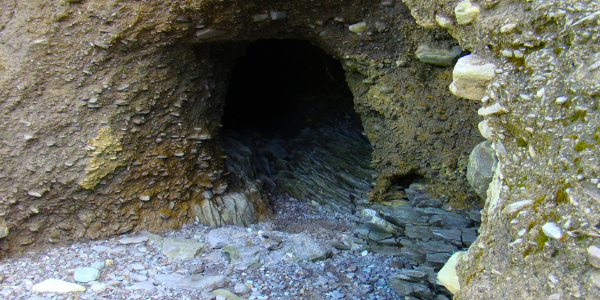
[00:18:00] Speaker D: I am going to look for a cave in the limestone cliffs along the lake. If I can find one that fills with ice during the winter, I will be able to keep food all year around.
[00:18:13] Speaker F: April 22, 1906. 7.
[00:18:19] Speaker D: I have had a truly mystical experience.
For days I searched for a cave, but found nothing suitable. Then I became ill with a high fever. It was like I was half asleep and half awake for days, unable to tell reality and fantasy apart. Then the fever broke and I slept soundly.
During this sleep I saw the entrance to a cave. I could see the cliff in great detail, as though it were magnified.
I watched myself scrutinize the cliff, checking and rechecking all the cracks, then stop before a place where the rock was covered with moss. I stood and stared at the dark indentation.
When I woke, I remembered the dream clearly.
But I was still weak with fever and did not go out for another three days.
Each night the dream returned. When at last I was strong enough to go outside, I rode my boat along the shore.
In the dream, as I had reached out to pull away the moss, I had always awakened. But now there was no waking. I felt the moss thick and moist under my Hand. I pulled it away and there was a crack just large enough for me to pass through if I stood sideways.
I made a torch from birch bark and entered.
With a gaff. I tested the ice covered walls and floor.
[00:20:06] Speaker F: September 20, 1911.
[00:20:14] Speaker D: Today I smashed through a curtain of ice at the rear of the cave. My axe revealed a narrow entrance to a still larger cave.
[00:20:25] Speaker F: November 25, 1911.
[00:20:29] Speaker D: During the past two months, I have discovered a series of caves. A labyrinth in honeycomb which underlies a surface that looks from outside, impervious, solid, real.
Although it supports infinite trees, marshes, animals, its solidity is only an illusion.
It has altered my whole concept of reality.
[00:20:55] Speaker G: Did you find anything more for 1911?
[00:20:57] Speaker F: No. There are only two more pieces.
One is a letter to his daughter.
[00:21:03] Speaker D: Dear Runa, each and every cave is different.
Each is filled with wonders. In some, there are marvelous colors, in others, underground streams.
The furthest cave where I write this by lamplight has a pool in it with fish.
The fish are small, like what the fishermen call mud puppies. And they have no eyes.
Sometimes, when I realize how far I have traveled, how alone I am, I shake with fear. But I cannot stop.
As much as I have learned the secrets of the earth, I have learned more about myself.
[00:21:51] Speaker F: There is also this. For December 14, 1914.
[00:21:55] Speaker G: A date. I've seen it somewhere before.
[00:21:58] Speaker F: It was the date on the note which the freighter found.
[00:22:01] Speaker D: I dream constantly of the cave. It obsesses me. I no longer sleep, but dream even as I am awake.
Today I will conquer my fear and at sunrise will begin the ultimate journey. I will take 500ft of string, 100ft of stout rope, a lantern, four pitons, a hand axe, enough food to last three days.
[00:22:30] Speaker G: Changed his whole concept of reality.
Isn't that what he said?
Everything looks so solid, but the solidity is only illusion.
[00:22:38] Speaker F: Do you think the caves actually existed?
[00:22:40] Speaker G: Don't you?
[00:22:42] Speaker F: He was alone, isolated.
Perhaps he only imagined it.
[00:22:47] Speaker G: What about your father's disappearance? Two generations later, we still know nothing about that.
He taught school. He was blonde, tall, thin. He lived in Winnipeg.
There is something else, isn't there?
What are you holding back?
[00:23:10] Speaker F: There were things of his in the box too.
[00:23:13] Speaker G: You've read them?
[00:23:15] Speaker F: My father found my great grandfather's diaries and letters.
[00:23:19] Speaker G: So he knew.
[00:23:20] Speaker F: Not at first.
Now and again, late at night, he'd take them out, look them over, promising that when he got time, he'd learn to read Icelandic.
[00:23:32] Speaker G: Your mother could read them.
[00:23:33] Speaker F: She'd have nothing to do with them anyway. Five years passed. That's what he says in the diary.
Five years passed and he moved to Winnipeg to teach at Kelvin Collegiate.
Twice a week he took lessons with Reverend V.J. alands at the First Lutheran Church.
[00:23:54] Speaker G: He'd never find it. Years had passed. The shoreline constantly changes, his diary says.
[00:24:01] Speaker F: I want above all, to learn about my family.
His mother had kept all knowledge of Gunnar from him.
They had a bitter fight.
To make peace, she gave him Gunnar's belongings.
[00:24:16] Speaker G: He searched.
[00:24:17] Speaker F: He became obsessed.
[00:24:19] Speaker G: Did he keep a daily log?
[00:24:21] Speaker E: No.
[00:24:21] Speaker F: His notes are erratic, undated.
[00:24:30] Speaker G: Today I found Gunner's camp.
All that remains is a log cabin overgrown with raspberry canes and moose maple.
I have searched for a month.
[00:24:46] Speaker D: I have found old tin cans, bottles.
[00:24:50] Speaker G: The ground pegs for the dogs.
But no sign of a cave.
Since nothing else has worked, I have.
[00:25:01] Speaker D: Cleared the brush from inside the walls of Gunnar's cabin.
[00:25:05] Speaker G: There I will sleep tonight.
[00:25:07] Speaker D: And like him, I will search my.
[00:25:10] Speaker G: Dreams for an answer.
I dreamt of the cave last night.
[00:25:17] Speaker D: Today I dreamt of the glass. I found it last night. Today.
[00:25:21] Speaker G: Embedded in ice.
[00:25:23] Speaker D: Embedded in ice.
[00:25:24] Speaker G: There is a piton and a lamp.
[00:25:25] Speaker D: There is a piton and a lamp.
Since dusk. Since dusk I have debated my next move. This deep subterranean maze.
[00:25:34] Speaker G: To enter this deep subterranean maze. Return to the outside world. Or to turn away.
Return to the outside world.
What else?
[00:25:46] Speaker F: He disappeared.
[00:25:47] Speaker G: He must have left some trace.
[00:25:49] Speaker F: The police searched, his friends searched. My mother waited, then went back to Iceland and took me with her.
[00:25:58] Speaker G: But the promise to your mother. She must have had some reason.
[00:26:03] Speaker F: Gunnar was a philosopher, a mystic.
He wrote a thesis.
He believed that history is cyclical, that the future can be predicted from the past.
He studied Icelandic family histories and felt he had found proof that in some families endless cycles repeat themselves.
[00:26:28] Speaker G: It's absurd.
It's just coincidence.
[00:26:34] Speaker F: I. I can't take that chance.
[00:26:44] Speaker E: That was 20 years ago.
I came home one day in January and she was gone.
A note on the table said, don't try to find me.
A year later I heard she was back in Iceland.
I wrote no reply.
When I got enough money, I flew there.
She had heard I was coming and had gone to Denmark.
Eventually I married someone else. That didn't work out. Now I'm living in Victoria, bc. Separated. Waiting for a divorce.
My life, I thought, was settled.
Then this came.
It's a letter from a young man called Ragnar Williamson. He's 19 years old. He tells me Siga is dead.
Cancer.
He claims to be my son. He says he's coming to meet me. He wants above all to learn about his family.
[00:27:47] Speaker G: I have searched for a month.
[00:27:50] Speaker D: There are some books in cans, bottles, the ground plates for the dogs.
[00:27:57] Speaker G: But no sign of a cave.
[00:28:01] Speaker D: Since nothing.
[00:28:02] Speaker G: I dreamt of the cave last night.
[00:28:06] Speaker D: Today I dreamt of the cave last night. Today, embedded in buried in Isopeton and Elizabeth in the land since dusk.
[00:28:17] Speaker G: Since death, my next move I have.
[00:28:19] Speaker D: Debated to an ex this deep subterranean maze. To enter this deep subterranean maze, return.
[00:28:26] Speaker G: To the next move or to turn away.
[00:28:28] Speaker D: I have had a truly mystical experience.
For days I searched for a cave, but found nothing suitable. Then I became ill with a high fever. It was like I was half asleep and half awake for days. Sleep unable to tell reality and fantasy apart. Then the fever broke and I slept soundly.
[00:28:51] Speaker G: During this last I listened to the hermit. I had books, books for his books are all by philosophers. And he lectured on the nature of reality. He says the soul never sleeps, but inhabits bodies two worlds. It passes back and forth between I What we call madness is leakage from one existence to another. He told me with great excitement that he had been exploring a cave. I asked him to show it to me, but he fell silent and did not speak again.
[00:29:19] Speaker F: I don't like this.
[00:29:20] Speaker G: We found what we're looking for. We've got to keep looking.
[00:29:23] Speaker E: Gans.
He claims to be my son. He says he is coming to meet me. He wants above all to learn about his.
[00:29:33] Speaker B: Family.
[00:29:34] Speaker E: Family.
[00:29:44] Speaker D: Ragnarok, the twilight of the gods.
But what of the children of the gods?
What obscurity awaits them?
Siga said, I feel cold on all over. As if I'm in a room full of ice.
Perhaps it was the yawning abyss.
The cave in the blood.
The cave with the average mean temperature of vanishing.
[00:30:32] Speaker J: The Cave by W.D. valgardson.
Valgardson as a young man was played by Paul Batten and Valgardson as an adult by the author himself.
Siga was played by Alana Shields, Nan by Marcy Goldberg, Gunner and the Mailman by Arnie Haroldson.
Valdy and the man by Tom. Macbeth, the Freighter and the Second man by Barney o'. Sullivan.
You also heard Gwyneth Harvey, Dorothy Davies, Lillian Carlson, Ted Stidder and Muriel Cooper in a variety of roles.
Music was composed by Bill Skolnick and performed by Tom Keenlyside and David Philip Owen.
Technical producer was Gene Loverock with sound effects by Jay Hyrene, and the production assistant was Dagmar Kafanka.
The series script editor is Sandra Rabinovich and the voice of introduction is David Calderisi.
The cave was produced and Directed at CBC Vancouver by John Giuliani. The executive producer of Vanishing Point is William Lane.
Until next week.
Hi, I'm Art Cuthbert. Wishing you good night and a happy New Year.
[00:31:58] Speaker A: That was the cave from Vanishing Point here on the mysterious old Radio Listening Society podcast once again. I'm Eric.
[00:32:06] Speaker B: I'm Tim.
[00:32:06] Speaker C: And I'm Joshua.
[00:32:07] Speaker A: Tim brought us this.
I get very excited when a Vanishing Point or A Nightfall or A Fear on four and is our episode of the week. Because it's either going to be, oh, that was crazy, or phenomenal or terrible. Right?
[00:32:26] Speaker C: Like, and you're not going to have a meh response.
[00:32:29] Speaker A: Right? You're never going to have a meh. I don't know. That was okay. But the other thing that struck me is in our opening, like, oh, this ran till 1993. And we go, that's just so recent. And it is not recent.
That is 300 years ago.
So Tim brought this. Tell us what prompted you to bring this.
[00:32:50] Speaker B: I know past Vanishing Point episodes we have done that. I've ranged from, like, I really like this a lot to, oh, my goodness, gosh, this is one of the best things I've ever heard. I love this.
[00:33:01] Speaker A: Right?
[00:33:01] Speaker B: So I decided I like me. I want to listen to a series that I like.
[00:33:05] Speaker A: Yeah.
[00:33:06] Speaker B: So I did. And I looked over some episode synopses to see what sort of makes me happiest.
And this ticked a bunch of boxes of, like, this is subject matter, storytelling style, all this stuff that I like. And it lived up to what I hoped it would be surpassed it, I would say for myself.
[00:33:25] Speaker A: Many times in this podcast, we start the discussion and I just kind of lay in the weeds because I want to hear.
Because right now, I really didn't like this that much.
[00:33:40] Speaker B: I'm not surprised.
[00:33:40] Speaker C: Did you just spring up from the weeds?
[00:33:44] Speaker A: Yeah. I'm very curious to hear what you guys think of it, because I do. I can go, oh, I didn't see that. Or you're right, that's interesting. But right now, the first taste in my mouth coming out of that was I was really boring.
So hit me with why it's not. Because I know you guys loved it.
[00:34:02] Speaker B: I.
[00:34:03] Speaker A: Am I right?
[00:34:04] Speaker B: Go a little deeper here of the cyclical themes to the story and the way that the story itself was told cyclically, both like, literally, this is the story of this person fighting the story about this person who finds the story.
And then technically, production wise of hearing these voices overlap themselves.
All of that, to me, was very pleasing. And also, this is very Lovecraftian of you're obsessed with this secret from the past, and if you just stop doing it, you. You'd be fine.
[00:34:35] Speaker A: Yeah, yeah.
[00:34:36] Speaker B: And also, it's a palimpsest.
They got one of my college words of these stories laying on top of each other. It's also this guy telling a story to his kid of this story from his youth and that not specifically delineated. This is a story about family and heritage and legacy in a very clear way, but in a sort of messy way.
It's this kind of theme and this kind of theme that's just similar but not exactly the same.
It breaks my impulse to analyze things and break down to structure and format of that little endorphin rush of like, oh, these things relate, but in a way that I don't have to actually understand perfectly.
That's my big, messy explanation.
[00:35:27] Speaker C: So basically, Tim just said it was boring.
I don't think it was boring, but I totally get why Eric thought it was boring. And I think this episode tells Eric, within the first couple minutes, eric, this is gonna be boring. Yes. And he says, if what I'm about to tell you were a work of fiction, I could foreshadow, dramatize, and then subtly reveal what has happened. Unfortunately, life is not so tidy.
You spoke to this yourself, Tim, but we are storytelling animals, and so we want to make life more linear.
And stories and things that happen to us have a beginning, middle, and end. And this story tells you right away we're not gonna do that.
[00:36:18] Speaker A: Right.
[00:36:19] Speaker C: It's gonna be nonlinear, it's gonna be circular, as Tim suggested. And, I mean, it's also a difference in cultural storytelling. Yeah. As well.
But it also appeals greatly, as Tim mentioned, Lovecraft, to things that Tim and I are obsessed with that you are not. And in addition to Lovecraft, which I wrote down, this also reminded me very much of Victorian ghost stories.
[00:36:46] Speaker B: Yeah.
[00:36:46] Speaker A: Yeah, you're right.
[00:36:47] Speaker C: The structure and theme reminded me, first of all, very much of Mr.
James because it has this huge research component. There's a person outside of a lot of the events, at least until the very end. And his curiosity, his drive to discover what happened in the past is his undoing. Or maybe not. It was always going to be his undoing if we were to kind of see this as some kind of predestination, this circularity.
And then it really reminded me a lot of the signalman in that foresight becomes a kind of trap.
[00:37:31] Speaker A: Yeah.
[00:37:31] Speaker C: Yep. That knowledge does not prevent the outcome because the circularity of it all guarantees that end from the beginning. Regardless of effort or any kind of action on the part of the protagonist, especially Sigga's mother's warning not to marry is what seals her fate. Just like the figure in the tunnel's warnings are what eventually draw the signal man in front of that train onto the tracks.
[00:38:01] Speaker A: Right.
[00:38:02] Speaker C: So that's exciting to me, those connections.
[00:38:07] Speaker B: I think I started to plug into what I liked about this story when she was talking to him about, you Canadians, you don't have a history.
And for us, our epic tales are the folks next door, right.
[00:38:20] Speaker A: That we speak of people from thousands of years ago as if they're still alive or still our neighbors, and we forget them quickly. And we meaning Canadians. But I would say that's true of our.
[00:38:32] Speaker C: Oh, it's certainly true of us. And maybe I'm just a terminal Gen X individualist, because I hear that and I go, awesome. I don't have any baggage. I maybe don't have the support that they have in that community. But it's a double edged sword. And I also think this story tells it a little as a double edged sword.
The protagonist, the writer is approaching this from that individualist point of view. Well, we can just figure this out and we can make different choices.
[00:39:01] Speaker B: Right.
[00:39:02] Speaker C: But it turns out he can't. Right.
[00:39:04] Speaker A: I will say we were heading in a direction at one point that I got excited about.
[00:39:11] Speaker B: We're going across the snow.
[00:39:12] Speaker C: Was that. No.
[00:39:13] Speaker A: Wow.
[00:39:13] Speaker B: I thought that was H.G.
[00:39:14] Speaker A: Wells, land of time forgot kind of thing where they drill down to the middle of the earth and they find a whole new planet with its own oxygen system and sky. You know what I'm saying? Like that idea. I thought that's what we were heading to and we were going to see some dinosaurs and some.
I thought that's what we discovered, that new Godzilla King Kong thing where there's a maze of underground tunnels that pop up all over the world.
[00:39:41] Speaker C: I can see why you were disappointed.
[00:39:43] Speaker A: Oh my God. Got so disappointed. Because nothing. It was just trees. He found trees.
That was it. He found trees. That's it.
[00:39:50] Speaker B: And blind fish.
[00:39:51] Speaker A: Yeah. Okay.
[00:39:53] Speaker C: In all fairness, there are times when you sit down here with us and you come out with some idea like I expected, giant monkeys and lizards and I'm just like, shut up here. I think it's incredibly fair. There are some cues that suggest that this might be moving in that Lovecraftian direction.
[00:40:13] Speaker A: Yes.
[00:40:14] Speaker B: And it is. The big. He's going across there. This guy who's with him died.
[00:40:19] Speaker A: Okay.
[00:40:19] Speaker B: He's at the cave. He's moved his way into the cave. He's finding these things. Finding these things. And it's exactly designed story wise to cut off there. So like, well, I'm going. I want to find what's in that cave.
[00:40:31] Speaker A: Right.
[00:40:32] Speaker C: And it's interesting that the framing sequence wants to give you an interpretive lens for this story that the story itself doesn't. And I've occasionally wondered this about Vanishing Point before.
Do the script writers write those intros or does the script editor. Because he basically just tells you this is the Icelandic Nordic cycle and that is the abyss before creation that he's found in this cave. Which I thought was a little disappointing to just put that interpretation on it.
[00:41:05] Speaker B: That's a fair point.
[00:41:06] Speaker C: It made me think it was an editorial decision and not the scriptwriters because nothing else in the script gives you that heavy handed.
[00:41:17] Speaker B: Same with the end of Ragnarok.
[00:41:18] Speaker C: Yeah. So that disappointed me.
[00:41:21] Speaker A: At least. A treasure chest full of gold.
[00:41:26] Speaker B: I'll actually jump in. I knew that you probably weren't gonna go into this. Like, I really enjoy this, but I know that we collectively occasionally do. Like, I listened to this knowing how much Tim would enjoy this.
[00:41:37] Speaker A: Yes. And that's what I said when I came out. Like, I know you two love this. And as I was listening, oh, yeah, this is so them. But what were you gonna ask me?
[00:41:45] Speaker C: I was just gonna ask, was it the.
Some other part of the writing that disappointed you?
[00:41:51] Speaker A: It was slow. It was a Victorian ghost story. I mean, you hit it. It was slow. It was the pace, the stakes. I don't want to look at this box full of stuff anymore because I can feel the evil coming out of it. It's like a Pandora's box. Anyway, moving on. Reading some more of these letters, like every time it got to a point where I was like, oh, something supernatural might happen or something, it was just nothing happened.
[00:42:20] Speaker C: But it did happen.
She could not stop it from happening. Her son was born despite them not getting married. He's discovered this information, he wants to come talk to his father. And then it becomes this quandary at the end. Right. Like, do I tell him all this?
[00:42:42] Speaker B: Will I kill him if I tell him all this?
[00:42:44] Speaker C: Yeah. Or will it happen anyway?
[00:42:47] Speaker A: And I.
[00:42:47] Speaker C: If I try to warn him like Sigga's mother warned her, I'll be honest.
[00:42:51] Speaker A: I don't care that that's what happened, is I didn't end up caring if he told him or not. And for whatever reason, and I hate when I say stuff like this because it sounds like such a shot like, it's a personal shot, but I just never got on board with the action.
That was not there.
[00:43:10] Speaker B: There were a lot of.
[00:43:11] Speaker C: Tim wrote this. It would be a personal shot.
[00:43:15] Speaker B: There are a lot of details in the storytelling that there's really.
[00:43:19] Speaker A: Ooh.
[00:43:20] Speaker B: All the language stuff of when he first meets her, he tries to speak Icelandic and she's like, I speak English. And over. And the things that he wants to find out, him and some before him, that the people who speak the language are filtering what they're telling him.
[00:43:37] Speaker C: And the father has to go away and learn Icelandic and has to come back to the letters five years later.
[00:43:43] Speaker B: Those are details that people are like, ooh, that's interesting. That's fascinating. But that's not. Events happening in the same way.
[00:43:48] Speaker J: That.
[00:43:50] Speaker A: And here's. And there's an. I have issue with all of that because from what I understand of the Icelandic language, the Icelanders don't know it. Nobody understands. Apparently. This is the most complicated, ridiculous language ever invented on the planet. From what I've heard, he had to.
[00:44:08] Speaker C: Learn it over five years.
[00:44:10] Speaker A: What I'm saying is I don't believe he learned it. I don't believe they know what it is.
[00:44:13] Speaker C: Is.
[00:44:14] Speaker B: I've heard it actually is from a town in Canada, in Manitoba, that it was like Icelanders founded this town.
[00:44:21] Speaker C: It's.
[00:44:22] Speaker B: I don't know if it's quite like Quebecois, but it is a lot of Icelandic language.
[00:44:28] Speaker A: Little Iceland.
[00:44:29] Speaker B: It is little Iceland.
[00:44:30] Speaker A: Yes, you're right. Iceland town.
[00:44:33] Speaker C: Forget it. Jake, Couple little details. I liked that. Probably bored. Eric points for a writer who can write a script in which he plugs the actual books he wrote.
Because Blood Flower and God Is Not a Fish Inspector are short story collections by this author.
[00:44:58] Speaker B: Sound kind of like he's making fun of himself.
[00:45:00] Speaker C: Yeah. It sounded made up to me.
[00:45:05] Speaker B: Oh, it's just the sort of thing some pompous jerk off. They went.
[00:45:07] Speaker C: Oh.
So I really enjoyed that. But also the letters when they're reading them from her. Yes. Her great grandfather.
Maybe I misunderstood it, but I listened to it twice. There are these strange time jumps in the datings of the letters, like by two years. And the story seems to pick up immediately where the other one left off.
And it had a really, again, weird temporal displacement quality that mirrored this idea of we in Canada or in the US have this different scale or sense of time.
[00:45:55] Speaker A: Yeah.
[00:45:56] Speaker B: And the events that were like, this is a more action thing that's happening are presented dry land. Don't necessarily have consequences. Like, I went snow blind. I was dragged behind the sled. Yeah, I was whipped. I will not forgive him for that. And then he died.
[00:46:11] Speaker A: I would have loved to have heard that story.
Act it out. That would have been more interesting.
[00:46:19] Speaker C: As always, Vanishing Point just has great production values, too. I love the performances between the young rider and Siga. Like when they're in the loft or in the hay, I can't remember where they are.
[00:46:33] Speaker B: Hey, my child, let me tell you about when I was young and doing it with somebody who's not your mom.
[00:46:43] Speaker C: Time worked differently.
[00:46:47] Speaker B: Do other parents have filters? Ah, it doesn't matter.
[00:46:51] Speaker C: But I loved the quality of the sound there and their performance.
It had just such an intimate quality. And often in these radio productions, you'll get some narration that tells the listener that the actors are in some certain environment. And often, unless it's an extreme environment, the actors don't always, in radio drama lean into that. And so that really stood out.
I believe they were on their sides, an inch from each other's face, kind of whispering to each other.
[00:47:22] Speaker A: Yeah. I will say about that.
The low talking whispering was too low and too quiet. I was like, what are you saying? What is happening?
[00:47:32] Speaker B: We're having a. Could you please excuse us, sir?
[00:47:35] Speaker A: Right. I was, like, not invited to this conversation.
[00:47:38] Speaker C: Eric thinks this is so boring.
[00:47:43] Speaker A: I really did think, like, production wise or, you know, like directorially, that that needs to be a tad louder. We get their whispering, but can we please hear what they're saying?
[00:47:52] Speaker F: You're wrong.
[00:47:52] Speaker C: I heard it.
[00:47:53] Speaker A: I have hearing aids and I couldn't hear it.
Yes. Now I've told everybody I'm 60 and I'm wearing hearing aids. We lost.
[00:48:02] Speaker C: Get off my lawn. You just got some new glasses, too.
[00:48:04] Speaker A: And I am now wearing glasses. We have lost anybody under 40.
[00:48:10] Speaker B: Is there any sort of smell enhancer that that person can like? If I taste things better?
[00:48:17] Speaker C: Yeah.
And the last thing I will say is the beautiful montage at the end of all those voices and all those lives coming together. And you get some weird new information buried in that that is very difficult to hear. But I again liked that, that you had to lean in and really actively listen when it talks about the souls that are in two and that they're not asleep.
[00:48:44] Speaker B: Was it compared to magnets that.
[00:48:45] Speaker D: Yeah.
[00:48:46] Speaker C: And that they had to share the same body. I couldn't even pull it all out. But it just shows you that there's like, we just scratched the surface and.
[00:48:54] Speaker B: It invites you, like, hey, get obsessed about this. It's great being obsessed about this.
[00:48:58] Speaker A: Right?
[00:49:00] Speaker C: It Won't end badly.
[00:49:02] Speaker A: Well, voting time.
[00:49:04] Speaker C: Sure.
[00:49:05] Speaker A: Joshua, you get to go first.
[00:49:07] Speaker C: I already mentioned the similarity between this and ghost stories. And I do think, in all seriousness, that it is not a story that relies on surprises or shocks or twists.
It's circular. It literally is that inevitable cycle that you can't break. And so it is the dread that a ghost story has that I appreciated about it. So for me, I thought it was great. I think it stands the test of time. It's very literate. It's hard to call it a classic.
I really liked it. It's not one of my very favorite vanishing points, but I think it's an amazing production. So it really just tells you how good I think Vanishing Point is.
And Vanishing Point is full of all these little niche stories. So there's depending on your taste. Well, I know you've loved vanishing points before too. You're gonna find something that seems like they wrote it just for you.
[00:50:06] Speaker B: Right.
[00:50:06] Speaker C: And I defin listening to this and I loved it very much. But I went, wow, this was written for Tim, right?
This is Tim Nip.
[00:50:21] Speaker B: I agree with Mitchell. As you said, it is not my favorite vanishing point either.
But it's so different than anything we've listened to. It's the themes, the storytelling style.
I really appreciated the novelty of it, which calling it novelty is maybe a little unkind to like, this is a really incredibly well made story.
And that was the main thing that was excited me about it. I never hear stories like this and I really enjoyed hearing it.
[00:50:49] Speaker C: Yeah. And I have to tack on one more thing. When I say it stands the test of time, that seems a little underwhelming because it stands the test of time so much that if someone gave this to me and said it was recorded today, I would totally believe it. This does not seem 35 plus years old at all. And some of that is a compliment to these creators.
I'm kind of afraid some of that is an indictment of the stagnation of our current culture and the fact that.
[00:51:18] Speaker B: We'Ve progressed no further in 35 years.
[00:51:22] Speaker A: So I laid in the weeds, listened to everything you had to say. I kind of feel the same as when I came in.
I hear what you're all saying.
I see all that.
But just from a strictly me point of view, did I enjoy this? And if I re listen to it now, after listening to what you all said, would I enjoy it anymore? Probably not.
I do think it's an interesting premise and it's a good piece of storytelling in the sense of all those things you said how it's time jumping and and I think everything about it is there. I do, I think it's a good story. I just don't think it was told in a way that held my attention, that made me want to know what was going on and care what was going on. But I think when you write it on paper and hear it from you guys like oh, that sounds fascinating. And then listening, they made that unfascinating for me.
[00:52:23] Speaker B: But there might be something too that this character is very much in that Mr. James Vane of this is a professorial sort of character that to us like that enough is like oh, I'm interested to hear his story that perhaps.
[00:52:38] Speaker C: Others would be like Eric's just like shut up four eyes. And then he's like, oh wait, I'm a four eyes now.
[00:52:45] Speaker B: Your story's interesting but you as a person like all right, all right, Tim, tell him stuff. Please go visit ghoulishdelights.com home of this podcast. You'll find more episodes there. But you can find these episodes wherever you get your podcast episodes from. But there you can leave comments, you can vote in polls. You can find a link to our store if you want to buy some mysterious old Radio Listening society merchandise. Coffee mug or a T shirt or a hoodie. Who doesn't love a hoodie? I love a hoodie. And you'll also find a link to our Patreon page.
[00:53:18] Speaker C: Yes, go to patreon.com themorals and become a member of the mysterious old radio Listening society today. We sure appreciate the financial support because Eric would just check out listen to one more boring radio show without any money attached.
[00:53:36] Speaker A: That's not true.
[00:53:37] Speaker C: And hearing aids aren't cheap.
That's true.
[00:53:41] Speaker A: There was no money the first eight years of this thing. Was there? I don't remember. I would do I love you guys.
[00:53:47] Speaker B: Oh, you were about to say I would do this for I love you guys.
[00:53:54] Speaker A: The mysterious Old Radio Listening Society Theater company performs live on stage recreations of classic old time radio shows and a lot of our own original work. Come see us performing radio drama on stage by going to ghoulishdelights.com and there you will find when we're performing and where and how to get tickets and what shows we are doing. And there's going to be a lot of shows coming up this 2026 we'd love to see there. If you can't make it though being a Patreon does give you access to the audio recordings of those live shows, so even more content provided for you for your. More bang for your Patreon buck.
[00:54:35] Speaker C: We're amazing.
[00:54:37] Speaker B: Yeah, that's what I'm trying to say.
[00:54:40] Speaker A: All right, what's coming up next?
[00:54:42] Speaker C: It's your pick, Eric.
[00:54:43] Speaker A: Oh, right.
Next, we're gonna be doing an episode from a series that we've never done on this podcast before called Dangerous Assignment. And the episode the Nazi and the Physicist. Until then, voting time.
[00:54:58] Speaker C: Sure.
[00:55:00] Speaker A: Voting time.
[00:55:03] Speaker C: I refuse to vote.