Episode Transcript
[00:00:16] Speaker A: The Mysterious Old Radio Listening Society podcast.
[00:00:27] Speaker B: Welcome to the Mysterious Old Radio Listening Society, a podcast dedicated to suspense, crime and horror stories from the golden age of radio. I'm Eric.
[00:00:36] Speaker C: I'm Tim.
[00:00:36] Speaker D: And I'm Joshua.
[00:00:38] Speaker C: We love mysterious old time radio stories, but do they Stand the test of time? That's what we're here to find out today.
[00:00:42] Speaker D: I've chosen the Marvelous Barastro from radio's Outstanding Theater of Thrills, Suspense.
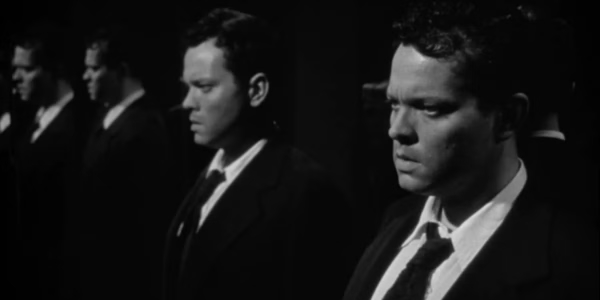
[00:00:50] Speaker B: Suspense debuted on CBS in 1942 and ran for an impressive 20 years. During its heyday, the program featured many of Hollywood's brightest stars, including today's leading man, Orson Welles.
[00:01:03] Speaker C: In total, Welles appeared in nine episodes of suspense, beginning in 1942 with Lucille Fletcher classic The Hitchhiker and ending in 1945 with one of the program's rare two part productions, Donovan's Brain. By the late 1940s, his strained relationship with Hollywood, financial difficulties and politically motivated scrutiny from the FBI led Welles to relocate to Europe, making further collaborations with a studio mounted program like Suspense. Impractical if not impossible.
[00:01:28] Speaker D: The Marvelous Barastro was Adapted from a 1926 short story by Ben Hecht, an American screenwriter, playwright, novelist and journalist whose career spanned the 1920s through the 1960s. Today, Hecht is best remembered for his contributions to film, despite the fact that he famously dismissed screenwriting as a sub literary waste of talent. His most notable sub literary efforts include the seminal gangster films Underworld and Scarface, the classic screwball comedies Nothing Sacred and His Girl Friday and Alfred Hitchcock collaborations Notorious and Spellbound.
[00:02:08] Speaker B: A few more pieces of trivia before we begin. The Marvelous Barastro was originally published under the title the Shadow, but CBS changed the name to avoid confusion with the Shadow radio program.
[00:02:20] Speaker C: According to the Suspense Project blog, Wells was so enamored of Hecht's story that he purchased the film rights. Like many of Wells creative endeavors, however, he was unable to secure the financial backing to bring it to the screen.
[00:02:31] Speaker D: The Marvelous Barastro was produced again in 1947 on the summer replacement series Mystery in the Air, starring Peter Lorre as Barastro.
[00:02:42] Speaker B: And now let's listen to the Marvelous Barastro from Suspense starring Orson Welles that first aired April 13, 1944.
[00:02:52] Speaker C: It's late at night and a chill has set in. You're alone and the only light you see is coming from an antique radio. Listen to the sounds coming from the speaker. Listen to the music and listen to the voices.
[00:03:12] Speaker E: Roma wines present suspense.
Roma wines made in California for enjoyment throughout the world.
[00:03:25] Speaker A: Salud.
[00:03:26] Speaker E: Your health, Senor.
Roma Wines Toast the world. The wine for your table is Roma wine. Made in California for enjoyment throughout the world.
[00:03:37] Speaker F: This is the man in black, here to introduce this weekly half hour of suspense.
Tonight, from Hollywood, we bring you Mr. Orson Wellesley. Mr. Wells will appear as star of the suspense play called the Marvelous Barastro. From an extraordinary story by the distinguished American author Ben Hecht. But before we raise the curtain on this evening's tail of suspense. Here is a message from your host. The Roma Wine Company of Fresno, California.
[00:04:02] Speaker E: Distance lends enchantment, says the old proverb. And it seems borne out in such little episodes as these. Let's pretend we're guests at the smart and handsome Pan American Club, Havana, Cuba. An American visitor is amazed that his Cuban host. Can picture the marvelous climate. And rich, fruitful soil of California. Without ever having been there. But the Cuban responds. One sip alone of wonderful Roma wine. Tells me all that only true perfection of climate and soil. Could produce the perfection of your splendid California wine. Roma wine. Well, that's so. And as Roma wines become available to wine connoisseurs of more and more lands. The chorus of praise grows. For the truly superb quality of these good Roma wines.
No wonder, then, these wine experts of other lands. Are so eager to import Roma wines. No matter what the distances from our own California. And no wonder, too, that these taste delighting Roma wines. With no import duty to pay. And without expensive shipping charges added to their cost. Here are America's largest selling wines. With such richly rewarding enjoyment within your reach. Why not get acquainted with your favorites among Roma wines. Many different delightful wine types. Remember the name R O M A Roma Wines made in California for enjoyment throughout the world.
[00:05:14] Speaker F: And now, with a marvelous Barastro. Produced and directed by William Speer. And with the performance of Orson Welles. We again hope to keep you in suspense.
[00:05:26] Speaker G: This is William Speer. Three weeks ago I was seated in my office. Poring over possible future stories. With which to hold you in suspense. When a stranger appeared unannounced.
[00:05:35] Speaker A: I am the Marvelous Barastro. I've come to tell you a story.
[00:05:39] Speaker G: How did you get in here?
[00:05:40] Speaker A: I am a magician by trade. I do such things. Perhaps you've heard of me, Barastro? No. I am the greatest magician alive.
No, that is not so. I am the second greatest. But soon I will be first. I am leaving tonight for Mexico City. You see me now for the first and last time. You will never see me again. No one will ever see me again. It is the last of Barathroom.
[00:06:01] Speaker G: How's that?
[00:06:02] Speaker A: I'm going To Mexico City to murder a man. His name is Rico Sansoni.
[00:06:07] Speaker G: Why are you going to kill him?
[00:06:09] Speaker A: Because.
Because he is the most evil man in the world.
I've been waiting 20 years for his name to appear.
For as long as he chose to hide. There was no hope. He's too clever. Far too clever even for me.
But I knew that his vanity would betray him. And that someday I would read again the name Rico Sansoni. I knew he would return to the stage.
[00:06:31] Speaker G: Is he a magician?
[00:06:32] Speaker A: He greatest to the most profound. The most subtle and the most evil.
He's greater than I. He begins his first performance in 20 years in Mexico next week.
I will be there to see it.
[00:06:45] Speaker G: Well, I would like to hear your story.
[00:06:46] Speaker A: I can tell you all but the end. That I will be unable to provide now. But you will find it out for yourself.
[00:06:53] Speaker G: Well, I'd like to hear what you can tell me.
[00:06:55] Speaker A: I will tell you, Mr. Spear, but on one condition. And that I must have your oath not to interfere.
[00:07:00] Speaker G: Oh, really. Now you can understand. I can scarcely give you that. After all, I can't.
[00:07:03] Speaker A: Ah. Very well. Very well. Very. I would take my chances with you.
This story begins 20 years ago.
I was a young man. I traveled as a magician with a small carnival through. Through southeastern Europe.
One night we came to a village in Malorussia. Our cymbals sounded. Our torches flickered in the spring wind. And the villagers gathered around our tents and wagons. I had taken my place in the black box outside my tent. There were holes in the box through which I could watch the crowd. While the barker made his announcement. Barrastro, the marvel of marvel. Barrastro, the magician who speaks with the dead and reads the secrets of life. At this moment.
At this moment, I saw her for the first time.
Her young and gentle face surprised me. Among so many peasants. I said to myself, what a strange girl. What a beautiful child.
I kept watching her. I couldn't keep my eyes away from her. At length, an old peasant led her in, holding her by the hand. I saw at once that she was blind.
My granddaughter would like you to tell her future.
[00:08:21] Speaker H: Can you tell my future?
[00:08:23] Speaker A: Yes.
[00:08:24] Speaker H: Will it be a happy one? My future?
[00:08:26] Speaker A: Hold out your hand and I will tell you.
[00:08:29] Speaker H: Here.
[00:08:31] Speaker A: A dark mist passed over me. I felt a sudden chill as I touched her hand.
I listened to the voices which foretell the future. Sorrow. Sorrow. They breathed pain and sorrow. Fly. Run.
I studied the girl's pace, a fear gripping at my heart. Her large, sightless eyes were calm, resigned. I could not bring myself to tell her What? I saw these spirits promise you happiness.
I lied.
Your hands will touch beautiful things.
Love and delight will await you.
[00:09:07] Speaker H: Oh, thank you, sir. Thank you.
Thank you.
[00:09:19] Speaker A: That was the beginning.
Her face haunted me that night. I could not sleep. I made inquiries the next morning. And I found her. We walked through the hills. She did not need my hand to guide her. She knew every stone, every turn of the path. She spoke of the trees around us. She had strange names for them.
[00:09:38] Speaker H: I call that tree Lullaby. Because it sings when it sways in the wind.
[00:09:42] Speaker A: Lullaby.
[00:09:43] Speaker H: And that one see with its branches open towards heaven.
I call that one prayer.
[00:09:49] Speaker A: How do you know its branch is open toward the sky?
[00:09:52] Speaker H: When I was younger, I climbed it.
[00:09:54] Speaker A: Anna.
[00:09:54] Speaker H: Come. I'll race you to the bed of flowers at the turn.
[00:09:57] Speaker A: Anna. Hurry.
[00:09:58] Speaker D: I run fast.
[00:10:00] Speaker A: We walked often through the hills.
I knew that she was aware of her destiny.
The stars had told me she would not live long.
And that agony and terror waited for her on this short journey.
Our caravan remained for two weeks in the village.
At the end of that time, I asked Anna to come with me as my wife.
[00:10:23] Speaker H: You make me very happy, Shari.
I could live only with you.
[00:10:28] Speaker A: I will love you with all my heart.
[00:10:30] Speaker H: And you will teach me, Shari. You will teach me to see.
[00:10:34] Speaker A: To see?
[00:10:36] Speaker H: Does one need eyes to see as you do, Shara? You will teach me to see beyond the horizon.
You will teach me to see as you see.
[00:10:45] Speaker A: We were married.
We rode together in the gilded wagon. And the vows were taken under a clear sky.
Suddenly, the sky changed.
It was only then that I realized what I had done. In seeking to save her. I was fulfilling the terrible message of the stars.
For it was I, Shari Barastro.
Who was the instrument Faith had selected for her ruin.
Then it came.
One night as I stood in the black box outside my tent.
I knew that I needed no further word from the mists of prophecy. It was there. It had come.
He.
He stood among the peasants before our tent. A graceful figure, smiling, leaning on his cane. A man of the world. Amusingly out of place in this far away little village. I looked at him through the holes in my box. I. I looked. I turned cold. I watched him. And I felt afraid.
He was studying Anna. Never once did he stop looking at her. My temper is quick and fiery. I went up to him as he was watching Anna.
Subtle he was. How graceful. I seized his arm and demanded to know what he meant by staring at my wife. He removed my hand as if I were a child. I can tell you there was something Something terrifying in his strength.
My most humbly beg your pardon for this misunderstanding. Let me introduce myself. My name is Rico Sansoni. I'm a student of the occult. Traveling about the world in search of knowledge. Inside of me, I feel that girl has remarkable psychic powers. I'd hope to be able to induce her to join me as my assistant.
Soon planning to go on the stage. But now that I know she's your wife. I apologize again for my seeming forwardness.
4.
I suppose there's nothing to do but to accept that apology.
And you, Madame.
Anna.
I think it is fair. Anna.
Anna.
[00:13:11] Speaker H: No.
I have nothing to say.
[00:13:18] Speaker A: It was thus Rico Sansoni entered their lives.
Little by little. During the days that followed. He attached himself to us. We listened, Anna and I, to his tales. He'd been everywhere, seen everything.
He brought the world into our gilded wagon. In his presence, I always felt elated and flattered. Thus. Thus does a man move in the grip of his destiny. Thus do we dig with our own hands. The appointed grave. For our happiness.
For one night, Anna came to me. And took my hands.
And told me something made my heart grow black.
[00:13:59] Speaker H: Shari, Rico Sansoni has made love to Anna. I've done nothing wrong. I'm afraid of Rico.
I tell you this so you will understand my fear.
[00:14:10] Speaker A: Do you want to tell me about it now?
[00:14:13] Speaker H: Yes.
[00:14:15] Speaker A: Tell me then.
[00:14:17] Speaker H: Rico came to me this afternoon while I was alone.
He took my hand and held it gently in his.
I suspected nothing until he asked me if I loved you. And how deeply I loved you.
Then he asked me if I love you more than happiness or life.
I took my hand from him and said. I cannot talk of love to you.
Even of my love for my husband.
Please go.
[00:14:40] Speaker A: Yes.
Rico.
She's told you.
[00:14:46] Speaker F: Sorry.
[00:14:47] Speaker A: Forgive me.
For a moment, I grew weak.
Let me remain your friend. I brought you both some flowers. I picked them myself.
Will you accept them?
You won't accept them?
Of course we will, my friend.
How could I have doubted you? I understand. Come. Forget the entire incident.
You are kind.
Really, you're kind.
This was the third month of our friendship. And now I began to feel it was my companionship he desired. Not Anna's. We spent long hours together without Anna under his care. My mind was expanding, My powers developing. He seemed interested in my every move. And again, I was flattered.
[00:15:43] Speaker G: Lured.
[00:15:44] Speaker A: Disarmed. You have a funny way of saying the word beautiful, my friend. How is it you say it?
Beautiful.
That's it.
[00:15:56] Speaker E: That's it.
[00:15:57] Speaker A: Beautiful. Hmm? Is that right?
You're telling me about The Houdini method of respiration. Oh, yes. So I was.
Beautiful.
Very good. I think I like you, Sonny.
I like you very much.
Amazing, isn't it?
Amazing how one can be drawn in by flattery and charm.
Then one day, I was sitting in my tent.
When a curious sense came over me. I felt a pressure on my heart. As if a hand were closing around it. It was a warning.
I left quickly.
I hurried the apartment. Anna had remained there. She frequently did. In the afternoon. I found myself running toward the door.
I paused. Waited until I recovered my breath. And then, coursing itself, smile to my lips. Opened the door.
Oh.
I saw Riko Rico.
Standing with his arms around her.
Her face raised to his lips.
Speechless, powerless. I looked at them. I heard her voice murmuring words of love. Her arms moved around his neck. And she kissed him.
Then I heard his voice.
Anna.
Anna, my darling.
[00:17:27] Speaker H: Sorry. My love.
[00:17:29] Speaker A: Anna, my darling.
My beautiful darling.
The sound of his voice. A horror seized me. Now I knew why he had spent so many hours with me. Why he was so interested.
It was my voice. It was Barastro talking.
It was a voice that seemed to come from my own throat. A horrible, familiar voice. And I understood what had happened. I sprang forward, shouting his name. Rico. He turned and faced me. Pointed his finger at me. As if he were an image in a mirror. Rico. He echoed.
Murder was in my heart.
I flew at this monster.
We struggled across the room. He answered my cries with cries that echoed each note, each inflection of my voice. I saw him through my rage. His face was contorted like my own. His every feature had changed. He was Barasto. There were two Barastos screaming together. Tumbling over each other.
He held me in his hands.
In his hands that were like steel.
I could not move or cry out.
His hand was on my throat. I lay gasping, crazed. And it was Barastro who was holding me.
Then this horrible and familiar figure changed. It became Rico. It was Rico Sansoni who spoke. The breath was leaving my body. I was strangling, dying. Yet I could hear him. But Astro.
God. You're killing me.
Shadi Shah, your mercy. I'm dying.
His voice was faint. I felt in this moment. The agonies of a hundred deaths.
For as my eyes grew dark. I saw with horror the thing he had in his mind.
He was pretending it was I who was killing him.
And thus he would kill me and go to hell.
It would be Rico Sansoni who would be buried. It would be Barastro who remained.
For a moment I caught a glimpse of his cold, ruthless eyes burning now over my face. As he enacted his false death. Groaning, pleading for mercy. And the strength drawn from the soul filled my lungs. I cried out with all my might. Anna. Anna.
Knowing that by this she would understand. It was I.
I who was dying.
And darkness.
Darkness seized me.
An hour had passed. When I opened my eyes. My head was splitting. My throat was stiffened. I raised myself and looked.
He was gone.
I saw her.
She was standing in the corner of the room. Crouched against the wall. Her hand against her teeth. And staring. Staring through the terrible dark around her. Anna.
I whispered to her.
Anna.
It is I. Anna. Aishaadi.
Anna.
Oh, God.
Anna, please.
Anna. Anna, darling, listen to me. Anna. Give me your hand. Anna. Anna. Anna, listen. It is Aya. It is Anna.
[00:20:59] Speaker H: Anna.
[00:21:00] Speaker A: Sorry. Your husband. Anna. Listen. Anna. Remember, Anna, Remember. Remember when we first kissed? When we first kissed, Anna.
That time on the hill. Anna. Remember I called you little princess. Remember? Anna. And Anna about your trees. Anna about Lullaby. The names you had for them. Lullaby in prayer.
Anna. One with its branches pointing towards him. The one he climbed. Anna. Please.
Anna, Please.
Please, Anna.
I.
It is I. Anna. Come here. Listen. Listen carefully, Anna.
The spirits promise you happiness.
Your hands will touch beautiful things.
Love and delight await you.
[00:21:50] Speaker H: Oh, sorry.
[00:21:53] Speaker A: Oh, my darling.
My honor. My sweet.
[00:21:57] Speaker H: Oh, sorry.
[00:21:58] Speaker A: Hold me close. Yes, my darling.
He's hurt you. What he's done? There, there, my darling. It's all right now. It's all right.
It's all.
Rico had disappeared.
We laid our plans, Anna and I.
As soon as she was able to walk, we abandoned the carnival. We were inseparable. And she could not bear to have me waved. For a moment, I understood everything. Everything in her soul.
Yes. Even the trembling that would seize her sometimes when I took her in my hand.
It was I alone. He could not deceive. I alone.
To anyone else, he could become Barastro.
Even to her, whose senses had learned every breath, every inflection of the man she loved.
Even to her, he had been Barastro.
The months passed.
Her life had become again almost like a honeymoon.
Or most, I say. For there were nights when I would awake to find her fingers tracing the contours of my face.
Then it was. I pretended to be ill and remained at her side. We said nothing, but we knew. The shadow.
The shadow in each other's mind.
Everything went smoothly, though. Until one evening when I entered the cabaret where I was performing.
I felt unusually disturbed. It was winter.
I was removing my coat. When it came again, as I had known it would. The warning the hand closing over my heart. I ran from the place and raced home. I entered our cottage by the back door. Quietly, like a thief. And I stood listening. From inside I could hear a voice.
[00:23:57] Speaker H: Oh, Charlene. Please, darling, you're ill again.
I'll take care of you, darling. I'll make you feel better.
[00:24:05] Speaker A: Anna, my dear Anna, how I love you.
He was back.
One doesn't reason.
One does not reason in the midst of a nightmare.
Yet terror can wake the mind to a clairvoyance.
An understanding beyond thought. The unity.
I stood motionless, silent, listening. The light was turned out. I heard her laugh.
Laugh like a child in the dark.
And this sound killed me.
Yes, one is dead forever when happiness is torn from the heart. I wanted to rush into the room. I wanted to shout, anna. Anna. Don't touch him. He's Rico. But instead I slipped quickly from the house. I walked in the cold streets. My thoughts returned.
I had acted out of one clear impulse. Through the terror and agony of those moments when I heard him take her in his arms, There had remained a certainty above everything else.
I must save her.
And I knew I had acted wisely. Had I rushed into the room and I made a noise, she would have died.
She would have known in that moment, as I knew, listening to him.
That he had been there before.
That he had been there before.
That he had crept through our defenses as our shadow creeps.
And we had not known.
I thought of them together as I walked.
And then I thought again that I had only to rush back. To speak a name.
Yes, and destroyer.
Destroyer.
I kept on walking.
And as I walked, I began to understand him. Yes, I was dealing with a monster. He would manage to leave her as he must have done so often before. A few moments before I was due to return from the cabaret. And if I sensed something was wrong, he would rely on my love for her to keep his sense a secret.
He knew me well.
He understood. I would allow my heart to be eaten away with grief.
And I would not make a sign lest I destroy her whom I love more than myself.
It was I who must be careful, not he. Yes, he knew me. He gambled on me. I determined to kill him the first moment I saw him.
And I began to think, to think of his superhuman strength. That he might kill me even as he that first intended.
And that he would go on living with her as Brastro.
She would never know I was dead. She would continue to love me in his arms. To press her kisses upon my murderer.
And this was the thought that contained in it the fullest measure of horror.
The thought of that moment when she would see him and not me.
[00:27:12] Speaker H: You understand?
[00:27:13] Speaker A: The grief.
The grief of that night.
Yes. It is fortunate I cannot remember it all.
I returned home at the time. At the time Rico wanted me to.
I wasn't careful about my coming. I trusted him.
Do you understand?
I trusted him that out of his evil.
He would spare her. As I spared her. Out of love.
I entered the bedroom, opened the door. And walked in. She was alone.
Anna.
Anna. Dear Anna.
Anna. It's I.
It's I. It's not me. Call. It's I. It's I.
Anna.
Anna.
This is my memory, Vana.
My memory.
She seized her face with her hands.
As if she were tearing something. Yes, the darkness.
As I rushed to where she fell.
She did not speak again.
In the morning, she d.
That is the story.
[00:28:50] Speaker G: As nearly in Barastro's words as I can remember them. When he'd finished, he got up quietly. Looked at me a moment and said. Thank you for listening to me, Mr.
[00:28:57] Speaker A: Spear.
[00:28:58] Speaker G: You understand now my prediction that there will be one less magician alive in the world within a fortnight. And he turned and left my office.
I must admit that the whole thing shook me rather badly. I've been spent the whole week wondering if something might happen. Something I couldn't predict. This morning.
I think perhaps it came at least while I was reading through the Theatrical Weekly Variety. And my eye caught a notice. You probably saw it too.
Of a magician who had been killed in Mexico City.
The account said that two magicians had been together in an automobile accident.
While driving through the rail yard district. Their car stalled on a track and had been demolished by an oncoming train.
One of the magicians, unidentifiable, had been cut to pieces.
The other, miraculously escaped with his life.
Although his features were so horribly disfigured. That plastic surgery will have to create a new face for him.
The survivor identified himself as the Marvelous Barastro.
[00:30:16] Speaker F: And so closes Ben Heck's story of the Marvelous Barastro. Starring Orson Welles.
[00:30:21] Speaker A: Tonight's tale of suspense.
[00:30:24] Speaker F: Before Mr. Wells returns to our microphone, a message from the sponsor of Suspense.
[00:30:30] Speaker E: Why is the making of good wine like a proverb? Because both are based on long experience.
For you to enjoy the many different taste delighting Roma California wines. First, there had to be long years of painstaking cultivation. Of some of the world's finest vineyards. Plus, year upon year of development of the art and skill. That go into the making of these fine Roma wines. Your first sip of any of the good tasting Roma wines will confirm the presence of these needed years of preparation will tell you why Roma wines are America's largest selling wines. Your taste will thrill to the superb quality and the downright satisfaction when you try, say, the tangy, delicious Roma sherry or the rich, hearty Roma Burgundy or the sweeter, heavier Roma port. You'll be thrilled too when you learn such great enjoyment costs so little, mere pennies a glass. You'll want to add your voice to the international praise of Roma wines now rising in many lands. In these words, Roma wines are truly magnificent. Let me repeat the name. R O M A Roma wines made in California for enjoyment throughout the world.
[00:31:37] Speaker A: This is Orson Welles. It was a great pleasure, ladies and gentlemen, as it always is, to appear as a purveyor of suspense. And next week, Mr. Spear would like me to tell you that Mr. Ed Gardner, better known to you as Archie, the elite proprietor at Duffy's Tavern, will make his debut as a dramatic actor. Mr. Spears also asked me to mention that Orson Welles played the part of both magicians on the program tonight.
Universal Pictures would like me to mention that Orson Welles plays a magician in a new picture of theirs called Follow the Boys.
Or is it Orson Welles?
[00:32:16] Speaker F: Next Thursday, same time, you will hear Ed Gardner Radio's famous Archie in Suspense
[00:32:22] Speaker E: presented by Roma Wines made in California for enjoyment throughout the world. This is cbs, the Columbia broadcasting System.
[00:32:31] Speaker B: That was the marvelous Barastro from suspense here on the Mysterious Old Radio Listening Society podcast once again. I'm Eric.
[00:32:38] Speaker C: I'm Tim.
[00:32:39] Speaker D: And I'm Joshua.
[00:32:40] Speaker B: That was your pick, right?
[00:32:41] Speaker D: Yes.
[00:32:42] Speaker B: Yeah. You brought that to us.
There is something eating at me listening to this, that I've heard this before. Is this gonna lead me down a path of embarrassment again?
[00:32:52] Speaker C: We have and we haven't.
[00:32:53] Speaker D: Not on the podcast, but we did listen to the Peter Lorre version for one of our happy hours. Thank you, our Patreon supporters, which you, dear listener, could become and join us for a happy hour.
[00:33:06] Speaker B: Yeah, there's more of that pitch coming later, but I am really glad to find out that.
And also not glad. The fact that I don't remember it is disturbing. But also I'm relieved to find out I'm not crazy.
[00:33:19] Speaker D: No, but you did remember it. It sounded familiar. So those are good signs.
[00:33:24] Speaker B: But you guys are.
[00:33:25] Speaker D: Memory therapy is working.
[00:33:27] Speaker C: It's not like I said. Ah, yes, I recall this from. Like this is familiar. I gotta go back into our Patreon feed and search through the.
[00:33:34] Speaker B: Oh, okay, so you didn't say that. Oh, yeah, January 5th, 2000.
[00:33:40] Speaker C: I brought that episode to that particular happy hour.
[00:33:43] Speaker B: So you're even dumber.
[00:33:45] Speaker C: Dumber, yes.
[00:33:46] Speaker B: Okay.
I'm doing well.
[00:33:48] Speaker C: Say something like mid dumb.
[00:33:51] Speaker B: I'm second dumb. Do you have something to make me third dumbest?
[00:33:54] Speaker D: Oh, we'll see.
Why don't you decide that at the very end of the podcast?
Take everything I've said into account and you can place me in the dumb tier.
[00:34:07] Speaker B: I'm going to delicately state this at the top.
[00:34:11] Speaker D: I doubt it's going to be delicate.
[00:34:13] Speaker B: I'm going to try my best.
[00:34:14] Speaker D: Just rip the band aid off.
[00:34:16] Speaker B: The band aid off.
[00:34:17] Speaker C: Men are better if matter.
[00:34:23] Speaker D: I'm sorry, honey. It was a joke.
[00:34:26] Speaker B: Your wife listens.
My wife doesn't even know she listens.
So if you say, I'm not a big Orson Welles fan, this would do nothing to help you like him? His performance in this is everything about him that when he drives me crazy.
[00:34:44] Speaker D: Elaborate.
[00:34:45] Speaker B: This is hard because it's not like a specific thing. I can.
There's something about him sometimes half his stuff is brilliant and I love him. Right. We've said this. There's many things that, as an actor, radio and on screen, he's amazing. Then there are things he does that they just come off so pompous. And there's something about him in this one that sounds like acting. Does that make sense? It sounds like he's acting instead of present. And sometimes he can draw. Step over that line really quick for me, where he's like, I am trying so hard to act.
[00:35:22] Speaker D: I know exactly what you're talking about. But as we move into the story, I will make a case that that is the way to tackle a story about an Eastern European magician.
[00:35:36] Speaker C: Okay, that's solid.
[00:35:37] Speaker D: Who is doing battle with his doppelganger, who you, as an actor, are also playing against.
So I think it's a fair choice. And he's a better actor than William Spear.
[00:35:50] Speaker C: That was my main going into this to start with a scene between William Speer, not an actor, perfectly competent at saying lines on a microphone and being heard. Very sort of mundane, grounded, and then huge, vague European accent. Orson Welles.
It's jarring. It feels weird.
In the spirit of Eric's critiques. A bit indulgent. That being said, as the story went and we got away from that starting point into an actual story where that character is appropriate to be that big and weird.
I think Orsmos did some amazing things and I really enjoyed him. And then we went back to William Spear, like, ah, we're here. Again, Right.
[00:36:36] Speaker D: This might be my personal bias speaking, but I enjoy how not an actor William Spear is. There's a certain verisimilitude when you realize that he is trying to convince the listener that he is just the producer. I'm not an actor. I'm just telling you this story. This weird magician walked into my office, and if it were played by an actor, I wouldn't have that.
[00:37:02] Speaker C: I don't mean like he is bad. I mean, it's disjointed between his aesthetic and big European magician guy aesthetic.
[00:37:12] Speaker D: Again, I love that I liked the
[00:37:15] Speaker B: actual battle of the magicians better than this battle of the magicians.
[00:37:18] Speaker A: Oh, wow.
[00:37:20] Speaker D: That, I think is harsh. But I'm gonna put my cards on the table here and say that this story I have.
[00:37:27] Speaker C: You got two sixes.
[00:37:30] Speaker D: My figurative cards.
I don't know why I just suddenly thought of the dogs playing poker.
Then I think we should get one for our recording space.
That's.
[00:37:42] Speaker C: Oh, I want a dogs doing a podcast painting.
[00:37:46] Speaker B: That's a great idea.
[00:37:48] Speaker D: What I was going to say is that this has been a beloved story to me since I was in late high school, college, and that was mostly through the Peter Lorre version. And I was really taken by it for purely shallow aesthetic reasons. The Eastern European cabinet of Dr. Caligari Carnival setting was great. The Lynchian doppelgangers. I loved the, you know, obsessive, doomed, fatalistic love. The classic trope of the innocent blind person who is unaware of the monster in their midst. And just the larger than life performances just captivated me. Especially Peter Lorre screaming Rico. Rico loved it. And for years, I never knew there was a suspense version. I never heard it. And then maybe about a decade ago, I heard this. And I've been meaning to bring it to the podcast for a long time. But this has all the extravagance of the Peter Lorre version that I love. But I think it adds a couple subtle and not so subtle things to it that elevate it staring at me.
[00:39:16] Speaker B: What are those things?
[00:39:17] Speaker D: Namely elaborate.
Namely having Orson Welles play both roles. Because in the Peter Laurie version, Laurie only plays Barastro. And there's another actor who plays Rico, obviously, because Peter Laurie can't disguise his
[00:39:33] Speaker B: voice because anybody can do a Peter Lorre impression. Joshua, that's mean. And I didn't mean.
[00:39:40] Speaker D: No. But weirdly, the Peter Lorre version never contains a scene in which Rico is imitating Peter Laurie's voice. It's all done in summary. So it's a strange missed opportunity.
[00:39:53] Speaker B: Yeah. Right.
[00:39:53] Speaker D: For exactly that reason. Get some guy to do his Peter Lorre impression. Anyone who can do a Peter Lorre impression, I can tell you right now it's very desperate to do it.
But I think that opens up different ways to view this story by having Orson Welles play both roles.
[00:40:16] Speaker C: Yeah.
[00:40:17] Speaker B: Here's another issue I had, and this is really.
I feel like the crappy guy at the party, but I think Wells accent is terrible.
It's so over the top. It's not based in any.
[00:40:33] Speaker C: But it's functional.
[00:40:34] Speaker B: Yeah, it's functional.
[00:40:35] Speaker D: I think it's more than functional. I think it's a conscious choice to match the material. This is a larger than life story. This is not a gritty, naturalistic.
[00:40:46] Speaker B: Right.
[00:40:47] Speaker D: Tale of life on the streets.
[00:40:49] Speaker C: Functional. It'll do.
[00:40:50] Speaker B: I mean, like magicians on the streets.
[00:40:53] Speaker C: That dialect has specific purposes. It has to be something that this other character can slide into, it can achieve and be distinct.
[00:40:59] Speaker B: Yeah.
[00:41:00] Speaker C: Separate sort of topic. This story is kind of in the neighborhood of the trope of male character whose wife, partner, whatever, is being antagonized by some figure. And the dilemma is, woe is me. I am the male character. And this woman is being antagonized, which sort of centralizes the antagonism on the man, even though it's really the woman who's suffering the whatever forms of magical awfulness. Yeah.
That crops up a lot in stories. And I feel this has a. It's in the neighborhood, but has a nice sort of tilt to it, that it's not just his ego of, like, my woman is being antagonized. It's. He is so empathetic to her and so helpless that while you're not getting a story of like, hey, what was her experience in this? Pretty awful, I assume, but we're not gonna hear that story. But it's still in his version of it. It's.
It's not his personal ego.
He loves her so much and he sympathizes so deeply with what this is for her.
[00:42:10] Speaker D: She's a tropey character. She's that too good for this Earth, wildly innocent and ignorant of her own doom type of character, who, from the moment she appears in the story, you know she's going to die.
[00:42:29] Speaker C: And as our main character fears, as soon as she does know the truth of what happened, she dies.
[00:42:36] Speaker D: So it has a fairy tale quality to it, this entire story, which I think is why the big performances, the broad performances don't bother me. I think, in fact, they help you navigate and help to signal that this is the kind of story it is, and you should interact with it on that level.
[00:42:56] Speaker C: And the second half of my thought, now that I got that first half out, was that I really loved the emotional tone between the couple. That's where I really felt Orson's acting was on point. That it felt very sincere and genuine.
Skeptical. Look, I get it.
[00:43:16] Speaker A: Mm.
[00:43:17] Speaker B: Mm.
[00:43:17] Speaker D: My big take on this story after living with the Peter Lorre one forever and then hearing this version is that there is only one Barastro and that Rico is just a psychological projection on the part of Barastro.
[00:43:35] Speaker A: What?
[00:43:36] Speaker C: I think that reading works with a strong interpretation. I'll give you the one little narrative.
[00:43:42] Speaker B: I kind of love this. What?
[00:43:44] Speaker A: Keep going.
[00:43:45] Speaker B: Sorry.
[00:43:45] Speaker C: Resistance to that, which is William Spears description of. There was a car wreck. There were two magicians. One died.
[00:43:52] Speaker D: I'll get to that.
[00:43:52] Speaker B: All right, come on. Explain that, because so far I'm loving this. Explain the two magicians in the car wreck.
[00:43:58] Speaker D: I'm going to get there.
[00:44:01] Speaker C: He went somewhere and hired a magician.
[00:44:03] Speaker D: That is a weak spot in this theory, but I need to build it first.
[00:44:08] Speaker C: All right.
[00:44:09] Speaker D: And I think again, Riko is this constructed other self that allows Barastro to avoid any conscious responsibility for the fate that he has already decided is inevitable. Anna's destruction at his hands. He realizes that at the wedding ceremony, when the bright sunny day turns to stormy weather, that he.
[00:44:37] Speaker C: When they first met. I'm gonna kill that lady.
[00:44:41] Speaker D: He is going to.
By trying to protect her from her fate, he has become the instrument of her destruction.
And so Riko allows him to project that onto someone else.
[00:44:55] Speaker C: Also really helps the weakness of, like, you're a blind lady and you don't recognize your husband.
[00:45:01] Speaker D: Yeah, I think that absolutely is part of it.
[00:45:05] Speaker B: Okay, so that is a problem with this story with the two people. You're killing me here. I love this theory. Because the problem, the huge hole in this is, from what I understand about being blind, touching someone's face, you would know immediately or smell or aura or anything that that isn't that person. Despite it being a voice impression, what Joshua's doing right now is saving this. Because if that's what this is, this is quite brilliant.
[00:45:39] Speaker D: So when the two Barastros grapple, the first time he catches Rico with Anna. And as you, Anna has her arms around him, clearly it's more than just the voice. And in that moment in his struggle with this other self is when he sees Rico's features contort and become him. He sees himself, the mirror image of Barastro. Which is a strange kind of surreal moment. If it really is a magician, he has enough power to contort his face into that of Barastro's. If that's the case, then why has he learning all these accents? And there's a lot of machinations. If he has that kind of shape shifting power.
It also explains a really weird scene at the end. Which is the finale when they have run away from the carnival, right? And he's now performing at cabarets. And he gets the same sort of disturbance in the force feeling like he did back at the carnival. And comes back home once again. Looks in the window, sees that Rico is there with her. But he seems to sense that if he bursts into there, she won't be able to handle that it's gonna kill her. And he realizes, oh, he's been doing this the whole time. Every time I leave, he's there with her. And he purposely avoids walking in. Waits until Rico leaves and then he walks in and she shrieks at the sight of him. Sight or at the sound of him.
Reek upon him. And I think that is that moment where everything collapses. Where I think she sees the two together. I think that you can read that as this.
[00:47:25] Speaker C: She gets it.
[00:47:26] Speaker D: The illusion is broken. She sees the truth that the two men are one. And at that moment the prophecy is fulfilled. He has killed her.
[00:47:34] Speaker B: Do you remember at the beginning I said, oh, I'm dumb. And then Tim did something dumber and I was second dumb.
I said, you do something dumb, right? And I'll be the. No, you did the exact opposite. You did something really stupid.
[00:47:46] Speaker D: The dumb part is that I've been listening to the Marvelous Barastro over and over again for 20 years.
[00:47:51] Speaker C: I mean, like if there was some word for not dumb, that'd be. What the.
[00:47:55] Speaker B: Did you find this take somewhere for me?
[00:47:57] Speaker D: Believe someone else. The Internet is not full of hot takes on the Marvelous Barastro. So.
[00:48:02] Speaker B: But hold on, this is more.
[00:48:03] Speaker D: I did not think this when I was young. And when I heard the Peter Lorre version partly too. The Peter Lorre version is slightly different. The Peter Lorre version. At the end, he sees her with Riko and bursts in. He doesn't wait.
And she sees them both and screams and dies suddenly. So I don't think it leaves the same kind of room for interpreting anything other than there are literally two of them. And she dies at the sight of two of them.
[00:48:32] Speaker B: What about Hecht's version? The written version?
[00:48:35] Speaker D: It's out of print. I've never read it.
[00:48:37] Speaker C: I Think that's a common interpretation of these twin doppelganger stories.
[00:48:41] Speaker D: Yeah. However, Fight the.
[00:48:43] Speaker C: Yeah, yeah.
[00:48:44] Speaker D: I think the suspense version of this story leaves the most room for that interpretation. And it's the most, I think, satisfying interpretation of this.
[00:48:57] Speaker C: I think it's very strong. I will say I'm inclined to go with the two different people. Just because the villain of Riko is so intriguing to me. Of this character that's motivated by nothing more than the destruction of the absolute consuming of this other magician.
[00:49:16] Speaker A: That.
[00:49:16] Speaker C: That. That's a, to me, kind of unique, weird, desperate villain.
[00:49:21] Speaker B: There's no conversation with his wife and Rico.
[00:49:26] Speaker D: He says that he walked in and saw them talking to one another.
[00:49:31] Speaker B: And he hears what I'm getting at.
[00:49:33] Speaker D: But there's never a con like she doesn' him.
[00:49:36] Speaker B: This is like. This is a sixth sense time. Does she ever acknowledge Rico's existence?
[00:49:42] Speaker D: Oh, yes. Yes, of course.
[00:49:43] Speaker B: Damn, I wish she had.
[00:49:44] Speaker D: Barastro could just as easily be doing Rico's voice for her.
[00:49:48] Speaker B: Yeah. Yeah. Okay.
I just realized I might have ruined Fight Club for somebody.
[00:49:55] Speaker D: I think Fight Club ruined Fight Club for a lot of people.
[00:49:57] Speaker B: So this is.
[00:50:00] Speaker D: I see what you mean about Rico as a captivating villain. Right. Because his sole motivation is just to destroy and become Barastro. But that's what leads to the idea that he has to be Barastro himself. He's struggling for the identity back.
[00:50:16] Speaker B: How about Barastro's ego is so big that he has created this mythical person that wants to do nothing but destroy him. I'm on board with this.
[00:50:27] Speaker C: He gets really old and dies. And then he just says rosebud.
[00:50:30] Speaker B: And then.
[00:50:33] Speaker D: Yes.
[00:50:34] Speaker B: Also there's that scene where he goes. I don't think he's as interested in her as he is me. By the way, that was an interesting moment where I thought, where's this going?
[00:50:43] Speaker A: But
[00:50:45] Speaker C: beautiful.
[00:50:46] Speaker B: Again in 19. Right, right.
But what if this is all massively ego driven?
[00:50:53] Speaker D: I do think again, it is a psychological effect that he's perhaps not even conscious of. Right. Because he says, I trusted him. That out of his evil, he would spare her. As I sp.
Yeah, there's another one.
So this idea that I can avoid fulfilling this prophecy that I myself prophesied by Dr. Jekyll and Mr. Hiding him out of.
[00:51:18] Speaker C: And I suppose if this had the original title of the Shadow, that's an even stronger argument for that. Yes.
[00:51:24] Speaker B: Right. Oh, no. This is no longer a discussion. Joshua's absolutely right. That's what the story is. There's one person, Tim you were wrong.
[00:51:35] Speaker C: It's dumb now.
[00:51:37] Speaker D: It's not a right or wrong. It's the reading that I think enriches it for me.
[00:51:42] Speaker B: It enriched it a lot for me.
[00:51:45] Speaker D: But there's also that second body in the car.
[00:51:49] Speaker B: Maybe.
[00:51:50] Speaker D: I thought for sure I could do my whole spiel. Get Eric on my side and let Eric come up with a solution.
[00:51:55] Speaker B: I'm trying to think of a solution.
[00:51:56] Speaker C: Why is it William Spear?
[00:51:59] Speaker D: It's Peter Lorre.
The story never definitively identifies this dead man. Because obviously the story also wants you to wonder, who is it? Is it Rico who survived? Or is it the marvelous Barastro? Sure, it could be anyone. And I think, psychologically speaking, I think it's legitimate to read that Brastro needed to physically kill his psychological double. And that would require a body. So I think it could be a. All part of Barastro's attempt at restoration. Whether it is a vagrant, someone who hypnotized a friend he made in Mexico.
[00:52:41] Speaker B: Which is a great Hallmark movie.
[00:52:47] Speaker D: Yeah.
But then in the end, the survivor is Barastro. In my reading, his injuries allow him to create a new face.
One that does not match Brastro or Rico. And the question being, will this be an integrated identity? Or has he created a third splinter for the fan fiction I'm going to write?
[00:53:12] Speaker B: That's so you.
[00:53:15] Speaker C: Now I'm convinced that it is William Speer who, having heard the whole story like, I'm Barastro.
[00:53:22] Speaker D: It's some sort of social contagion spread across the radio waves.
[00:53:28] Speaker B: Everybody stands up one at a time. I am Barastro.
I am Barastro.
[00:53:33] Speaker C: That guy's Barastro.
[00:53:35] Speaker D: I am Barastro.
[00:53:38] Speaker B: What movie am I thinking of?
[00:53:39] Speaker C: Spartacus.
[00:53:40] Speaker B: Thank you, Spartacus.
[00:53:41] Speaker D: The Marvelous Spartacus.
[00:53:47] Speaker B: I want to vote. Okay, so bad.
Because here's my vote coming in. Nah, it was not great. I didn't like it much. Here's my vote. Now I believe Joshua is right. And this is brilliant.
Seriously, that lens. Joshua changes the story so much. I love it.
It's not definitive. That's what they were trying to say. It is an extrapolation on your part. I get that. That you could very much argue that that's not true at all.
[00:54:18] Speaker D: It strengthens every weak point.
[00:54:20] Speaker B: But it strengthens every weak point.
[00:54:23] Speaker D: Another example is when Rico has him at his mercy. He's strangling Barastro and throwing his own voice to make it sound as if it is Rico who's being killed. And Barastro yells out, Anna. And blacks out. And then mysteriously, for reasons that make no sense, Rico has just left him alive and disappeared.
[00:54:43] Speaker B: Okay, there's another reason. You're right. It's a two way. It's a two vote for me. It's okay from the one standpoint with that information Joshua gave me, which the more he brings up, the more I think he might be right.
[00:54:57] Speaker D: I think this is a classic.
[00:55:00] Speaker B: Honestly, I think it's kind of brilliant. If that was their intent, we'll never know.
[00:55:07] Speaker C: I'm not going to call it a classic. I think it Stand the test of time. I think the story supports that very compelling argument. Although really my favorite part, favorite and least favorite is Orson Welles.
That there are points where the performance is indulgent, as we said, at the end, at the beginning. And there are points when he takes a ridiculous kind of over military back situation and puts a lot of realty, a lot of reality into it and made me really feel for these characters in the situation. So yes, I think it's really, really good.
[00:55:40] Speaker D: I have nothing but love for Orson Welles performance in this.
My argument would be a script like this. You need to pick it up and run. You need to have just gigantic amounts of energy to pour and keep it moving.
Because it is, like I said, it's almost a gothic fairy tale.
[00:56:03] Speaker B: Oh, it very much so is.
[00:56:05] Speaker D: Feels like the Grimm brothers in many ways. So I think it's old world kind of storytelling.
[00:56:12] Speaker C: Yeah.
[00:56:12] Speaker D: I think the largeness of Welles, his performance, he shoulders this entire script for me. It is a classic. It went from a guilty pleasure in the mystery in the air version to a old time radio classic.
[00:56:33] Speaker B: That was quite a journey I just went on.
Tim, tell him stuff.
[00:56:37] Speaker C: Hey, go visit ghoulishdolights.com that's the home of this podcast. You'll find a bunch of other episodes there.
All the episodes we've done except for the ones we've done for Patreon. But you'll hear more about that later.
But you can click and like, hey, I want to know what all suspense episodes you've done. You can find all the suspense episodes. We've done a bunch of different series.
[00:56:58] Speaker D: And then you can go, oh, is that all?
[00:57:01] Speaker A: It's a lot.
[00:57:03] Speaker C: There's a lot there for you. I don't mean to sound apologetic.
[00:57:06] Speaker D: Talking about duality again. Is that excitement, then the disappointment.
Brastro Rico.
[00:57:13] Speaker C: And there's resources there like, hey, where can I buy Mysterious Old Radio Listening Society backpack? You can go to our ghoulishtlights.com webpage and then Find a link there to the store, which, if you just have a link to the store, you wouldn't need the Ghoulish Delights webpage. But you know, this is how the Internet works. And you'll also find a link to our Patreon page.
[00:57:30] Speaker D: Yes, go to patreon.com themorals and become a member of the Mysterious Old Radio Listening Society. We have all kinds of perks. Bonus podcasts, as we mentioned, Zoom Happy Hours, where we get together with our listeners and you guessed it, talk about old time radio shows. We also have a Discord server where you can interact with other members of the morals community and with us. I will probably end up on Discord fleshing out this theory or defending it against some questions, I'm sure.
So, yeah, go to patreon.com themorals and become a member today.
[00:58:13] Speaker B: I'm really proud of all of us for getting through this entire episode with no Rico Suave jokes.
[00:58:20] Speaker D: Never even crossed my mind.
[00:58:21] Speaker C: It was always in the back of my mind.
[00:58:23] Speaker B: Thank you. Me too.
[00:58:26] Speaker D: I'm better than that.
[00:58:29] Speaker C: So.
[00:58:30] Speaker D: Better than that.
[00:58:31] Speaker B: If you'd like to see the Mysterious Old Radio Listening Society Theater Company performing live.
We perform live on stage. Classic recreations of classical time, radio shows and a lot of our own original work. Find out where we're performing, what and how to get tickets by going to ghoulishdelights.com and there you'll see all that information. We also record the audio of those live shows and provide that audio to our Patreons as well. Another perk. Become a Patreon. Okay, so what's coming up next?
[00:59:02] Speaker D: Next is your pick, Eric.
[00:59:04] Speaker B: That's right, it's my pick. And we're gonna be doing a episode of the Clock called the Hitchhiker. Until then, look out.
That's right.
[00:59:16] Speaker D: Yes, we're going Some William Spear acting going on over there.
Wow.
[00:59:25] Speaker B: Yo, so you're gonna kill a guy?
[00:59:30] Speaker C: Suave,
[00:59:32] Speaker B: Rico.