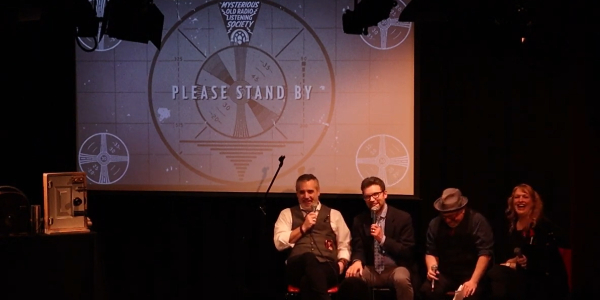
[00:00:16] Speaker A: The mysterious old radio listening society podcast.
[00:00:26] Speaker B: Welcome to the Mysterious Old Radio Listening Society, a podcast dedicated to suspense, crime and horror stories from the golden age of radio. I'm Eric.
[00:00:36] Speaker C: I'm Tim.
[00:00:36] Speaker D: And I'm Joshua.
[00:00:37] Speaker C: We love mysterious old time radio stories, but do they stand the test of time? That's what we're here to find out.
[00:00:42] Speaker D: This week I offer you a double feature. First, my own reading of they Bite, a 1943 short story by Anthony Boucher, followed by Nightfall's 1981 radio adaptation.
For once, I won't be the only one who read the story. We can all compare and contrast the original with the adaptation.
[00:01:03] Speaker B: Anthony Boucher was an American writer, editor and critic who worked across multiple mediums and genres. As a novelist, he wrote Primarily mysteries, including Nine Times Nine, a 1940 whodunit widely regarded as one of the finest locked room mysteries ever published. As a radio writer, Boucher contributed scripts to the New Adventures of Sherlock Holmes, the Adventures of Ellery Queen, and the Casebook of Gregory Hood. As a translator, he was among the first to bring the work of the renowned Argentine writer Jorge Luis Borges into English. Beginning with the Garden of Forking paths In a 1948 issue of Ellery Queen's Mystery Magazine, Boucher really wrote horror, and
[00:01:44] Speaker C: when he did, it was often a playful send up of the genre. For example, his 1942 Hugo Award winning novella the Complete Werewolf, tells the story of a mild mannered philosophy professor turned werewolf and his absurd encounters with devil worshippers, Hollywood starlets, G men, Nazis and at least one talking cat. In contrast, they Bite, first published in the August 1943 issue of Unknown Worlds, is a tightly focused, hard edged piece of unironic folk horror. Despite the story's popularity and frequent reprintings, it has been adapted only once by Len Peterson for Nightfall.
[00:02:15] Speaker D: Nightfall was a supernatural horror anthology produced by the Canadian broadcasting corporation between July 1980 and June 1983. Although inspired by the Golden Age of radio, the series embraced a more modern approach to horror, testing what was considered acceptable on Canadian radio at the time. Its intense situations, graphic sound effects and occasional use of strong language led some CBC affiliates to drop the program entirely.
[00:02:44] Speaker B: What happens when a lean, bleak 1940s horror story becomes a flashy boundary pushing 1980s radio play? Let's find out. Here is they Bite by Anthony Boucher, read by Joshua, followed by they Bite, adapted for Nightfall by Len Peterson it's
[00:03:03] Speaker C: late at night and a chill has set in. You're alone and the only light you see is coming from an antique radio. Listen to the sounds coming from the speaker. Listen to the music and listen to the voices.
[00:03:27] Speaker D: There was no path, only the almost vertical ascent.
Crumbled rock for a few yards, with the roots of sage finding their scanty life in the dry soil. Then jagged outcroppings of crude crags, sometimes with accidental footholds, sometimes with overhanging and untrustworthy branches of greasewood, sometimes with no aid to climbing but the leverage of your muscles and the ingenuity of your balance.
The sage was as drably green as the rock was drably brown.
The only color was the occasional rosy spikes of a barrel cactus.
Hugh Talent swung himself up onto the last pinnacle. It had a deliberate shape. Look about it.
A petrified forest of lilliputians, a Gibraltar of pygmies.
Talent perched on its battlements and unslung his field glasses.
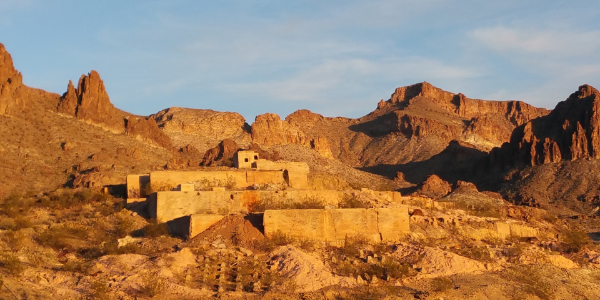
The desert valley spread below him. The tiny cluster of buildings that was Oasis, the exiguous cluster of palms that gave name to the town and shelter to his own tent and to the shack he was building, the dead ended highway leading straightforwardly to nothing, the oiled roads diagramming the vacant blocks of an optimistic subdivision.
Talent saw none of these.
His glasses were fixed. Beyond the oasis and the town of Oasis on the dry lake, the gliders were clear and vivid to him, and the uniformed men busy with them were as sharply and minutely visible as a nest of ants under glass.
The training school was more than usually active. One glider in particular, strange to Talent, seemed the focus of attention. Men would come and examine it and glance back at the older models. In comparison, only the corner of Talent's left eye was not preoccupied with the new glider.
In that corner something moved, something little and thin and brown as the earth.
Too large for a rabbit, much too small for a man.
It darted across that corner of vision, and Talent found gliders oddly hard to concentrate on.
He set down the bifocals and deliberately looked about him. His pinnacle surveyed the narrow flat area of the crest.
Nothing stirred, nothing stood out against the sage and rock but one barrel of rosy spikes.
He took up the glasses again and resumed his observations.
When he was done, he methodically entered the results in the little black notebook.
His hand was still white. The desert is cold and often sunless in winter.
But it was a firm hand and as well trained as his eyes, fully capable of recording faithfully the designs and dimensions which the they had registered so accurately.
Once his hands slipped and he had to erase and redraw, leaving a smudge that displeased him. The lean brown thing had slipped across the edge of his vision again.
Going toward the east edge, he would swear where that set of rocks jutted like the spines on the back of a stegosaur.
Only when his notes were completed did he yield to curiosity, and even then with cynical self reproach.
He was physically tired. For him, an unusual state from his daily climbing and from clearing the ground for his shack to be the eye muscles play odd nervous tricks.
There could be nothing behind that stegosaurus armor.
There was nothing.
Nothing alive and moving. Nothing. Only the torn and half plucked carcass of a bird which looked as though it had been gnawed by some small animal.
It was halfway down the hill. Hill in Western terminology, though anywhere east of the Rockies it would have been considered a sizable mountain. That Talent again had a glimpse of a moving figure.
But this was no trick of a nervous eye.
It was not little, nor thin, nor brown. It was tall and broad and wore a loud red and black lumberjacket. It bellowed Talent in a cheerful and lusty voice.
Talent drew near the man and said, hello. He paused and added, your advantage, I think.
The man grinned broadly.
Don't know me well, I dare say 10 years is a long time, and the California desert ain't exactly the Chinese rice fields. How's stuff still loaded down with secrets for sale?
Tallent tried desperately not to react to that shot, but he stiffened a little.
Sorry. The prospector getup had me fooled.
Good to see you again, Morgan.
The man's eyes narrowed. Just having my little joke. He smiled.
Of course, you wouldn't have no serious reason for mountain climbing around a glider school, now would you? And you'd kinda need field glasses to keep an eye on the pretty birdies.
I'm out here for my health.
Talent's voice sounded unnatural even to himself.
Sure, sure.
You were always in it for your health.
And come to think of it, my own health ain't been none too good lately. I've got me a little cabin way to hell and gone around here, and I do me a little prospecting now and then, and somehow it just strikes me, Talent. Like maybe I hit a pretty good load today.
Nonsense, old man. You can see I'd sure hate to tell any of them army men out at the field some of the stories I know about China and the kind of men I used to know out there wouldn't cotton to them stories a bit. The army wouldn't. But if I was to have a drink too many and get talkative like. Tell you what, Talent suggested brusquely, it's getting near sunset now and my tent's chilly for evening visits. But drop around in the morning and we'll talk over old times.
Is rum still your tipple?
Sure is kind of expensive now you understand.
I'll lay some in. You can find the place easily over by the oasis. And we.
We might be able to talk about your prospecting too.
Talent's thin lips were set firm as he walked away.
The bartender opened a bottle of beer and plunked it on the damp circled counter. That'll be 20 cents, he said, then added as an afterthought, want a glass? Sometimes tourists do.
Talent looked at the others sitting at the counter, the red eyed and unshaven old man, the flight sergeant unhappily drinking a Coke. It was after army hours for beer. The young man with the long dirty trench coat and the pipe and the new looking brown beard and saw no glasses.
I guess I won't be a tourist, he decided.
This was the first time Talent had had a chance to visit the desert sports spot.
It was as well to be seen around in a community.
Otherwise people begin to wonder and say, who is that man out by the oasis? Why don't you ever see him anyplace?
The sports spot was quiet that night, the four of them at the counter, two army boys shooting pool and a half dozen of the local men gathered about a round poker table, soberly and wordlessly cleaning a construction worker whose seem more on his beer than on his cards.
You just passing through? The bartender asked sociably. Talent shook his head.
I'm moving in. When the army turned me down from my lungs, I decided I better do something about it. Heard so much about your climate here I thought I might as well try it. Sure thing. The bartender nodded. You take up until they started this glider school. Just about every guy you meet in this desert is here for his health.
Me, I had sinus and look at me now. It's in the air.
Talent breathed the atmosphere of smoke and beer suds but did not smile.
I'm looking forward to miracles.
You'll get em. Whereabouts you staying? Over that way a bit. The agent called it the old Carker place.
Talent felt the curious listening silence and frowned. The bartender had started to speak and then thought better of it. The young man with the beard looked at him oddly. The old man fixed him with red and watery eyes that had a faded glint of pity in them. For a moment Talent felt a chill that had nothing to do with the night air of the desert. The old man drank his beer in quick gulps and frowned as though trying to formulate a sentence. At last he wiped beer from his bristly lips and said, you wasn't aiming to stay in the adobe, was ya?
No, it's pretty much gone to pieces.
Easier to rig up a little shack than try to make the adobe livable. Meanwhile, I've got a tent. That's all right, then. Maybe.
But mind you don't go poking around that there adobe.
I don't think I'm apt to. But why not?
Want another beer? The old man shook his head reluctantly and slid from his stool to the ground.
No, thanks. I don't rightly know as I.
Yes?
Nothing. Thanks all the same.
He turned and shuffled to the door. Talent smiled. But why should I stay clear of the adobe? He called after him. The old man mumbled.
What? They bite, said the old man, and went out shivering into the night.
The bartender was back at his post.
I'm glad he didn't take that beer you offered him, he said. Along about this time in the evening I have to stop serving him. For once he had the sense to quit.
Talent pushed his own empty bottle forward.
I hope I didn't frighten him away.
Frighten? Well, mister, I think maybe that's just what you did do. He didn't want beer. That sort of came, like you might say, from the old Carker place. Some of the old timers here, they're funny that way.
Talent grinned.
Is it haunted?
Not what you'd call haunted, no.
No ghost there that I ever heard of. He wiped the counter with a cloth and seemed to wipe the subject away with it.
The flight sergeant pushed his Coke bottle away, hunted in his pocket for nickels, and went over to the pinball machine.
The young man with the beard slid onto his vacant stool.
Hope old Jake didn't worry you, he said.
Talent laughed.
I suppose every town has its deserted homestead with a grisly tradition, but this sounds a little different. No ghosts. And they bite.
Do you know anything about it?
A little, the young man said seriously.
A little?
Just enough to Tallente was curious.
Have one on me and tell me about it. The flight sergeant swore bitterly at the machine.
Beer gurgled through the beard.
You see, the young man began, the desert's so big you can't be alone in it.
Ever notice that it's all empty and there's nothing in sight? But there's always something moving over there where you can't quite see it.
It's something very dry and thin and brown. Only when you look around it isn't there ever see it?
Optical fatigue, tallente began. Sure, I know every man to his own legend.
There isn't a tribe of Indians hasn't got some way of accounting for it.
You've heard of the watchers and the 20th century. White man comes along and it's optical fatigue.
Only in the 19th century things weren't quite the same.
And there were the Carkers.
You've got a specialized local legend.
Call it that you glimpse things out of the corner of your mind. Same like you glimpse lean dry things out of the corner of your eye and you encase them in solid circumstance. And they're not so bad.
That is known as as the growth of legend. The folk mind in action.
You take the carkers and the things you don't quite see and you put them together and they bite.
Talent. Wondered how long that beard had been absorbing beer.
And what were the carkers? He prompted politely. Ever hear a Sawney Bean, Scotland, reign of James I.
Or maybe the sixth, though I think Rockheed's wrong in that for once.
Or let's be more modern. Ever hear of the Benders? Kansas in the 1870s?
No.
Ever hear of Procrustus or Polyphemus or fee fi fo fum?
There are ogres, you know.
They're no legend. They're fact. They are the inn where nine guests left for every 10 that arrived. The mountain cabin that sheltered travelers from the snow sheltered the them all winter till the melting spring uncovered their bones. The lonely stretches of road that so many passengers traveled halfway.
You'll find them everywhere, all over Europe and pretty much in this country, too, before communications became what they are.
Profitable business.
And it wasn't just the profit. The Benders made money, sure, but that wasn't why they killed all their victims as carefully as a kosher butcher Sawney Bean got. So he didn't give a damn about the profit. He just needed to lay in more meat for the winter.
And think of the chances you'd have at an oasis.
So these Carkers of yours were as you call them, ogres?
Carkers? Ogres.
Maybe they were the Benders.
The Benders were never seen alive, you know, after the townspeople found those curiously butchered bones.
There's a rumor they got this far west and the time checks pretty well.
There wasn't any town here in the 80s, just a couple of Indian families, last of a dying tribe living at the oasis.
They vanished after the Carkers moved in.
That's not so surprising.
The white race is a sort of super ogre. Anyway, nobody worried about them but they used to worry about why so many travelers never got across this stretch of desert. The travelers used to stop over at the carkers, you see, and somehow they often never got any farther. Their wagons would be found maybe 15 miles beyond in the desert. Sometimes they found the bones too parched in white nod looking, they said. Sometimes.
And nobody ever did anything about these carkers. Oh, sure, now we didn't have King James vi.
Only I still think it was the first to ride up on a great white horse for a gesture. But twice army detachments came here and wiped them all out.
Twice.
One wiping out would do for most families. Talent smiled.
That was no slip. They wiped out the carcars twice because, you see, once didn't do any good. They wiped him out. And still travelers vanished. And still there were gnawed bones. So they wiped them out again.
After that they gave up and people detoured the oasis, made a longer, harder trip. But after all, Talent laughed. You mean to say these carkers were immortal?
I don't know about a mortal.
They somehow just didn't die very easy.
Maybe if they were the benders, and I sorta like to think they were, they learned a little more about what they were doing out here on the desert. Maybe they put together what the Indians knew and what they knew and it worked.
Maybe whatever they made their sacrifices to understood em better out here than in Kansas.
And what's become of them, aside from seeing them out of the corner of the eye?
There's 40 years between the last of the Carker history and this new settlement at the oasis. And people won't talk much about what they learned here in the first year or so.
Only that they stay away from that old carker adobe.
They tell some stories.
The priest says he was sitting in the confessional one hot Saturday afternoon and thought he heard a penitent come in.
He waited a long time and finally lifted the gauze to see was anybody there?
Something was there and it bit.
He's got three fingers on his right hand now, which looks funny as hell when he gives a benediction.
Talent pushed their two bottles toward the bartender.
That yarn, my young friend, has earned. Another beer. How about it, bartender? Is he always cheerful like this? Or is this just something he's improvised for my benefit?
The bartender set out the fresh bottles with great solemnity.
Me, I wouldn't have told you all that myself. But then he's a stranger too, and maybe don't feel the same way we do here. For him it's just a story.
It's more comfortable that Way, said the young man with the beard. And he took a firm hold on his beer bottle.
But as long as you've heard that much, said the bartender, you might as well.
It was last winter when we had that cold spell. You heard funny stories that winter.
Wolves coming into prospectors cabins just to warm up.
Well, business wasn't so good. We don't have a license for hard liquor. And the boys don't drink much beer when it's that cold. But they used to come in anyway because we've got that big oil burner.
So one night there's a bunch of them in here. Old Jake was here. That was the one he was talking to. And his dog Jeeger. And I think I hear somebody else come in. The door creaks a little, but I don't see nobody. And the poker game's going and we're talking just like we're talking now. And all of a sudden I hear a kind of noise like a crack over there in that corner behind the jukebox near the burner.
I go over to see what goes, and. And it gets away before I can see it. Very good.
But it was little and thin, and it didn't have no clothes on.
Must have been damned cold that winter.
And what was the cracking noise? Tallente asked dutifully.
That that was a bone. It must have strangled Jeeger without any noise. He was a little dog. It ate most of the flesh. And if it hadn't cracked the bone for the marrow, it could have finished. You can still see the spots over there.
The blood never did come out.
There'd been silence all through the story.
Now suddenly all hell broke loose. The flight sergeant let out a splendid yell. And began pointing excitedly at the pinball machine. And yelling for his payoff. The construction worker dramatically deserted the poker game. Knocking his chair over in the process. And announced lugubriously that these guys here had their own rules. See, any atmosphere of Carker inspired horror was dissipated.
Talent whistled as he walked over to put a nickel in the jukebox. He glanced casually at the floor.
Yes, there was a stain, for what that was worth. He smiled cheerfully and felt rather grateful to the Carkers. They were going to solve his blackmail problem very neatly.
Talent dreamed of power that night.
It was a common dream with him. He was a ruler of the new American corporate state that would follow the war. And he said to this man, come and he came, and to that man, go and he went, and to his servants, do this. And they did it.
Then the young man with the beard was standing before him, and the dirty trench coat was like the robes of an ancient prophet, and the young man said, you see yourself riding high, don't you? Riding the crest of the wave. The wave of the future you call it.
But there's a deep dark undertow that you don't see, and that's a part of the past and the present and even your future.
There is an evil in mankind that is blacker even than your evil and infinitely more ancient.
And there was something in the shadows behind the young man, something little and lean and brown.
Talent's dream did not disturb him the following morning, nor did the thought of the approaching interview with Morgan. He fried his bacon and eggs and devoured them cheerfully. The wind had died down for a change and the sun was warm enough so that he could strip to the waist while he cleared land for his shack.
His machete glinted brilliantly as it swung through the air and struck at the roots of the brush.
When Morgan arrived, his full face was red and sweating.
It's cool over there in the shade of the adobe, talent suggested. We'll be more comfortable.
And in the comfortable shade of the adobe he swung the machete once and clove Morgan's full, red, sweating face in two.
It was so simple it took less effort than uprooting a clump of sage.
And it was so safe. Morgan lived in a cabin way to hell and gone, and was often away on prospecting trips. No one would notice his absence for months if then no one had any reason to connect him with Talent, and no one in Oasis would hunt for him in the carker haunted adobe.
The body was heavy and the blood dripped warm on Talent's bare skin.
With relief he dumped what had been Morgan on the floor of the adobe.
There were no boards, no flooring, just the earth.
Hard but not too hard to dig a grave, and no one was likely to come poking around in this taboo territory to notice the grave. Let a year or so go by and the grave and the bones it contained would be attributed to to the carkers.
The corner of Talent's eye bothered him again.
Deliberately he looked about the interior of the adobe.
The little furniture was crude and heavy, with no attempt to smooth down the strokes of the axe. It was held together with wooden pegs or half rotted thongs.
There were age old cinders in the fireplace and the dusty shards of a cooking jar among them.
And there was a deeply hollowed stone covered with stains that might have been rust if stone rusted.
Behind it was a tiny figure clumsily Fashioned of clay and sticks, it was something like a man and something like a lizard and something like the things that flit across the corner of the eye.
Curious now, Talent peered about further. He penetrated to the corner that the one unglassed window lighted but dimly.
And there he let out a little choking gasp. For a moment he was rigid with horror.
Then he smiled and all but laughed out loud.
This explained everything.
Some curious individual had seen this, and from his accounts had burgeoned the whole legend.
The Carkers had indeed learned something from the Indians. But that secret was the art of embalming.
It was a perfect mummy. Either the Indian art had shrunk bodies, or this was that of a 10 year old boy.
There was no flesh, only skin and bone and taut, dry stretches of tendon between the eyelids were closed. The sockets looked hollow underneath them. The nose was sunken and almost lost.
The scant lips were tightly curled back from the long and very white teeth, which stood forth all the more brilliantly against the deep brown skin. It was a curious little trove, this mummy. Talent was already calculating the chances for raising a decent sum of money from an interested anthropologist. Murder can produce such delightfully profitable chance byproducts. When he noticed the infinitesimal rise and fall of the chest.
The carker was not dead.
It was sleeping.
Talent did not dare stop to think beyond the instant. This was no time to pause, to consider if such things were possible in a well ordered world.
It was no time to reflect on the disposal of the body of Morgan. It was a time to snatch up your machete and get out of there.
But in the doorway he halted there, coming across the desert, heading for the adobe, clearly seen this time was another, a female.
He made an involuntary gesture of indecision. The blade of the machete clanged ringingly against the adobe wall. He heard the dry shuffling of a roused sleeper behind him.
He turned fully now. The machete raised. Dispose of this nearer one first, then face the female. There was no room even for terror in his thoughts, only for action. The lean brown shape darted at him avidly. He moved lightly away and stood poised for its second charge. It shot forward again. He took one step back, machete arm raised, and fell headlong over the corpse of Morgan.
Before he could rise, the thin thing was upon him. Its sharp teeth had met through the palm of his left hand. The machete moved swiftly. The thin, dry body fell headless to the floor. There was no blood.
The grip of the teeth did not relax. Pain coursed up Talent's left arm. A sharper more bitter pain than you would expect from the bite. Almost as though venom. He dropped the machete and his strong white hand plucked and twisted at the dry brown lips. The teeth stayed clenched, unrelaxing. He sat, bracing his back against the wall and gripped between his knees. He pulled. His flesh ripped and blood formed dusty clots on the dirt floor. But the bite was firm.
His world had become reduced now to that hand and that head. Nothing outside mattered. He must free himself. He raised his aching arm to his face, and with his own teeth he tore at that unrelenting grip.
The dry flesh crumbled away in desert dust, but the teeth were locked fast. He tore his lip against their white keenness and tasted in his mouth the sweetness of blood.
And something else.
He staggered to his feet again.
He knew what he must do.
Later he could use Cauteria tourniquet, see a doctor with a story about a Gila monster. Their heads grip too, don't they? But he knew what he must do now. He raised the machete and struck again.
His white hand lay on the brown floor, gripped by the white teeth in the brown face.
He propped himself against the adobe wall, momentarily unable to move. His open wrist hung over the deeply hollowed stone.
His blood and his strength and his life poured out before the little figure of sticks and clay.
The female stood in the doorway now, the sun bright on her thin brownness.
She did not move.
He knew that she was waiting for the hollow stone to fill.
[00:33:31] Speaker A: What happened down there?
[00:33:34] Speaker D: You have just heard they Bite by Anthony Boucher.
Read to you by Joshua English Scrimshaw with music by Lead Belly and Julian Carrillo.
[00:33:51] Speaker A: And his body ever been found.
My goodness, my girl. Don't you lie to me.
Tell me, where did you sleep last night? Come on and tell me something about it. In the pines, in the pines where the sun don't ever shine. I miss you.
Night.
In the dream you are falling, Lost in the listening distance as dark locks in.
Nightfall.
Good evening.
Tonight's story takes place on the road to nowhere, Nevada.
It has to do with people who are homesick for themselves.
Based on a short story by Anthony Boucher and dramatized for radio by Len Peterson. The play is called they Bite.
There it is. What were they? Where would you see?
[00:35:16] Speaker D: What?
[00:35:19] Speaker A: Nothing.
Shadow. Flickering corner of my eye.
This. This ain't Vietnam, Huey Blair. A goop behind every bush and blade of grass. War is over. This is your you, United States. The great American desert. I'm not going crazy.
Don't give me that look, Corey. The heat, Huey boy. Too much sun hit for the shade, huh? Hey, heard wild creatures saw them. Almost something wild,
[00:35:58] Speaker C: Man.
[00:35:58] Speaker A: It was heavy weather this with my old flying buddy Huey. The screwy and clunk got him out here to these Utah foothills. Adobe country, no man's desert.
Huey's into old bones and dinosaurs. But before all that, army hero Blair went as crazy as the war in Vietnam. Got all twisted up. His friends the enemy, the enemy, his friends. Then who shoots who?
The shrink stateside shrunk his mind back to what's considered normal for middle Americans. But Huey was still nuts enough to get a college degree.
Paleontology, Petrified life science.
But the way that kid Dipsy doodled over them Viet Cong jungles kept me rear gunner Corey in one piece. So I owe him all these years since I got a franchise here in the desert. Filling station on the outskirts of oasis. About as close as you can get to nowhere, Nevada.
One day I was going through my Vietnam suit souvenirs and thought of Huey Blair and sent him a postcard. How goes it, Lieutenant? And I mentioned the huge, you wouldn't believe petrified bones we got out here that appear then disappear in these rocky sand blown foothills.
He gets out here almost before the postcard gets to him. But not before a gale's covered them old bones again and made a liar out of me.
Why didn't you pound in markers, Cory?
I could trust the sand and wind for a few days.
Nothing's where it was and the bones blew away. No, they're anchored in rock. Come on, Corey. Where are the bloody bones?
Well, we never did find the bones. I seen wind found them for us one hour of a night.
But the wind didn't blow away them weird sounds and shadows.
Hear that? No, but See that?
Yeah.
Stegosaur.
[00:38:12] Speaker D: Bones.
[00:38:13] Speaker A: What bones? Stegosaur.
Small headed hunchback, spike tailed plant eating dinosaur.
See these double row of upright plates along the back for defense? Hey, am I still stringing you? Corey, you delivered.
What do you figure he'd weigh in at? 25 tons with a brain the size of a fox terrier or a military commander.
Two and a half ounces.
Corey, there's a good chance we've got a complete skeleton. If the stern end is down under the sand back there.
Start digging. To see? No, to cover it up.
[00:38:50] Speaker D: What?
[00:38:52] Speaker A: You don't want this critter? An army glider down the valley there. It's too close. They spot this flying low, it's goodbye bones. Souvenir hunters will come swarming all over and that'll be the end of 25 tons of Stegosaurus scratches on these bones. Huh? Teeth marks. I've never seen that.
And those marks were made before the bones turned to stone.
What do you make of it? Ever see teeth marks like that? Well, I'm no dentist. Not from any animal that exists today.
Powerful bite, but not a large creature killer or scavenger.
Corey, this could be the biggest discovery in paleontology in 100 years. What? These teeth marks. The great mystery. What killed off the dinosaurs? Maybe this is the first clue. Grab a shovel. Cover the jewels.
Shovel. Cory, inch by inch, keep the rest covered up. When I'm ready to call my gang from the museum to come and fetch him.
What in creation is making those sounds? There it is. What?
[00:40:01] Speaker C: Where?
[00:40:04] Speaker A: Gone.
It's gone.
So you're seeing it too?
I don't know if I really saw anything.
Maybe, maybe not getting you search.
Yeah, it's getting you.
Up in the foothills with Huey the Screwy. Helping him cover and uncover his 25 ton baby.
I got to hearing what he heard and seeing what he saw.
But back in town or at the filling station, I knew it was Boswell.
Huey's psycho magination.
He worked hard at the old bones business though. Making drawings, impressions, taking snapshots.
Corey, I can't thank you enough for tipping me off on the stegosaur. And I think I found some fragments of a podakasaurus and the salt of a. What mean Ferocious little beasts. They made the bites on your big bones? No, their bites are too small. Yeah, but these.
These drawings to them.
Army glider planes in the valley. Not much connection with the old bones business. Just doodling. I always doodle. And these cages, even with field glasses, I can't make out what's in those cages. The army's packing them into gliders and taking off. With what? Birds, animals? What do you care? Huey, we're out of that. Something's going on. Oh, stick to your bones. Well, I am sticking. They're not going anywhere without me. Good. You're the doctor.
They're sniffing around again. So let them. Let them.
They ain't Brontosauruses and they ain't Tyrannosauruses.
See, I've been boning up on your monsters. Don't let them buzz and chirp. So what? More than buzzing and chirping now.
Barking, howling. I don't hear nothing. That's not part of the territory.
[00:42:23] Speaker B: Liar.
[00:42:23] Speaker A: Look behind those rocks. Carcasses of birds, rabbits, rodents. So what? They're torn apart. Devoured by powerful jaws and sharp teeth.
[00:42:30] Speaker D: Of what?
[00:42:31] Speaker A: Creatures that don't exist to you, Huey the Screwy. You can see, hear anything in the desert.
Stop working like a dog. It's hot enough to melt a snake.
There's always the Cactus Bar over an oasis. What?
Oh, I kind of thirsty at that,
[00:42:57] Speaker D: Huey.
[00:42:58] Speaker A: I.
I've heard talk.
Talk?
Yeah. Local folks wondering who is that camped up in the foothills near the old Carker place.
Is he on the run?
Hiding out?
You're sure to get snoopers snooping on you if you don't stop acting like a fugitive.
You got it right.
I am on the run.
I am a fugitive.
Yeah.
Yes, sir.
First mark on the house. After that, I overcharge.
Set him up. Sid, this is Hugh Blair. Hey. Yeah, set him up. Was in our war too. Was a barkeeper. Just doing what he's doing now. Decorated six times for it.
Yeah, six bloody medals. Coriol. Guess what I ran into up in the hills. Live and breathe and stay thesaurus. The buzzing and squeaking and barking got really bad after you left this afternoon. I felt. I felt I was being spied on.
Some guy, tanned, full beard, pack sack like a prospector.
Blair. He knows my name.
Hugh Blair. Lieutenant Morgan.
Morgan from Vietnam?
Morgan the desk flying major.
If Morgan had a dollar for every pointless death, theirs and ours to his credit, he'd be a rich man.
Morgan. The last straw in the Vietnam manure pile.
Only my straight jacket saved Morgan from a lethal blast of napalm.
Lieutenant Blair? That's right, Major.
[00:45:05] Speaker B: How.
[00:45:07] Speaker A: How have you been? Fine. Just fine. No more trouble, no more crazies. Well, I didn't mean that. The crazies all gone, Major. You're well again, Blair.
Good bit, Major, except for a spot in one lung. That's why I'm hanging out here. This hot, dry air is supposed to clear me up. Is that your tent? Just over the ridge, yeah.
How about yourself? I thought you were still in the army. No.
Back to my real trade. Prospecting.
Find anything?
Paid to keep my mouth shut.
[00:45:42] Speaker D: Sure
[00:45:45] Speaker A: sketchpad you got there. Yes.
Going arty on us, Blair?
Can't just sit around.
I'd go nuts.
Is that a glider you're drawing in? Landscapes mostly. Rocks, foothills. Does the glider field down there interest you, Blair?
Not especially.
Have you figured out their function? The gliders, I mean? No.
Well, any new tricks since we were nervous in the service?
You reckon so?
Let me see your sketches.
Not worth looking at. Let me see.
Show me.
Sorry, Morgan. You're not my superior officer now.
Just an old buddy trying to keep you out of trouble. Yeah.
See you Around.
Clear up that spot on your lung, Blair, and don't get any more.
Cory. What did the son of a bitch mean by that? To cover up how much I was thrown meeting up with him, I invited Morgan to visit me tomorrow in my tent. I go to rum. I told him. If rum still is, drink dark rum. It is. It is. Morgan's never gonna change. There's no bloody chance encounter. Well thought he's prospecting for minerals, real estate, maybe. Cooking up conflict where there's peace and quiet. Still beating the bushes for spies and traitors. But the army shrinks have me labeled a psycho and Morgan a patriot. Nothing kinky in the way. He pushed us in Vietnam into more and more outrageous sacrifices. Yes, he said himself to test our loyalties. Definitely pathological. Are getting tired of spraying Mekong peasants with bullets and napalm. He sure made a special target of you, Huey. The screwing some hunting to find me here.
Who knows except you and the FBI, CIA, army and the entire credit network. They're never gonna stop loving you, Huey boy. Morgan's madness drove me into the nuttiness of wasting three hours on my way here burying my stegosaur sketches just because of my doodles of those army gliders. Scared of being taken for a spy. Easy now. Easy. Morgan was filing to CIA all the time in Vietnam. What's his job now? To keep a buffer zone between that glider field and honest man.
Playing prospect.
That's his cover. Keep out. No trespassing. The signs are all over, huh? Sure way to draw the snoopers. Well, as John Wayne would say, there ain't enough room in these here foothills for me and Morgan. Hey, how am I gonna diffuse you, Lieutenant? Come on, come on. Meet the boys, the locals.
Take your mind off Morgan.
Best poker players in these parts. It's Fred, Joe, Art, BW and old Jake.
This flying buddy of mine from Nam, Hugh Blair, he's got lung trouble. So we come to God's country for a cure. Yeah, we. We seen you was camping up near the Carker place.
Don't know if that's healthy, though. Carker place? Adobe hut. Just one hill over from that tent of yours. Now, you keep clear of it. Why?
Oh, they ain't saying.
Spill it, old Jake. No sherry.
Tell him, Jake.
Warn him. Told him.
Tell him so he'll take it serious. Don't be such a cuss, honey.
They bite.
What? Bite?
Well, I ain't say it no more. Not a word more. A war vet hero from NAMM Here for his health. Do him a favor. He did you One. Oh, how do you get mad? Well, for him you'd be sitting playing poker with the inscrutable Viet Cong. Shut him up. Shit. I don't want nothing from the Carker place coming after me. Worse than Vietcong. I tell you. The Carcas were homesteaders. Poor place for a homestead. Sure enough. A lot of kids and grandkids. Well, they could raise on that scrub land. Yeah, sure, sure. So, so? So what's up there on the Carter place? Oh, well, no ghosts, but that's what tourists are looking for. And something worse.
About as hard to spot as ghosts, but real, whatever they are. And lately, coming down into town, making trouble, they're brown and naked and sneaky and make noises like no animal you ever heard. Cory and I have heard them.
Maybe we have, maybe we haven't. That's about all anybody can see.
[00:51:02] Speaker D: And
[00:51:04] Speaker A: they bite.
They sure do. Like critters from long ago and not of these parts. Some say it's the Carkers. Third, fourth generation. Yeah, original carkers. Burt and Sarah. I knew them.
Went crazy trying to make a go of homesteading on that godforsaken land of Cain.
Ended up eating their own kin.
And others? Only rumors, Jake. Rumors. That's God's truth. And they're still at it. There was Indians before them. They got starved out, too. No. Folks from around here disappeared way back.
And travelers that stopped at the Carker place just vanished. The army's come in twice to clean the place out.
Didn't work.
Good for bar business, though. Jake, tell him about your daughter.
No, no, here.
Right here in Cactus Bar. One of those things ate up old Jake's dog. And nobody noticed till we heard the thing crack the leg bones with his teeth. Yeah, Nugget.
Best dog I ever. The thing had finished almost the flesh and was cracking the bones for the marrow when we jumped. Go look. It skitted out. Or we could lay a hand on it. Well, who'da dared? And lose three fingers like Father Kelly? But I seen it wasn't like no creature I ever saw before.
Like something small and brown and leathery from a million years ago.
Worth the price of a mission. Here, Cactus Bar. Sell me irons.
Unbelievable.
But not impossible.
Makes me think of the creatures that did in the dinosaurs. Small, quick, ferocious. Yeah, they bite. How many times did we hear that tonight? And they meant bite.
The teeth marks on my stegosaur aren't tender little nymphals.
How's that for full moon talk, Cory?
Makes a great story.
Anyway, glad to see you in such a good humor for A change.
Maybe the army has discovered those prehistoric creatures and is trapping them. The army will breed them and turn them loose on the enemy. Great sport is moonthought, Huey. It all comes together, huh?
Those cages for the. No. See him? Critters. Another airborne weapon. Is that why Morgan came snooping? Because he thinks I'm onto a top secret?
Why don't you ask him if he comes for the rum I offered him?
Yeah.
Yeah, I'll put it to him, all right.
Lieutenant Hugh Blair of the Fighting Army Air Corps. Yes, sir. Major Morgan.
As you were.
Easy.
Well, I've come for that free shot of rum you promised. Yes, sir. What are you up to with that machete? Oh, just clearing sage for the hell of it.
So much of what we do, Major, is just for the hell of it.
Yeah.
Seems. Yeah. Sort of got the habit in the domino war.
Read any books on the war since coming back? Few.
Man fights first, then finds out after. What war? What have you found out, Major?
Something not so different from what you were screaming about when you went mental and we shipped you home. Is that so, Major?
[00:55:10] Speaker D: We.
[00:55:11] Speaker A: We treated you rough, but you were rough too. Yeah.
Can we bury the hatchet?
[00:55:17] Speaker D: Sure.
[00:55:18] Speaker A: Drink to it?
[00:55:19] Speaker D: Sure.
[00:55:21] Speaker A: Why not?
Bury the hatchet.
He's so friendly. I know he's about to fix me his way in Vietnam. Nice friendly, then the smash.
Bury the hatchet.
Will a machete do, major? What war? Reparations.
To pay back what we did on your orders. For the hell of it. What are you talking about? What we learned in the domino war. War? War's over and I beat you to the jump. What are you doing with that machete? Burying the hatchet, Major.
In your.
Just carrying out orders, sir.
Creatures that might smelling blood, meat a meal.
Shall I leave you here, Major?
Let the no see him speak. You clean.
[00:56:28] Speaker D: No.
[00:56:30] Speaker A: I'll give you a decent burial in the haunted hut.
Nobody will go snooping there.
And if they do and find your gnawed bones, they'll blame the carker monsters.
Major, you're my farewell to Vietnam.
The adobe hut.
What was in it when I got there?
It's a crude furniture, cinders in the fireplace, and near it, a tiny rough figure of clay and straw. Half human, half lizard.
Below that, a hollowed stone covered with dried blood and fresh.
The rest of what happened will happen. The beach together.
Huey scrawled words on the wall of the hut in wet clay and blood.
Carter sure knew how to keep snoopers out of this hut.
A mummified woman, skin and bone, eyelid shut Tight nose sunk in, lips curl back from the teeth.
Am I imagining her chest rising and falling, Breathing alive, this carker sleeping creature that bites Hugh grabs his machete, makes for the door.
[00:58:21] Speaker B: No.
[00:58:21] Speaker A: Burying Morgan now. Oh, no.
[00:58:24] Speaker D: No.
[00:58:24] Speaker A: Across the desert, a brown skinny creature, savage woman. Comes hurrying to the hut. Hewitt turns back inside, drops the machete.
Mummy sinks her sharp teeth into Blair's left hand and holds on. Let go. Hugh grabs the machete again and slashes the carcass, severs the dry, bloodless body from the head.
But the creature's teeth stay locked in his hand.
He can't reach. Rip the clenched teeth loose with his free hand. Bloody creature fall with his own teeth savagely biting.
Crazed by the pain, he swings the machete to free himself and his hand.
And the grip and white teeth of the thing that bites tumble to the floor beside Morgan.
Free again, he makes for the door, but the female creature hurries toward him. He moves back into the hut. I can't beat her.
[00:59:23] Speaker D: Oh, she inside.
[00:59:24] Speaker A: Running. Ambush her inside the door. But the blood flowing from his gape and wrist into the hollowed stone so weakens him. He falls to his knees.
The woman creature feels a doorway, but comes no further.
She waits for his spurting blood to fill the hollow stone.
The way you stand there, creature, woman, I know you waited many times for the stone to fill with warmth.
[01:00:05] Speaker D: Red
[01:00:07] Speaker A: blood.
You have just heard they bite. The Anthony Boucher short story dramatized for this series by Len Peterson.
Featured tonight were John Stocker as Corey and Robert Haley as Hugh Blair.
You also heard David Calderisi as Morgan, Ken James as set him up, Sid and Maber Moore as old Jake.
Our recording engineer this week is Tom Shipton, with sound effects by Matt Wilcott. The series story editor is Earl Toppings, with the production assistance of Nancy McElveen.
Nightfall is produced and directed for CBC Radio by Bill Howell.
And now here's a final word from your host. Hello again.
Next week's Nightfall features a new adaptation of a story that has always had a special place in my heart.
Whenever his pale blue eye fell on me, my blood ran cold.
And so, by degrees, very gradually, I made up my mind to take the life of the old man and thus rid myself of the eye forever.
It was an evil eye, but Wetherby was very kind to me. No one had been this kind. It was too much to bear.
You fancy me mad?
Mad men know nothing.
But you should have seen how wisely I proceeded, with what caution, with what foresight, with what dissimulation.
I went to Work.
Edgar Allan Poe's the Telltale Heart, adapted for radio by Len Peterson and starring Richard Monette.
Next week on Nightfall.
Until then, careful of the edge
[01:02:09] Speaker B: that was. They Bite by Anthony Boucher, first read by Joshua, followed by the Nightfall version of the book. Or the story, I guess.
[01:02:20] Speaker D: Short story, short story.
[01:02:22] Speaker B: They Bite by Len Peterson, here on the mysterious old Radio Listening Society podcast once again. I'm Eric.
[01:02:28] Speaker C: I'm Tim.
[01:02:28] Speaker D: And I'm Joshua.
[01:02:29] Speaker B: Wow, that was a phenomenal job, Joshua, the reading of that.
[01:02:33] Speaker D: Thank you.
[01:02:34] Speaker B: The music and Leadfoot Jones or whoever that was.
[01:02:39] Speaker C: How can you be so old and not yet know the things that old people are supposed to know?
You did not do Nightfall any favors there. That was awesome.
[01:02:47] Speaker B: Yeah, right?
[01:02:48] Speaker D: The Boucher story, I think, is fantastic.
And a little behind the scenes for our listeners is occasionally when we reach the end of a recording set where we have recorded maybe six to eight, once or twice, 10 episodes in a single sitting, we get to the last episode of that recording session and we get to the next time. And if we don't have a next time, then when I am eventually editing that episode, I have to pull out a microphone and, you know, whatever we've decided, next time is then and record and dub that next time in. And it's a pain in the butt. So on our last recording session, I had just recently read they Bite. And I knew Nightfall did a version, so I just panicked and went, nightfall, they Bite.
[01:03:36] Speaker A: Right.
[01:03:36] Speaker D: And when I listened to it again before this recording session, another peek behind the curtain. This is the first episode of a recording session. I realized most of what interests me about Nightfall's version is just the choices they made in relation to the original. So I thought, hey, this might be the perfect time to just present them both instead of letting Nightfall ruin the original story for anyone listening who was interested in the original story. And they can kind of have both and compare and contrast, and we can, too.
[01:04:07] Speaker B: And you kind of tricked me into sort of reading something.
[01:04:10] Speaker D: You sort of almost read something vicariously.
[01:04:14] Speaker B: Yeah.
[01:04:15] Speaker C: And I thought, future you just come over to Eric's place and read things to him.
[01:04:20] Speaker D: Read them to sleep.
[01:04:22] Speaker B: I really love that idea.
[01:04:23] Speaker C: Nice.
[01:04:25] Speaker D: Yeah.
[01:04:25] Speaker B: But your reading was great and the short story was just fantastic. I mean, it's really odd and terrifying and interesting. Also, the other thing, a few weeks ago, I learned all about the benders. The benders. And I didn't know that was a thing until the Tim and Joshua taught me on a podcast about that serial killing family in Kansas that was somehow related to little Houses.
[01:04:50] Speaker D: We go around to mini schools and teach about the benders. So we have a whole program, if you're interested in.
[01:04:56] Speaker C: We drive around in a unmarked white van and.
[01:05:00] Speaker B: So would you say that Peterson's short story was inspired by the story of the benders?
[01:05:08] Speaker D: Bouchers, yes.
[01:05:10] Speaker B: I'm sorry. Bouchers.
[01:05:11] Speaker D: Yeah. I think he was inspired by the benders, for sure. But what he does with the story, I think he makes it his own. And one of the choices I really like is that the protagonist is evil.
[01:05:26] Speaker B: Right.
[01:05:27] Speaker D: He's a spy. This is written in 1943. So he's working against the US government, which means he's supplying these secrets to the Axis powers.
And he has that strange dream where he imagines himself as the ruler after the war of the American corporate state. And it has all this biblical language in it, and it's just really authoritarian and strange.
[01:05:54] Speaker C: Yeah. As a dream, just the phrase of I say come and they come, and I say go.
[01:05:58] Speaker D: Yeah. Which is from the centurion says that the one who asks Jesus to heal his servant, and it's his way of saying, I understand power, and you, Jesus, you got the power.
So it is an expression of power, obviously, in the dream and its sources, too. And to make it all just that icky combination of religion and government and power.
[01:06:23] Speaker B: Do you know.
Do you know how many biblical references we would have missed in this podcast had you not been a part of it?
[01:06:30] Speaker D: Tim gets them all, I bet.
[01:06:31] Speaker C: Pretty well.
[01:06:32] Speaker D: But he's a former snake handler.
[01:06:38] Speaker C: All right. Well, we're not kidding.
[01:06:42] Speaker B: I don't get any of them, but yeah. Then it's also interesting that he brings up in the short story the Benders, but then other stories throughout history of travelers stopping somewhere, you know, and being
[01:06:57] Speaker D: killed or killed or in some way.
[01:06:59] Speaker B: So this is like the fact that the bender thing wasn't a thing that happened, that it's a trend setting up
[01:07:07] Speaker C: to a fundamental essence, essential aspect of frontier worlds. Right. I can't remember which version it was, but the.
It is a world in which 10 people will come, nine people will leave.
[01:07:21] Speaker B: The thing with humans, that in a frontier world, that one out of every 10 stuckies is going to be a problem.
[01:07:29] Speaker C: Yeah.
That in the absence of a really strong civic structure, there's a percentage of people who will just be feral.
[01:07:39] Speaker B: Right.
[01:07:39] Speaker D: And then when people die of even natural reasons because of this hostile environment, it's a new one that they are pioneering. It can then also be attributed to these kind of folk stories and creatures of horror, whether they really exist or not. And that is part of that debate going on in the bar that I really like in Boucher's story where talent seems skeptical of it all. Right up to the last moment.
Even exploit it. Yeah.
[01:08:13] Speaker C: To pivot a little towards comparison of the two.
The pacing of the story itself, I thought was so good.
[01:08:21] Speaker B: Which one? Joshua's or the. Yeah, I'm sorry.
[01:08:23] Speaker D: Yes.
[01:08:24] Speaker C: The original short story.
The story moves quickly, like there's no fat on it, but it builds its moments meticulously.
There's beat by beat getting you to the emotional space to punch you in the face as it does, versus Nightfall, which is just a wild screaming run at the story.
[01:08:50] Speaker D: A really good description.
There's something appropriate though, to that for their adaptation. Yes.
Nightfall's wild and screaming approach matches their choice to reset Boucher's story and post Vietnam America.
[01:09:10] Speaker B: So two things. And the first one is. I need to ask you a question. After listening to Joshua's and then listening to the Nightfall version, both times I got lost in the final second. And I need some clarification.
He's taking his hand off.
He's standing in front of the lady creature, the female.
And what happens?
Like, I didn't quite catch.
[01:09:37] Speaker C: I'll give you what my take is. The implication, the moment just pauses there, at least in the original short story, of the sort of acknowledgment. And this is me putting my interpretation on top of it, of I have one hand left.
I did pretty good against this last thing, but I had to lose a hand over it. And I maybe can kill that thing, but if it bites me, then I can't cut my other hand off.
That even in his best situation, he's
[01:10:05] Speaker D: dead and he's losing all that blood. Sure. And also the image of it pouring into this bowl that he found.
[01:10:14] Speaker C: That is the hollow in the floor.
[01:10:16] Speaker D: The hollow in the floor that's set next to the idol, the kind of lizard God thing. And that he realizes that he has become part of this ancient ritual and he's a sacrifice. Specifically that she has probably stood there and watched blood drain into this bowl over and over again.
He is part of the folk horror that was being described to him at the bar.
[01:10:41] Speaker B: Now I just wanted to make sure that it was, as I just found out, somewhat open ended of an ending and me not just missing something.
You are to take for granted that this is the end or whatever you want. But there is nothing that.
[01:10:58] Speaker C: Yeah, I wouldn't go say definitive thing. That's kind of.
[01:11:00] Speaker B: Thank you. That's All I was asking it is
[01:11:03] Speaker D: alluded to, but I think it's very clearly. He's going to die.
[01:11:06] Speaker B: He will not wanted to hear it.
[01:11:07] Speaker D: Yeah.
[01:11:08] Speaker B: Or I needed another four minutes.
[01:11:10] Speaker D: Woman will clamp onto his stump, stop the bleeding by biting down on it. And you don't know.
He'll have the. The little woman stuck on his stump.
[01:11:19] Speaker B: But you don't know. He didn't write it. So that could have happened.
[01:11:22] Speaker D: Good.
[01:11:23] Speaker C: Could have been.
[01:11:24] Speaker B: Totally finish your story.
[01:11:26] Speaker C: I'll make.
[01:11:27] Speaker A: I'll be okay.
[01:11:28] Speaker B: Right now I gotta walk around going, I don't know. Maybe they got married thing in the voucher board.
We don't know.
The other then question I have for me, listening to you read it and then hearing Nightfall's version.
And this is what's going to be an interesting question for me. I thought it was pretty faithful adaptation by Nightfall at the end.
[01:11:55] Speaker D: I think the problem is it tried to be really faithful in the last 10 minutes. So it had to speed through the actual elements, the story. And I think it added a lot of contemporary things that I think were fascinating from a historical perspective.
Changing that lens from World War II to Vietnam, but ultimately detracted from the ending mainly just because it didn't leave itself enough time. It rushes through that and the actor just says everything so fast that it's hard to even track, I think.
[01:12:31] Speaker B: Would you say that had I not known the original short story that I would have had a hard time tracking the Nightfall version without that information ahead of time?
[01:12:40] Speaker C: I kind of went through the same question of had I not.
Was not familiar with the story beforehand, what would I take away? That like the relationship between the major and the nutty guy whose name I clearly.
[01:12:53] Speaker D: But Huey the Screwy.
[01:12:55] Speaker C: Huey the Screwy. Thank you. Would have seemed to be more important to me than I took it to be.
[01:12:59] Speaker D: Because
[01:13:02] Speaker C: the abuse of power, the madness that exists in war that in listening to like this is not the original story part.
[01:13:11] Speaker D: Yeah. It seemed to want to drag ideas into this story to try to map it onto it. That didn't make sense. I mean, one of the interesting things it does when it's looking at the United States military as a dangerous or corrupt power is the implication that they're capturing these creatures somehow in that glider school because he sees cages and that they might be weaponizing them. Gonna drop these on.
[01:13:39] Speaker C: Yeah.
[01:13:40] Speaker D: On enemy powers somewhere.
[01:13:42] Speaker B: Which, by the way, is the story I want to see next.
[01:13:47] Speaker D: You can ride it.
So then when it starts opening the world up to such a degree.
Boucher's Original ending, which is kept intact.
It seems rushed and out of nowhere.
[01:14:01] Speaker C: Yeah. And smaller.
[01:14:03] Speaker D: It's smaller than the rest because we
[01:14:05] Speaker B: don't get an answer to what the US government is doing.
They set us up with that in the Nightfall version, Right.
Oh, what's this big secret going on? And we don't get that answer.
[01:14:17] Speaker D: You can see some parallels if you really squint, with Vietnam and Boucher's story in that.
In the Nightfall version, Hugh sees himself as a sacrifice by the US government in the war.
And now here he is once again, perhaps literally being sacrificed for whatever the government is planning to do with these Carkers.
But I still think it's a stretch as written and they needed to underscore that more or draw it out in some way.
[01:15:04] Speaker C: Also interesting of often in radio that you want a first person, sort of narrator person to step in, to be his friend who's not him, to sort of introduce us to him.
[01:15:17] Speaker D: That
[01:15:19] Speaker C: being able to be in his head the whole time, as in the story. I'm sorry, the Boucher version, they could make that character very antisocial and isolated in a way that he can't be in the radio version, because they're not literally in his head like that.
[01:15:34] Speaker B: There's also an interesting thing that happens at the end of the Nightfall version where they switch to him narrating, and that's a little awkward.
[01:15:42] Speaker D: And he couldn't possibly know these things unless he found the body. And then he's making some guesses at what happened.
[01:15:50] Speaker C: So it's reading the journal, written and offhand in blood. Yes. Pardon me, ma'.
[01:15:56] Speaker B: Am.
[01:15:56] Speaker C: Can I speak to your husband for a minute about what happened when you two first met?
[01:16:04] Speaker B: There's a battle here, an interesting battle of theater of the mind, art forms, the power of words on a page. Theater of the mind versus audio drama. Theater of the mind. And it's that moment of. In Nightfall, he talks about.
I forget the words he used, but when he kills him.
The spear with the machete.
[01:16:29] Speaker D: The machete, yeah.
[01:16:30] Speaker B: Yeah. What does he say? We don't put a pin in it. No, that's what he said.
[01:16:34] Speaker C: Oh, bury the hatchet.
[01:16:35] Speaker B: Bury the hatchet.
[01:16:35] Speaker D: Yeah, Put a pin in it.
[01:16:39] Speaker A: Ow.
[01:16:40] Speaker B: That's really annoying.
Get it out of my forehead.
No, we're going to bury the hatchet. So he describes it and then you hear. And he goes, Boucher's book. The detail of the words that he uses to describe the splitting his face in half.
[01:16:56] Speaker D: Yeah. And it's just that it's one sentence and it just happens before you even know it.
[01:17:00] Speaker B: A win for books. Theater of the mind.
What I've envisioned in the short story was far more impactful, visceral, how he describes how easy it was.
[01:17:16] Speaker C: I think, too, that's the context going into it. The way those two characters, when it's in the Nightfall version, it's kind of just more straightforward of, I hate you, you've done me wrong, I'm going to attack you.
The way the character is presented is kind of more of a generic, I'm nuts.
[01:17:33] Speaker D: Yes.
[01:17:35] Speaker C: Versus in the short story, that it is this violence that comes all of a sudden was otherwise presented as a pretty reserved character.
[01:17:44] Speaker D: And it's the casualness of the violence in Boucher's story that is shocking as well as the description. Yeah. But also, you're entering a whole new relationship with that main character when you make him sympathetic instead of a villain from the top.
Because you're sympathetic, I think, to a certain extent, with Huey. And it looked like Huey had got his life together. Right. He went a little crazy. He got himself put together. He became a paleontologist.
[01:18:14] Speaker C: But then as a profession littered with former insane.
[01:18:19] Speaker D: Yeah. Oh, yeah.
[01:18:20] Speaker C: A lot of mental illness and incredibly lucrative.
[01:18:25] Speaker D: But then he meets Morgan, and that seems to trigger his insanity again. So you're in a very different position at the end of the Nightfall adaptation, I think.
[01:18:36] Speaker C: Yeah.
[01:18:36] Speaker D: And I think the fact that he is a Vietnam vet in 1981 is more relatable to the listeners because everyone would know someone who went through that, too, in a way that we don't as much today.
[01:18:50] Speaker B: And I know we harp on this and, you know, maybe it's not fair, but do it again.
Who the hell's in charge of Nightfall's music? It's terrible in this, and it's always terrible, but this really doesn't match anything.
[01:19:07] Speaker D: Oh, I think it matches. It's not well done. Like, to me, this seemed like a poor man's Apocalypse Now. Okay.
[01:19:12] Speaker B: All right. I'll give you that.
[01:19:13] Speaker D: Vietnam bets.
[01:19:14] Speaker B: All right.
[01:19:15] Speaker D: In the desert. It's just not good. I wanted the Lonely tonally off to me with this story, the way they did it.
[01:19:23] Speaker B: I wanted the lonely Western guitar.
[01:19:25] Speaker D: Yeah, that sound, that's for Anthony Boucher's original story. This one, I think it helped to sort of drag the story into the timeline and realm they wanted it to be in. Aesthetically speaking.
[01:19:38] Speaker B: I wanted some lead. Belly. Belly flop.
[01:19:42] Speaker D: The other thing I think hurts, Nightfall's adaptation is this paleontology angle that they clearly were inspired by. The one Line metaphor used in the original story where talent describes a rock outcropping like a stegosaurus.
[01:20:03] Speaker B: Oh, yeah, yeah. And to an actual stegosaurus.
[01:20:05] Speaker D: Yes. And I thought, oh, that's interesting. But the idea that these are just eternal creatures that have existed and possibly killed the dinosaurs is a little silly.
[01:20:17] Speaker C: And to give away right off the bat, like, oh, there's little teeth marks here. So this isn't just some crazy family or this is.
[01:20:24] Speaker B: I like the Boucher version better in the sense, and I'm agreeing with you, that this is a family that can't be killed. And they've become, over the years, evolutionarily odd looking and terrifying, but they are still humans. This became lizards, you know, these became velociraptors of some sort. In the Nightfall version, I like that these are just some crazy people living in the desert.
[01:20:54] Speaker C: Well, in going through the initial go through of the Boucher version, which is my first brush with the story and going through all the. Okay, they bite. That's the name of the story. So vampires, Little critters running around.
I had maybe five different versions of my head before we got to the end and saw the thing start breathing and like, that's what it is.
[01:21:14] Speaker D: Ew.
[01:21:15] Speaker A: Right?
[01:21:16] Speaker D: Yeah. So it defied your expectations, but fulfilled them in the end, which is always hard to do.
[01:21:23] Speaker B: I really thought when I see they bite vampires, that we're going into a vampire story.
[01:21:29] Speaker C: Honestly, when we're talking about the gliders. Those are bats. This is vampires. He's spying on bats.
What am I thinking? Why am I this totally wrong but right.
[01:21:39] Speaker B: And I wasn't disappointed it wasn't vampires. Normally I would be powerful.
[01:21:44] Speaker C: Powerful endorsement.
[01:21:45] Speaker B: Wow, this was good. Despite the lack of vampires.
[01:21:51] Speaker D: It was words on a page and no vampires. And still Eric liked it.
[01:21:57] Speaker C: To talk about the Nightfall version broadly as an adaptation, I am putting myself in the adapter's mind with no actual expertise. But it seems as though I have this story that I've read and I like it. And it speaks to me of a similar experience with what's going on with the Vietnam vets. I want to mash these two things together in a way that reimagines what the impact of the original story was in a new way that speaks to the Vietnam War experience.
I know I'm just describing what adaptations are, but to the degree that goal succeeds or fails, I think in part, as you said, the two ideas fight and they don't resolve into a harmonious insight.
A really good adaptation is a reflection of the new Ideas. And the previous ideas speak to each other in a conversation that brings more out of each.
[01:22:58] Speaker D: Yes.
[01:22:59] Speaker C: And this one.
[01:23:00] Speaker D: They fought.
[01:23:01] Speaker C: Yeah.
[01:23:02] Speaker D: Just bickered.
[01:23:02] Speaker C: They talked at the same time.
[01:23:03] Speaker D: Yes.
Let's just really kill this metaphor.
[01:23:08] Speaker C: Thank you. Yes.
[01:23:09] Speaker D: Yeah, I agree.
And I feel like I'm not going too far out on a limb to see a little bit of racial quality to some of the descriptions in that original short story in so much as we have talent as this Aryan autocrat stealing secrets for Nazis.
[01:23:32] Speaker C: Just saying. But, yeah, the initial description really evoked Rommel to me with the desert.
[01:23:39] Speaker D: Yeah. And he looks at his hand several times and says, it talks about its whiteness and that you'd think the desert would have an effect on me, but no, it gets cold and I'm still white. And there's a lot of focus on the dried brown.
[01:23:53] Speaker C: Yeah. That had the.
[01:23:55] Speaker D: I don't think that's all racial. I think some of it is to foreshadow that mummification process and age and desiccation. But I think it's interesting that this guy who is even looking at his own whiteness and talking about it, dreaming of power and then is killed by the brown people.
It might be adding that on after the fact, but there are a lot of cues in there that make me think that's not a strained reading, particularly the dream.
[01:24:25] Speaker B: Well, should we vote?
[01:24:26] Speaker C: Yeah.
[01:24:27] Speaker B: Well, I think we can all agree that Joshua's reading was a classic, so let's just vote on Nightfall.
I'm going to probably surprise you and say I thought it was really, really good.
I like the adaptation. I liked the changes. I liked where it went with it. I didn't feel it was rushed. I thought it did tribute to the original story by. And changed it in a way that fit the needs or what they wanted to do. So somewhat different with the same things. I liked it a lot.
The music was night folly, whatever. But I thought the acting was good and I liked it a lot. I.
I think they're different stories for sure. They go in different directions. But I don't hold that against the Nightfall inspiration instead of adaptation.
It borders on almost just inspired by. Instead of an adaptation. But if you look at it that way, I really enjoyed it. I thought it was a scary, cool piece of radio drama.
[01:25:40] Speaker C: Nightfall has good quality and the work that they do, this is an example of it.
They're not shy.
I really like the idea, the attempt, the experiment that I think met with mixed results. But I'm always much more entertained to hear someone take a Big swing.
I don't know that I liked it as much as you, but I enjoyed listening to it and I'm glad they did it.
[01:26:11] Speaker B: Had I not known anything or heard the short story in its original form, I would have walked away from that going, yeah, that was great.
[01:26:19] Speaker C: Yeah, yeah, yeah.
[01:26:20] Speaker D: I think I fall closer to Tim. I admire the adventurousness and ambition of this adaptation, but I think it ends up being very jumbled and unfocused, even though I can see what it's going for. And I think it's like I so
[01:26:37] Speaker C: close, I see what you were going for.
[01:26:41] Speaker D: Suddenly I'm like that college professor.
How many times did I get that written on my paper?
But I find it interesting. And one of the other reasons I wanted to share the short story is, and I'm not entirely sure how this happens, it's counterintuitive, but it's fascinating to me when the 80 year old story just stands up. And I do think it's a classic. And the 40 year old radio adaptation to me doesn't stand the test of time.
It feels more dated to me than the short story.
[01:27:20] Speaker C: Part of that was a deliberate choice on Nightfalls. But like, we want to talk about something that is right now not necessarily a failing, but just a function of the adaptation.
[01:27:29] Speaker D: It was World War II. He was stealing secrets in the original short story. He was having dreams of world domination. That was very much of its time as well. But I think it didn't dig in as deep.
But yeah, I think the Nightfall version is historically interesting and I admire the strength and beauty of its swing, even though I think it was a swing and a miss.
[01:27:54] Speaker B: All right, Tim, tell him stuff.
[01:27:56] Speaker C: Please go visit ghoulishdelights.com it's the home of this podcast. You'll find other podcasts there.
[01:28:01] Speaker B: Of course.
[01:28:02] Speaker C: You know, you can find podcasts anywhere.
The street is littered with podcasts,
[email protected]
[01:28:09] Speaker B: it's like bathrooms in England in the 1600s.
[01:28:13] Speaker C: Yeah, just like Manna.
[01:28:15] Speaker D: Like to get another biblical reference for Eric, but, you know, just gather enough podcasts for one day.
No more.
[01:28:23] Speaker C: Give us our daily podcasts.
[01:28:25] Speaker B: Manna the Hands of fate.
[01:28:28] Speaker C: At gluchedralights.com, you can leave comments on our podcast episodes. You can vote in polls.
I'm still doing the polls. I might stop someday, but for now they're still there.
That's podcasting. Yay. You can also find links to our store if you'd like to buy a coffee mug or a T shirt or some swag. This is pretty cool.
Just saw someone out in the wild with a hat on. It was a pretty nice looking hat. One of our hats. It was.
[01:28:53] Speaker D: I totally did not recognize it was our hat. It had to be pointed out to me and I was like, wow, that's really good. I was too surprised by the quality of this hat.
[01:29:03] Speaker C: You will also find a link to our Patreon page.
[01:29:06] Speaker D: Yes, go to patreon.com themorals and support this podcast. We have so much bonus material just sitting there waiting for you to just hoover it up.
We have lots of bonus podcasts, as we always mention, but we also have a handful of episodes of something we very occasionally do called Mysterious Old Bedtime Stories, which are reading of short stories. So if you enjoyed this one, there are at least six or seven more among all the other bonus podcasts. So definitely become a member today.
[01:29:44] Speaker B: Yeah, they Bite's a terrible bedtime story.
[01:29:48] Speaker D: They snuggle.
[01:29:50] Speaker B: If you'd like to see the Mysterious Old Radio Listening Society Theater Company performing live on stage recreations of classic old time radio shows or and a lot of our own original work, which includes me, Joshua, Tim and Shannon Custer, you can go to ghoulishdelights.com to see where we're performing, when we're performing, and what we're performing, how to get tickets. Come see us live doing radio plays.
That'
[email protected] and we record the audio of that. And that's another perk of being a Patreon, as the audio of those performances gets posted for you as well.
What's coming up next?
[01:30:25] Speaker D: Well, what's coming up next is another perk if you become a patron, and that is that we do Patreon requests and we will be doing a request from James, an episode of the Shadow entitled Hypnotic Death. Until then.
I forgot to put that on there. You don't have this memorized, do you? Or do you have it on another one? We could say the line to you, then you repeat it.
[01:30:50] Speaker B: It's late at night.
It's late at night.
[01:30:59] Speaker C: It's late.